

How Should Beginners Groom a Kitten?
Last Updated: October 24, 2026
Quick Summary
Kitten grooming should start between 8 and 12 weeks with short, positive sessions of 5 to 10 minutes during calm periods. Introduce handling gradually over the first week with treats and praise, then progress to brushing every two to four weeks and nail trimming every two to four weeks using cat-specific tools with safety features.
- Start kitten grooming between 8 and 12 weeks when kittens are curious and personalities are forming.
- Brush short-haired kittens every two weeks and long-haired kittens two to three times per week to prevent mats and loose hair buildup.
- Trim kitten nails every two to four weeks using LED nail clippers to safely avoid the quick.
- Always reward grooming sessions immediately with treats or play so your kitten learns to associate grooming with positive outcomes.
- Stop grooming immediately if your kitten shows extreme fear, hissing, trembling, or tries to escape to prevent lasting anxiety.
Table of Contents
- Start Kitten Grooming Gradually and Early
- How to Groom a Kitten: Building the Foundation
- Regular Brushing: How Often to Brush a Kitten
- How to Trim Kitten Nails Safely
- Choosing the Right Kitten Grooming Tools
- Bathing, Ear Cleaning, and Dental Care
- Common Mistakes to Avoid and Health Red Flags
- Set Up Your Kitten's First Grooming Session
- Frequently Asked Questions
Start Kitten Grooming Gradually and Early
The best time to introduce kitten grooming is between 8 and 12 weeks, when kittens are curious and their personalities are still forming. Starting early teaches your kitten to accept handling as normal, making every future session easier. This guide from Furbabies4less covers the essential best kitten grooming tips for beginners so you can build a calm, stress-free routine.
Gradual introduction separates a kitten that tolerates grooming from one that fights it.
Rushing backfires: a kitten that associates grooming with stress will hide, scratch, or bite during future sessions. If your kitten shows extreme fear (trembling, hissing, or trying to escape), stop immediately and try again the next day, pushing through resistance creates lasting anxiety.
How to Groom a Kitten: Building the Foundation
The foundation of kitten grooming is short, positive sessions of 5 to 10 minutes, held during your kitten's calm periods, typically after meals or play, when they're tired and more receptive to handling.
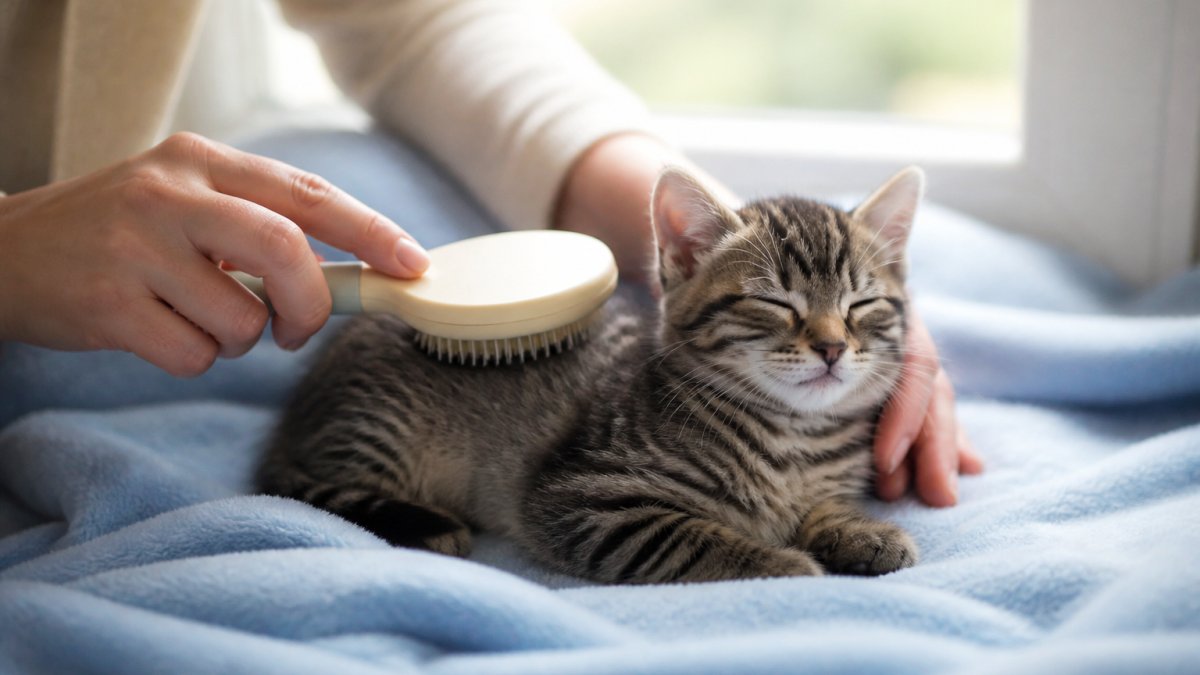
First Week: Short Sessions and Positive Reinforcement
During the first week, focus on touch rather than tools. Spend 2-3 minutes daily stroking your kitten's head, neck, and back with your bare hand, then introduce gentle paw and ear touching on days 3-4.
Positive reinforcement is non-negotiable. After each short session, immediately offer a favorite treat or a few minutes of play, so your kitten learns that grooming time leads to rewards.
Handling Paws and Sensitive Areas
Paw handling is critical because nail trimming will be part of your routine. Hold each paw for a few seconds, release, and gently press the paw pad to extend the nails slightly.
Many kittens are defensive about their ears.
Some kittens are sensitive about their whiskers or mouth. Stroke the cheeks and forehead, avoiding the whiskers directly, they're sensory organs and kittens dislike it.
Regular Brushing: How Often to Brush a Kitten
How often you brush depends on coat type, but the general rule is every two to four weeks. Short-haired kittens need less frequent brushing than long-haired breeds, but both benefit from regular attention to prevent loose hair buildup and early mat formation.
Starting early prevents shedding problems and keeps the coat healthy. Regular brushing removes dead fur before it lands on your furniture and lets you spot skin issues, bumps, or parasites early.
Short-Haired vs. Long-Haired Coats
Short-haired kittens have simpler needs. A soft slicker brush or rubber grooming glove works well; brush in the direction of hair growth with gentle, short strokes.
Long-haired kittens require significantly more attention. Their coats mat easily, especially behind the ears, under the armpits, and along the belly.
The 3-in-1 Gentle Steam Brush from Furbabies4less is particularly useful for both coat types.
Removing Loose Hair and Preventing Mats
Loose hair accumulation is one of the biggest beginner mistakes.
Use a slicker brush or grooming glove to remove loose hair after brushing. The Electrostatic Pet Hair Remover Glove from Furbabies4less uses electrostatic technology to lift and trap loose fur without sticky residue or refills.
For long-haired kittens, check for mats daily by running your fingers through the coat. Work through small tangles immediately with a wide-tooth comb using short strokes.
How to Trim Kitten Nails Safely
Nail trimming is one of the most important grooming tasks, and the one that makes most beginners nervous. The key is understanding nail anatomy and using the right tool.
Kittens' nails grow continuously and need trimming every two to four weeks. Indoor kittens typically need it more often than outdoor kittens because they don't wear their nails down on rough surfaces. Trim whenever the sharp tips start to curve or catch on fabric.
Understanding the Quick and Avoiding Injury
The quick is the blood vessel and nerve inside the nail; cutting into it is painful and causes bleeding.
Cut only the sharp clear or white part of the nail; the quick typically starts about 2-3mm before the nail curves.
The LED Pet Nail Clippers with Blood Line Safety Light from Furbabies4less offer another excellent option with a built-in light and safety features.
Managing Fear and Resistance
Many kittens are nervous about nail trimming, especially after a bad experience. If your kitten struggles or seems afraid, return to paw desensitization for a few days before trying again.
If your kitten panics, stop immediately. Learn how to groom a resistant cat with calm techniques, the right tools, and desensitization steps to help your kitten feel more comfortable during future sessions.
If your kitten bites, scratches, or shows extreme fear, consider having a veterinarian trim the nails the first few times.
Choosing the Right Kitten Grooming Tools
The tools you choose directly affect how your kitten responds. Low-noise, gentle-design tools are essential because kittens have sensitive hearing and delicate skin; loud tools create anxiety, while gentle ones make grooming feel safe.
ASPCA guidance on pet grooming recommends using tools specifically designed for cats rather than human grooming tools. Cat-specific tools are sized appropriately and designed with feline comfort in mind.
Essential Tools for Beginners
A complete beginner kitten grooming kit should include:
- A soft slicker brush for regular coat maintenance
- A wide-tooth comb for detangling and checking for mats
- Nail clippers with LED light or safety guard
The 3-in-1 Gentle Steam Brush from Furbabies4less combines steam, brushing, and detangling in one tool, making it an excellent starting point for beginners. It softens the coat with gentle steam, reducing the discomfort of brushing and making loose hair removal easier.
3-in-1 Gentle Steam Brush for Pet Grooming & Cleaning →
For nail trimming, the SafeGlow Nail Clippers include a safety guard that prevents overcutting, which is perfect for nervous first-timers. The LED light shows the quick clearly, even on dark nails.
Why Low-Noise and Gentle Design Matter
Kittens have far more sensitive hearing than humans. Standard clippers and trimmers operate at noise levels that cause genuine stress, so a low-noise motor dramatically reduces that trigger and lets your kitten get through sessions without anxiety.
The Low-Noise Pet Grooming Trimmer from Furbabies4less features an ultra-quiet motor that won't startle anxious or noise-sensitive kittens.
Gentle design also means ergonomic handles that don't require force or pressure. Tools that are uncomfortable to hold lead to rushed sessions and mistakes.
Bathing, Ear Cleaning, and Dental Care
Most kittens don't need frequent baths, their natural grooming keeps them clean, but occasional baths are sometimes necessary. Ear cleaning and dental care round out a complete routine.
When and How to Bathe Your Kitten
Bathe only when necessary: if your kitten gets into something sticky or dirty, or has a skin condition requiring medicated shampoo.
Use lukewarm water and kitten-specific shampoo, never human shampoo, which is too harsh for feline skin.
Drying is where most people struggle, since kittens panic at loud blow dryers. The CalmFlow Pet Dryer from Furbabies4less solves this with a low-noise motor and adjustable temperature settings, drying coats fast without overheating.
Ear and Dental Hygiene Basics
Check your kitten's ears weekly for dirt, redness, or discharge. If clean, no cleaning is needed; if there's buildup, wipe the inside of the ear flap with a cotton ball dampened with warm water. Never insert anything into the ear canal.
Brush your kitten's teeth 2-3 times per week with a soft toothbrush and feline toothpaste. Start by letting your kitten lick toothpaste off your finger, then gradually introduce the brush. If your kitten resists, gently rubbing the gums with your finger still helps reduce plaque.
Common Mistakes to Avoid and Health Red Flags
Beginner mistakes often come from good intentions but poor execution. Knowing what not to do prevents stress and injury.
Beginner Mistakes That Cause Stress
The biggest mistake is grooming when your kitten is already stressed or overstimulated. Choose calm moments, after meals or naps work best.
Another common error is using human grooming tools.
Forcing grooming when your kitten resists creates lasting anxiety.
Many beginners skip the reward step. Treats, praise, and playtime after grooming are what make your kitten willing to cooperate next time; without them, grooming feels like punishment.
When to Stop Grooming and Call Your Vet
Stop grooming and contact your veterinarian if you notice:
- Excessive scratching, hair loss, or bald patches
- Red, inflamed, or bleeding skin
- Discharge from ears or eyes
These signs indicate an underlying health issue that needs professional attention. Grooming can sometimes worsen skin or ear infections, so veterinary evaluation comes first.
Set Up Your Kitten's First Grooming Session
Your first grooming session should be a confidence-builder, not a full grooming. Structure it like this:
Choose the right time and place. Pick a calm period in a quiet, comfortable space like a bathroom or bedroom, and gather all your tools beforehand.
Start with just 3-5 minutes. Spend the first session simply handling your kitten and introducing one tool, perhaps the soft brush or grooming glove. Don't attempt nail trimming or bathing on day one.
Use treats generously. Reward every small cooperation: sitting still, allowing paw handling, accepting the brush.
End on a positive note. Stop before your kitten becomes frustrated. A short, positive session beats a long, stressful one.
Repeat every 2-3 days. Short, frequent sessions build comfort faster than occasional long sessions. By week two, your kitten should accept basic handling without resistance.
| Grooming Task | Frequency | Duration | Tools Needed |
|---|---|---|---|
| Brushing (short-haired) | Every 2 weeks | 5-10 minutes | Slicker brush, grooming glove |
| Brushing (long-haired) | 2-3 times per week | 10-15 minutes | Wide-tooth comb, slicker brush |
| Nail trimming | Every 2-4 weeks | 5-10 minutes | LED nail clippers, safety guard |
| Ear cleaning | Weekly check | 2-3 minutes if needed | Cotton balls, warm water |
| Dental care | 2-3 times per week | 2-3 minutes | Soft toothbrush, feline toothpaste |
| Bathing | As needed (rarely) | 5-10 minutes | Kitten shampoo, towel, dryer |
The Essential Wellness Supplies for New Kittens article covers the full range of products that support your kitten's health during these early grooming months. For specific tool recommendations, Gentle Grooming Tools for Cats: 6 Best Picks provides detailed guidance on selecting the right brushes and clippers for your kitten's coat type.
Starting kitten grooming early with patience, the right tools, and consistent positive reinforcement sets your kitten up for a lifetime of stress-free grooming.
Building a grooming routine your kitten tolerates requires patience, the right tools, and positive reinforcement. Start with SafeGlow Nail Clippers for Safe & Stress-Free Grooming for your first nail trim, and explore our full Everyday essentials collection to find tools that match your kitten's needs and temperament.

Frequently Asked Questions
When should you start grooming a kitten?
Start introducing your kitten to grooming between 4 and 8 weeks old. Early exposure builds positive associations with brushing, nail trimming, and handling. Keep first sessions very short (2-5 minutes) and use rewards like treats or play to create calm, happy memories. Kittens introduced to grooming early tolerate it far better as adults.
How often should you groom a kitten?
Short-haired kittens need brushing two to three times per week to remove loose hair and prevent matting. Long-haired kittens require daily brushing. Nail trimming every two to four weeks keeps nails at a safe length. Ears should be checked weekly, and dental care should start early. Adjust frequency based on your kitten's coat type and shedding.
What should you do if your kitten hates being brushed?
If your kitten resists brushing, keep sessions under five minutes and stop before they become stressed. Use high-value rewards like treats or playtime immediately after grooming. Try different brush types, some kittens prefer softer bristles or a steam brush that softens the coat. Approach from a calm state yourself; kittens pick up on your tension. Gradual desensitization works better than forcing the issue.
How do you trim a kitten's nails safely?
Use clippers with an LED light to see the quick (blood line) inside the nail, this prevents cutting too deep and causing pain. Trim only the clear or white part of the nail, stopping before the pink quick. Hold your kitten's paw gently but firmly, and trim at a 45-degree angle. If your kitten struggles, take breaks. Tools like SafeGlow Nail Clippers ($27.99) include a safety guard to help beginners avoid mistakes.
What grooming tools do kittens need?
Start with a soft brush or steam brush for coat care, nail clippers with an LED light for safe trimming, and cotton balls for ear cleaning. The 3-in-1 Gentle Steam Brush ($18.99) softens coats and reduces shedding, while LED clippers like the SafeGlow ($27.99) or LED Pet Nail Clippers ($23.22) make nail trimming safer. Low-noise tools prevent anxiety; kittens have sensitive hearing and loud clippers cause stress.

