

Essential Wellness Supplies for New Kittens (2026)
Table of Contents
- Your New Kitten Wellness Supplies Checklist
- Best Kitten Food for Healthy Growth
- Litter Box Setup, Training Supplies, and Pee Pads
- Grooming Tools Every Kitten Owner Should Have
- Interactive Toys, Enrichment, and Scratching Posts
- How to Kitten Proof Your Home Before Day One
- Kitten Vaccination Schedule and First Vet Visit
- Budget-Friendly and Eco-Friendly Kitten Wellness Supplies
- Frequently Asked Questions
Last Updated: September 1, 2026
Your New Kitten Wellness Supplies Checklist
Bringing a kitten home is exciting and overwhelming. At Furbabies4less, we've built our product catalog around a simple idea: every kitten deserves quality care without requiring you to spend a fortune. This guide covers essential wellness supplies organized by category so you can shop with confidence.
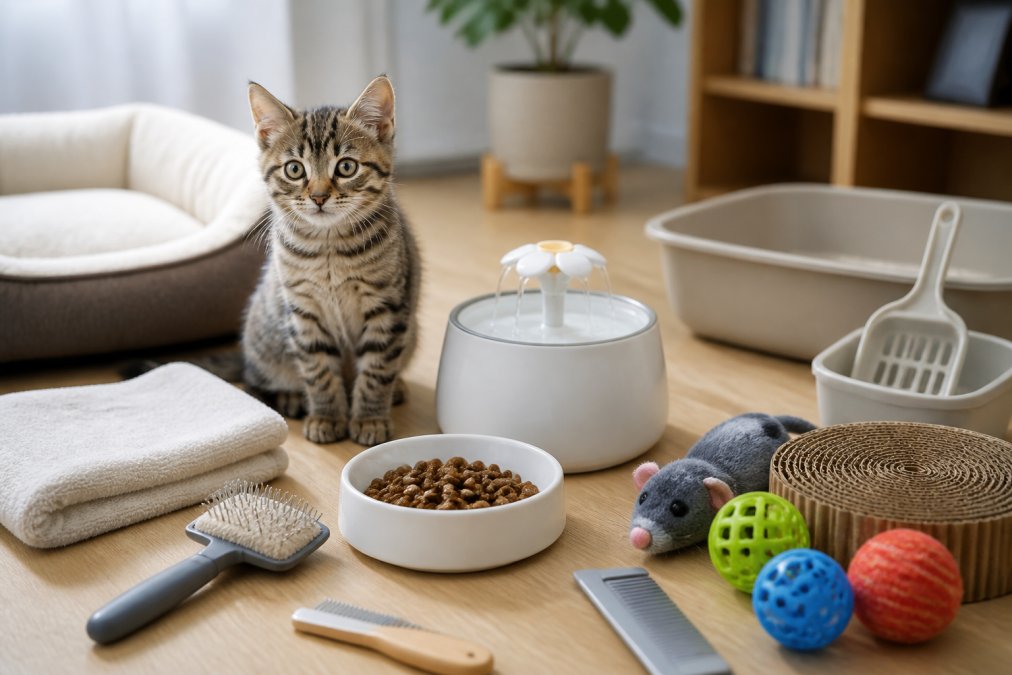
Quick-reference checklist for the first week:
- Age-appropriate kitten food (wet and dry)
- Filtered water fountain or stainless steel bowl
- Litter box, clumping litter, and litter scoop
- Cat carrier for vet visits and travel
- Scratching post or cat tree
- Wand toy and puzzle feeder for enrichment
- Grooming brush, nail clippers, and trimmer
- Cat bed or cozy sleeping space
- Collar with ID tag and microchip registration
- Pheromone diffuser for anxiety support
Best Kitten Food for Healthy Growth
Nutrition is the single most important decision for your kitten's long-term health. Kittens are not small cats, their dietary needs are distinct. Feeding them adult food during their first year can create deficiencies that appear years later.
Choose food specifically labeled "complete and balanced for kittens" or "all life stages," which meets the nutritional profiles established by AAFCO's pet food nutrient profiles.
Wet Food vs. Dry Kibble: What Kittens Actually Need
Most kittens do best on a combination of both. Wet food provides hydration and mimics a cat's natural prey-based diet, while dry kibble offers dental benefits and is easier to free-feed throughout the day. The mistake new owners make is going all-dry for convenience. Kittens have a low thirst drive and often don't drink enough water to compensate, setting the stage for urinary and kidney issues over time.
Look for foods where a named protein source (chicken, turkey, salmon) appears first. Avoid foods where corn syrup, artificial colors, or unnamed "meat by-products" lead the list.
Hydration: Why a Water Fountain Beats a Bowl
Cats are instinctively drawn to moving water. A stagnant bowl signals stagnation; flowing water signals freshness. This is why many cats ignore their water dish and try to drink from the faucet.
The PureFlow Pet Water Fountain ($27.00) solves this directly. Its continuous flow encourages kittens to drink more throughout the day, and its multi-stage filtration removes hair, debris, and impurities. The BPA-free, food-grade materials are safe for daily use, and the ultra-quiet pump won't startle a noise-sensitive kitten.

Stainless steel bowls are the next-best option if a fountain isn't in the budget. Plastic bowls harbor bacteria in micro-scratches and are a common cause of feline acne.
Litter Box Setup, Training Supplies, and Pee Pads
Most kittens take to litter training quickly. The standard guidance is one litter box per cat, plus one extra. A single-kitten household should start with two boxes in different locations. Kittens often need to eliminate immediately after waking or eating, so placing a box near sleeping and feeding areas reduces accidents.
For litter type, clumping litter is most practical. It makes waste removal easier, reduces odor, and lets you monitor your kitten's output, genuinely useful health information in early weeks. Avoid strongly scented litters; what smells fresh to you can overwhelm a kitten.
Litter box size matters. A box that's too small forces kittens to eliminate with back legs hanging over the edge, leading to accidents outside the box. Use a box at least one and a half times the kitten's length.
For households still training, the Extra-Thick Deodorizing Pee Pads ($35.53) are practical backup. Each pad features a super-absorbent core that locks in moisture instantly, built-in deodorizer, and leak-proof lining. They work well inside playpens or near the litter box during early weeks when accidents are common.
Grooming Tools Every Kitten Owner Should Have
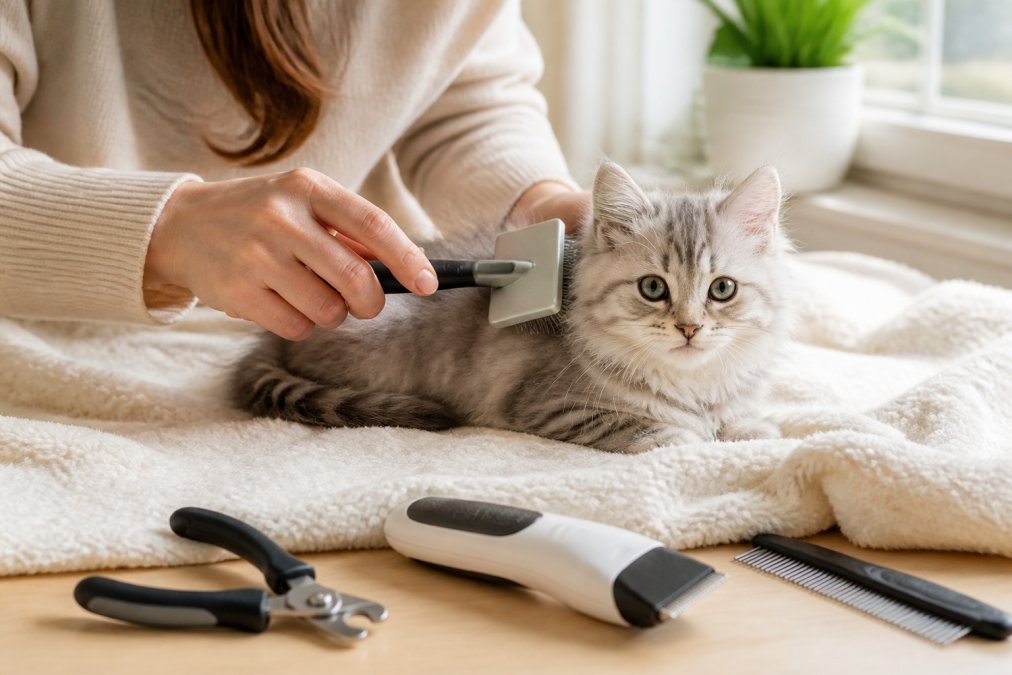
Starting grooming routines early is one of the best investments in your kitten's long-term temperament. A kitten handled regularly, brushed gently, and having its nails trimmed from a young age becomes an adult cat that tolerates grooming without a battle.
Nail Clippers with LED Safety Light
The number one reason new owners dread nail trims is fear of cutting the quick, the blood vessel inside the nail. The SafeGlow Nail Clippers ($27.99) feature a built-in LED light that illuminates the quick so you can see exactly where to cut. Precision sharp blades deliver clean cuts that don't crush or splinter the nail, and an included safety guard prevents overcutting.
Steam Brush and Low-Noise Trimmer for Sensitive Kittens
Kittens have sensitive skin and thin coats. Aggressive brushing or loud clippers create negative associations that make grooming a battle for years.
The 3-in-1 Gentle Steam Brush ($18.99) combines steam, brushing, and detangling in a single tool. Gentle steam softens the coat before brushing, meaning less pulling and discomfort. For trimming around the face, paws, and ears, the Low-Noise Pet Grooming Trimmer ($24.99) is ideal for sensitive kittens. Its whisper-quiet motor minimizes sound and vibration.


Interactive Toys, Enrichment, and Scratching Posts
Behavioral development in kittens happens fast. The window between 2 and 14 weeks is when socialization patterns are set. Enrichment during this period shapes how confident, curious, and well-adjusted your cat becomes as an adult.
According to the American Association of Feline Practitioners' feline life stage guidelines, environmental enrichment is a core component of preventive healthcare for cats, not optional.
A scratching post is non-negotiable. Cats scratch to mark territory, stretch muscles, and shed outer claw layers. Without a designated surface, they'll use your furniture. The post must be tall enough for full vertical stretch and stable enough not to wobble.
Wand toys are the best tool for interactive play. They mimic prey movement and trigger predatory sequences kittens need to practice. Ten to fifteen minutes of wand play twice daily meaningfully reduces problem behaviors like ankle-attacking and midnight zoomies.
For solo enrichment, the Interactive Lick Ball ($3.74) is one of the best-value items in any kitten starter kit. Unlike flat lick mats, the 3D ball requires kittens to rotate, nose, and paw it to reach treats inside, creating deeper mental engagement. Fill it with wet food or plain yogurt, and it doubles as a slow feeder.
How to Kitten Proof Your Home Before Day One
Kitten-proofing your home is not optional. Kittens are curious, fast, and have no concept of danger. The average home contains dozens of invisible hazards.
Room-by-Room Safety Checklist
Complete this checklist before your kitten arrives:
Kitchen:
- Secure cabinet doors with child-proof latches
- Keep the oven, dishwasher, and dryer closed at all times
- Store cleaning products in locked or high cabinets
- Remove toxic plants (lilies are extremely dangerous to cats)
Living Room:
- Secure loose electrical cords with cable management covers
- Remove small objects that could be swallowed (hair ties, rubber bands, coins)
- Block access behind large furniture where kittens can get trapped
- Anchor tall bookshelves and cat trees to the wall
Bathroom:
- Keep toilet lids closed (kittens can fall in and drown)
- Store medications in closed cabinets
- Secure razors and sharp objects
Bedroom:
- Check that reclining chairs and sofa beds are kitten-free before operating
- Store small jewelry and hair accessories out of reach
- Keep windows screened; kittens can fall from surprising heights
The ASPCA's list of toxic plants for cats is worth bookmarking. Common household plants including lilies, pothos, and dieffenbachia are toxic to cats and should be removed or placed completely out of reach.
Multi-Cat Household Integration Tips
Introducing a kitten to a resident cat requires patience. The biggest mistake is forcing immediate face-to-face contact. Most adult cats need days to weeks to accept a newcomer, and a bad first encounter can set the relationship back significantly.
The standard phased introduction approach is:
- Separation phase (days 1-7): Keep the kitten in a single room with their own food, water, litter box, and bedding. Let both cats smell each other under the door.
- Scent swapping (days 3-7): Exchange bedding between the two cats so they become familiar with each other's scent.
- Visual introduction (days 7-14): Use a baby gate or cracked door to allow visual contact without physical access.
- Supervised meetings (week 2+): Allow short, supervised interactions in a neutral space. End sessions before tension escalates.
A pheromone diffuser in the shared living area reduces territorial stress during transition.
Kitten Vaccination Schedule and First Vet Visit
The kitten vaccination schedule is the backbone of preventive healthcare in the first year. Getting this right protects your kitten from serious diseases and establishes a relationship with a veterinarian who knows your pet's baseline health.
Core vaccines for kittens include:
| Vaccine | First Dose | Booster | Notes |
|---|---|---|---|
| FVRCP (distemper combo) | 6-8 weeks | Every 3-4 weeks until 16 weeks | Core; protects against 3 diseases |
| Rabies | 12-16 weeks | 1 year later, then every 1-3 years | Required by law in most states |
| FeLV (feline leukemia) | 8-12 weeks | 3-4 weeks later | Recommended for outdoor/at-risk kittens |
The American Veterinary Medical Association's vaccination guidelines provides detailed guidance on core and non-core vaccines based on lifestyle and risk factors. Your vet will tailor the schedule to your kitten's situation.
The first vet visit should happen within the first week of bringing your kitten home. This visit establishes a health baseline, checks for parasites, discusses parasite prevention and flea treatment, and confirms microchipping and spay/neuter status.
Microchipping provides permanent identification. A collar with an ID tag is still important for immediate identification, but collars can fall off. A microchip stays with your cat for life.
Budget-Friendly and Eco-Friendly Kitten Wellness Supplies
Premium kitten care doesn't require premium spending. Many effective essential wellness supplies are affordable, especially when you choose reusable over disposable.
Where reusable beats disposable:
The Electrostatic Pet Hair Remover Glove ($12.99) replaces rotating disposable lint rollers. Its electrostatic technology lifts and traps fur from furniture, clothing, and car seats without sticky residue. Rinse it under water and it's ready again. The Washable Reusable Lint Roller ($19.99) is the travel-friendly companion with no sticky sheets or waste.
DIY enrichment that works:
Not every enrichment tool needs purchase. A paper bag with handles removed, a cardboard box with holes cut in the sides, or a toilet paper roll stuffed with dry kibble are all legitimate puzzle feeders that kittens find genuinely engaging.
What's worth spending more on:
Quality matters for nutrition, litter box setup, and grooming tools. Cheap nail clippers crush rather than cut, causing pain and negative associations. A low-quality litter box that's too small or poorly ventilated leads to litter avoidance. These aren't places to cut corners.
Eco-friendly choices that make practical sense:
- Reusable grooming tools over single-use wipes
- Biodegradable litter options made from corn, wheat, or paper
- A water fountain with replaceable filters rather than bottled water
- Washable cat bedding instead of disposable pads
The Furbabies4less product lineup is built around this philosophy: vet-informed selections at accessible prices, with a portion of every sale supporting animal rescues.
| Supply Category | Budget Option | Worth Upgrading | Skip Entirely |
|---|---|---|---|
| Water source | Stainless steel bowl | Filtered water fountain | Plastic bowls |
| Nail care | Basic clippers | LED quick-illuminating clippers | Human nail scissors |
| Grooming | Rubber brush | Steam brush + low-noise trimmer | Loud electric clippers |
| Enrichment | DIY cardboard puzzles | 3D lick ball, wand toys | Toys with small detachable parts |
| Litter | Unscented clumping litter | Self-cleaning box (later) | Scented or crystal litter for young kittens |
| Hair removal | Washable lint roller | Electrostatic glove | Disposable sticky rollers |
Frequently Asked Questions
What cat supplies do I need for a new kitten?
The core list includes a litter box with clumping litter and a litter scoop, food and water bowls (stainless steel is easiest to clean), age-appropriate wet food and dry kibble, a cat carrier, a cat bed, a scratching post, and basic grooming tools like a brush and nail clippers. A water fountain encourages better hydration, which is especially important for kittens. Round out the starter kit with a few wand toys and a puzzle feeder for enrichment.
What is the 3-3-3 rule for new kittens?
The 3-3-3 rule is a general adjustment guideline: in the first 3 days, a kitten is overwhelmed and needs a quiet, confined space. Over the next 3 weeks, they begin to learn their routine, explore more, and show their personality. By 3 months, they typically feel fully settled and comfortable in their home. Supporting this transition with consistent feeding schedules, safe hiding spots, and calm enrichment activities helps kittens adjust faster.
When should a new kitten have its first vet visit?
Most vets recommend scheduling a first visit within 48 to 72 hours of bringing a kitten home. This initial exam checks for parasites, confirms overall health, and starts the kitten vaccination schedule. Core vaccines typically begin at 6 to 8 weeks of age, with boosters every 3 to 4 weeks until 16 weeks. Your vet will also advise on flea treatment, parasite prevention, and when to schedule spaying or neutering.
How do I kitten-proof my home for safety and wellness?
Start by securing loose cords, covering small gaps behind appliances, and removing toxic houseplants. Store household cleaners and medications in closed cabinets. Check that window screens are secure and toilet lids stay closed. In the kitchen, keep rubber bands, twist ties, and plastic bags out of reach. A pheromone diffuser in the kitten's main room can reduce stress during the adjustment period. Kitten-proofing before your new cat arrives prevents most common household accidents.
What is the best kitten food for healthy growth?
Kittens need food labeled specifically for kittens or 'all life stages,' which meets the higher protein and calorie demands of growth. Wet food supports hydration and is generally easier for young kittens to eat, while dry kibble helps with dental health and is convenient for free-feeding. A combination of both is a common vet-approved approach. Avoid adult cat food until your kitten reaches 12 months, as it does not provide adequate nutrition for healthy development.
Giving a new kitten the right start is straightforward when you know what actually matters. The challenge most new pet parents face isn't lack of love; it's sorting signal from noise in an overwhelming market. Furbabies4less exists to make that easier, with vet-informed selections, transparent pricing, and a rescue-first mission that means your purchases support animals still waiting for their home. Shop the kitten wellness collection and give your new family member the foundation they deserve.
This article was written using GrandRanker
