

How to Groom a Resistant Cat: A Step-by-Step Guide
Table of Contents
- Why Some Cats Resist Grooming (Medical vs. Behavioral Causes)
- How to Desensitize a Cat to Brushing: A Training Plan
- Cat Grooming Tools for Aggressive Cats: What Actually Works
- Safe Restraint Techniques for Grooming a Resistant Cat
- Grooming Sensitive Areas: Stomach, Legs, and Claws
- How Long Should a Cat Grooming Session Last?
- Post-Grooming Recovery and When to Call a Professional Groomer
- Frequently Asked Questions
Last Updated: September 2, 2026
Most cats tolerate grooming on their own terms, which is to say, barely. If you're trying to figure out how to groom a resistant cat without losing a pint of blood or your cat's trust, you're in good company. At Furbabies4less, we hear from rescue pet owners and new cat parents every week dealing with exactly this struggle. The good news: resistance is almost always trainable. The key is understanding why your cat is fighting back before you ever pick up a brush.
Below, we'll walk through a structured desensitization training plan, the tools that actually work for sensitive or aggressive cats, safe restraint techniques, and how to tell when it's time to call in a professional groomer. Most guides treat grooming as a one-time physical task rather than an ongoing behavioral training process, that mindset turns a mildly resistant cat into a genuinely fractious one.
Why Some Cats Resist Grooming (Medical vs. Behavioral Causes)
Resistance to grooming is rooted in either physical discomfort or a learned fear response, and telling the difference changes everything about how you respond.
Signs of Medical Discomfort vs. Defensive Behavior
Medical discomfort shows up as localized reactions: your cat flinches when you touch a specific spot. Skin sensitivity, joint pain, ear infections, dental pain, and matted fur pulling tight against the skin can all make grooming painful. According to American Association of Feline Practitioners feline pain guidelines, cats routinely mask pain and may only display it during handling. If your cat's resistance is sudden, worsening, or tied to a specific body area, a vet visit should come before any grooming attempt.
Behavioral resistance looks different. These cats react to the anticipation of grooming: they hide when they see the brush, go rigid when held, or escalate to hissing and scratching before you've touched their coat. This is a learned fear response, often rooted in past negative experiences or lack of early handling.
The practical test: touch the resistant area gently with your hand during a calm, non-grooming moment. If your cat reacts the same way, suspect medical causes. If they tolerate your hand but not the brush, you're dealing with a behavioral trigger.
How to Desensitize a Cat to Brushing: A Training Plan
Desensitization gradually reduces a cat's fear response to grooming by pairing it with positive experiences. Most cats need two to six weeks of consistent short sessions before they tolerate brushing comfortably.
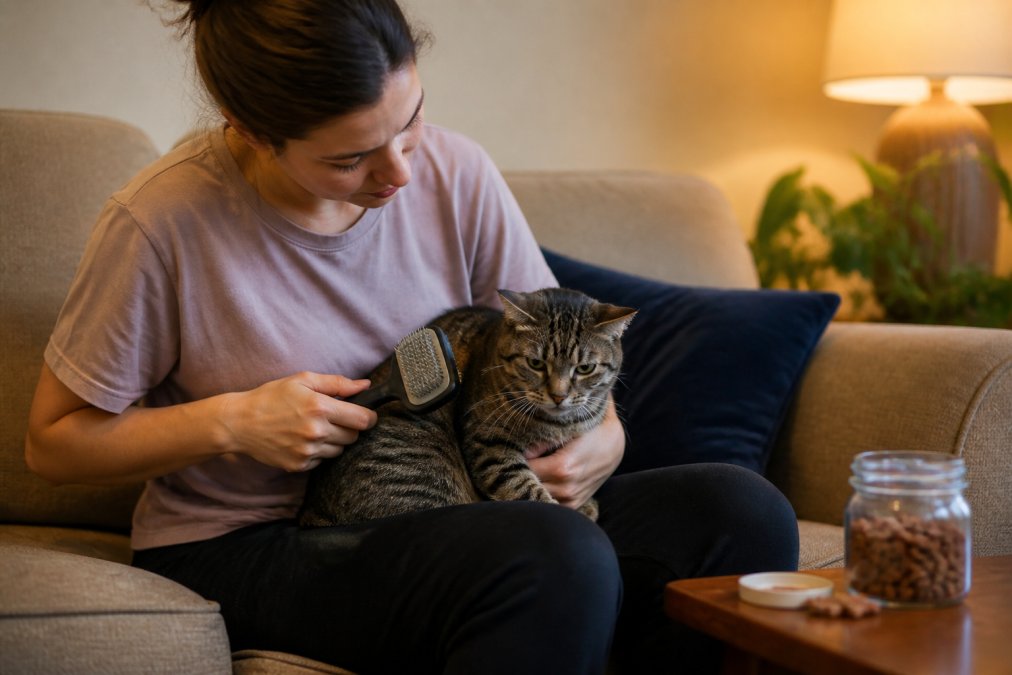
Step 1: Create a Calm Environment Before You Begin
Choose a time when your cat is naturally relaxed, ideally after a meal or play session. Turn off loud appliances and sit at floor level so you're less physically imposing. A calm environment is a prerequisite, not a luxury.
Step 2: Introduce Grooming Tools Gradually
Don't start with the brush on the coat. Start with the brush on the floor several feet away while you give treats. Over several sessions, move it closer and let your cat sniff it. Only after your cat is consistently calm near the tool should you introduce it to their coat.
For cats with sensitive coats or significant tangles, the 3-in-1 Gentle Steam Brush from Furbabies4less is worth introducing early. The steam softens the coat before contact, which means less pulling, less pain, and a calmer cat. At $18.99, it reduces the physical discomfort that drives defensive behavior.

Step 3: Use Positive Reinforcement and Reward-Based Handling
Use high-value treats your cat doesn't get at other times, small pieces of cooked chicken or lickable treat paste work well. The sequence matters: treat first, then brief brush contact, then treat again. Never end a session on a struggle.
As the American Veterinary Society of Animal Behavior's position on reward-based training explains, positive reinforcement builds reliable behavioral change without the aggression and avoidance that comes from aversive handling. Keep sessions to two to three minutes maximum at this stage.
Step 4: Read Your Cat's Body Language and Stress Signals
The biggest mistake is ignoring early stress signals and waiting for escalation. By the time your cat is hissing or scratching, you've already missed several warnings.
Watch for:
- Tail flicking or lashing
- Skin twitching along the back
- Ears rotating backward or flattening
- Pupils dilating suddenly
- Freezing or going rigid
- Low vocalizations or growling
Any of these signals means the session ends. Put the brush down and walk away. This teaches your cat that stress signals are respected, which reduces aggression over time.
Cat Grooming Tools for Aggressive Cats: What Actually Works
The wrong tool makes everything harder. For cats with sensitive coats, defensive behavior, or significant undercoat buildup, generic brushes often cause more pain than they resolve, reinforcing the resistance cycle.
Brushes, Combs, and Steam Tools for Sensitive Coats
A wide-tooth comb is a better starting point than a slicker brush for resistant cats, especially when working through matted areas slowly. For detangling, always work from the ends of the fur toward the skin, not the reverse.
The 3-in-1 Gentle Steam Brush addresses the root cause of much grooming resistance: physical discomfort from dry, tangled fur. Steam softens the coat before the brush makes contact, so the brush glides rather than pulls. For cats with dense undercoats or chronic tangles, this is a meaningful difference.
| Tool Type | Best For | Caution |
|---|---|---|
| Wide-tooth comb | Detangling matted fur gently | Work slowly from ends to roots |
| Slicker brush | General coat maintenance | Avoid on already-sensitive skin |
| Steam brush | Sensitive coats, tangles, shedding | Introduce gradually, the steam sensation is new |
| Low-noise trimmer | Trimming around paws, face, ears | Desensitize to sound before use |
For trimming around sensitive areas, the Low-Noise Pet Grooming Trimmer from Furbabies4less runs quietly enough that most cats don't startle. At $24.99, it's designed specifically for home grooming without salon-level stress.

Nail Clippers That Reduce Stress for Cat and Owner
Nail trimming is often the most dreaded part of grooming a resistant cat. The biggest risk is cutting the quick, which causes real pain and sets back all your desensitization progress.
The SafeGlow Nail Clippers include a built-in LED light that illuminates the quick through the nail. For dark-nailed cats where the quick is invisible, this is genuinely useful. The LED Pet Nail Clippers with Blood Line Safety Light offer similar functionality at $23.22.

Safe Restraint Techniques for Grooming a Resistant Cat
Restraint's goal is to provide enough physical stability that your cat feels secure rather than threatened.
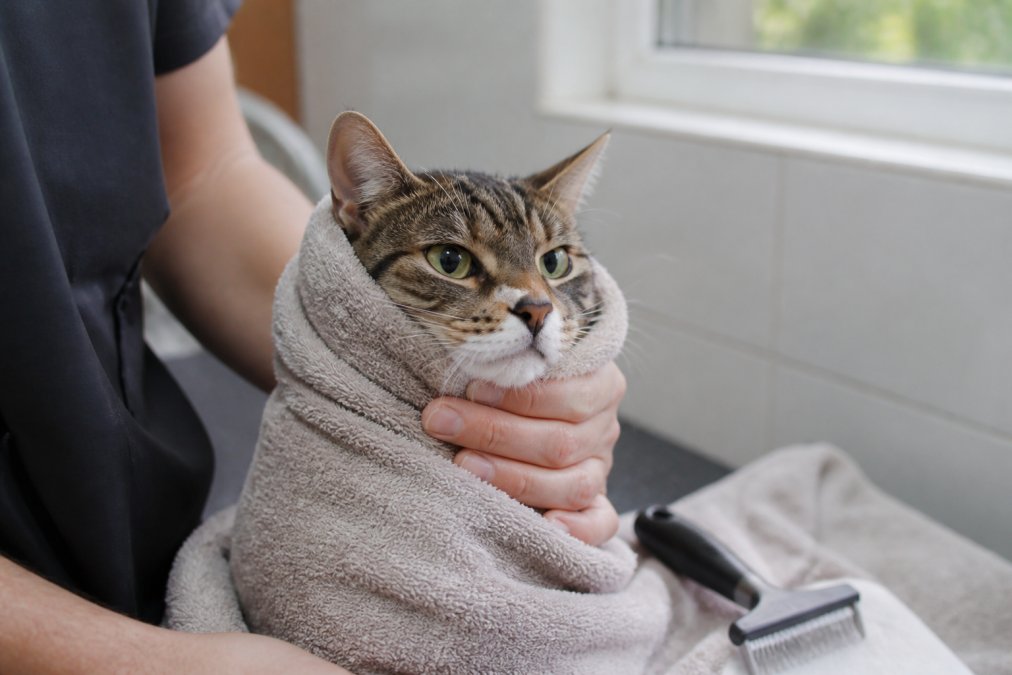
The Towel Wrap (Burrito Method) Explained
The towel wrap involves wrapping a cat snugly in a soft towel so their legs and claws are contained while their head remains free. Done correctly, many cats calm down inside the wrap because the gentle, even pressure is reassuring.
To do it: lay a large, soft towel flat. Place your cat in the center. Fold one side across their body, tuck it under, then fold the other side over. The wrap should be snug but not tight, you should be able to slide two fingers under the towel at the chest. Work quickly and calmly. This is particularly useful for nail trimming, ear cleaning, or working on the face.
The towel wrap is not appropriate for a cat in full defensive aggression. If your cat is already hissing or biting, restraint will escalate the situation.
Handling Matted Fur Without Causing Pain
Matted fur pulls the skin, restricts movement, and can harbor moisture and debris that causes skin irritation. The correct approach:
- Apply detangling spray or use steam to soften the mat
- Use your fingers to gently separate the outer edges first
- Work a wide-tooth comb from the outer edges inward, in small increments
- Never pull toward the skin, always work away from it
- For tight, close-to-skin mats, a professional groomer is safer
According to Cornell Feline Health Center's coat care guidance, severe matting should be addressed by a veterinarian or professional groomer rather than forced removal at home.
Grooming Sensitive Areas: Stomach, Legs, and Claws
The stomach, inner legs, and paws are the areas most cats guard most fiercely. These are the areas a cat would protect in a real threat situation, and your cat's instincts don't distinguish between a threat and a brush.
Work up to these areas last, after your cat is comfortable with grooming on their back and sides. When approaching the stomach, keep one hand resting gently on the cat's side rather than reaching directly underneath. Many cats tolerate lateral strokes along the belly far better than direct ventral contact.
For paws and claws, handle paws during calm, non-grooming moments first. Press gently on the paw pad to extend the claw, reward, release. Do this daily for a week before introducing clippers. Inner leg fur in long-haired cats is prone to tangles and often neglected because cats resist it strongly. A narrow comb and very short sessions work best here.
How Long Should a Cat Grooming Session Last?
A cat grooming session should last two to five minutes for resistant cats, and no more than ten to fifteen minutes even for cats that tolerate grooming well. Longer sessions increase stress accumulation even when a cat appears calm.
Short, frequent sessions three to four times per week produce better long-term results than one long weekly battle. Coat maintenance stays manageable, and your cat's tolerance builds gradually rather than being depleted in a single exhausting encounter. If stress signals appear within the first two minutes, that is your session length for now.
Post-Grooming Recovery and When to Call a Professional Groomer
After a grooming session, give your cat space. Don't pick them up, don't follow them, don't try to make up for the stress with forced affection. Let them decompress on their own terms.
Offer a high-value treat at the end of every session, even a difficult one. This creates a positive association with the end of grooming, which makes future sessions easier to start.
Call a professional groomer when:
- Matting is severe enough that home removal risks skin damage
- Your cat escalates to biting or scratching despite consistent desensitization work
- The grooming need is medical (post-surgery coat care, skin condition management)
- Your cat is elderly or has mobility issues that make restraint unsafe at home
A professional groomer experienced with fractious cats has access to techniques and tools beyond what's practical at home. Some veterinary practices offer grooming under mild sedation for cats whose stress response makes any handling genuinely unsafe. Sedation is sometimes the most humane option available.
Grooming a resistant cat takes patience, the right approach, and tools that don't make the experience worse than it needs to be. Furbabies4less carries vet-informed grooming tools selected specifically for cats with sensitivity and anxiety, including the steam brush that softens tangles before they become battles and LED nail clippers that take the guesswork out of trimming safely. Every purchase also supports animal rescue organizations. Shop the Furbabies4less grooming collection and make the next session easier for both of you.
Frequently Asked Questions
How do you groom an unwilling cat without getting scratched?
Start with very short sessions of two to three minutes and pair every grooming touch with a high-value treat. Use a towel wrap to limit sudden movements without causing pain. Keep your own body language slow and relaxed, cats read tension quickly. A low-noise trimmer or a gentle steam brush reduces the startling sounds and pulling sensations that trigger defensive aggression. Over several sessions, most cats tolerate handling far better as they associate grooming with calm and reward.
What are the best tools for grooming a fractious cat?
For a fractious cat, the goal is to minimize pain and surprise. A gentle steam brush softens the coat before you touch it, reducing painful tugging on tangles. A slicker brush or wide-tooth comb works well on the undercoat once the fur is softened. For nail trims, LED nail clippers that illuminate the quick prevent accidental cuts, which are a major source of grooming-related fear. Low-noise trimmers eliminate the high-pitched buzz that sends many cats into a defensive state.
How can I desensitize my cat to grooming tools?
Place the grooming tool near your cat's resting spot for a few days so it becomes a familiar, non-threatening object. Then hold it near your cat without using it, rewarding calm behavior with treats. Progress to touching the tool against the cat's back without brushing, then short strokes. This reward-based desensitization process can take one to three weeks for a highly resistant cat, but it builds lasting tolerance rather than forcing compliance that increases stress over time.
When should you seek professional help for cat grooming?
Consult a professional groomer or your vet when your cat has severe matted fur that cannot be safely detangled at home, when grooming triggers biting or scratching that breaks skin, or when resistance is sudden and new, which can signal underlying pain or skin sensitivity. A vet can rule out medical causes before you attempt behavioral training. Some cats with extreme anxiety may benefit from vet-prescribed sedation for grooming, which is a safe and accepted option.
This article was written using GrandRanker
