

Gentle Grooming Tools for Cats: 6 Best Picks for 2026
Table of Contents
- Quick Comparison: Gentle Grooming Tools for Cats
- How We Evaluated These Cat Grooming Tools
- 1. 3-in-1 Gentle Steam Brush: Best for Sensitive Skin and Fine Fur
- 2. Electrostatic Pet Hair Remover Glove: Best Non-Brush Alternative
- 3. Low-Noise Pet Grooming Trimmer: Best for Anxious Cats
- 4. CalmFlow Pet Dryer: Best for Long-Haired Cats After Baths
- 5. SafeGlow Nail Clippers: Best for First-Time Cat Owners
- 6. LED Pet Nail Clippers with Blood Line Safety Light: Best Budget Option
- How to Groom a Cat That Doesn't Want to Be Groomed
- When to See a Vet Instead
- Frequently Asked Questions
Last Updated: October 12, 2026
Quick Comparison: Gentle Grooming Tools for Cats
Most cat owners grab whatever brush is closest, then wonder why their cat bolts.
At Furbabies4less, we built our lineup on the principle that helped our rescue dog, Oz, recover: gentle, consistent care beats force.
Below, six picks by coat type and temperament, with pricing and what each tool does.
| Tool | Price | Best For | Coat Type |
|---|---|---|---|
| 3-in-1 Gentle Steam Brush | $18.99 | Sensitive skin, fine fur | All coat types |
| Electrostatic Hair Remover Glove | $12.99 | Non-brush alternative | All fur lengths |
| Low-Noise Grooming Trimmer | $24.99 | Anxious cats | All coat types |
| CalmFlow Pet Dryer | $64.99 | Long-haired cats after baths | Long, thick coats |
| SafeGlow Nail Clippers | $27.99 | First-time owners | All breeds |
| LED Blood Line Clippers | $23.22 | Budget pick, dark nails | All breeds |
How We Evaluated These Cat Grooming Tools
Most roundups rank tools by popularity or price. We ranked them by how a cat actually responds, because a tool the cat refuses is worthless regardless of features.

The Four Criteria
1. Sensitive-skin handling. We looked at bristle material, tip shape, and friction.
2. Ease of cleaning. Trapped fur gets redistributed on the next pass.
**3.
4. Tolerance by resistant cats. Noise, vibration, and how much of the tool the cat can see affect acceptance.
The Trade-Offs Behind Each Pick
No tool wins on all four. Knowing where each gives ground helps you choose:
- Steam brushes win on sensitive skin and mat loosening but need power and warm-up per section.
- Grooming gloves win on tolerance and versatility but collect less undercoat per stroke.
- LED nail clippers win on safety and visibility but do nothing for coat or shedding.
Why Cat Tools Are Not Scaled-Down Dog Tools
A common mistake is buying a dog tool and assuming it scales down. Cat tools need finer bristles, shorter strokes, and lighter pressure because a cat's coat is denser and their skin tears more easily.
How We Weighted Noise and Vibration
We weighted noise and vibration heavily. Many cats tolerate brushing until something buzzes or rattles, which is why low-noise design shows up repeatedly in our picks. Cats hear frequencies humans cannot, and a standard clipper sits in the range that triggers a flight response.
1. 3-in-1 Gentle Steam Brush: Best for Sensitive Skin and Fine Fur
Our top pick for most cats is the 3-in-1 Gentle Steam Brush, which combines steam, brushing, and detangling in one pass, fewer strokes means less irritation on sensitive skin.
The steam softens the coat before bristles reach skin, loosening tangles instead of pulling them, and lifts dead fur so shedding control happens during the brush rather than all over your sofa.
Pricing and What You Get
One-time purchase at $18.99. The brush is safe for all coat types and fine enough for kittens and cats with thin fur.
Why It Works for Cats with Sensitive Skin
Steam reduces friction, the cause of most brushing complaints. The tool loosens mats and dead undercoat rather than yanking them free, so a cat that flinches at a pin brush often settles within a few strokes.
2. Electrostatic Pet Hair Remover Glove: Best Non-Brush Alternative
Some cats never accept a brush, and forcing it damages trust. The Electrostatic Pet Hair Remover Glove sidesteps the problem by turning your hand into the grooming tool.
Electrostatic adsorption lifts and traps loose fur without sticky residue or refills.
Pricing and What You Get
One-time purchase at $12.99. Reusable and washable, so you rinse it and keep going rather than buying replacements.
How to Use It for Grooming and Loose-Hair Pickup
Stroke the glove along the coat in the direction the fur grows; the electrostatic charge catches loose hair and dander. It doubles as a furniture and car-seat cleaner, making it the most versatile pick for heavy shedders.
3. Low-Noise Pet Grooming Trimmer: Best for Anxious Cats
Noise is the biggest reason cats fight grooming sessions. The Low-Noise Pet Grooming Trimmer uses a quiet motor that minimizes sound and vibration, the two things that actually startle cats.

Most clippers vibrate loudly, and cats feel that vibration through their skin as much as they hear it. Reducing both makes this tool usable on a nervous cat.
Pricing and What You Get
One-time purchase at $24.99, available as a starter set or with a full accessory kit. It is USB rechargeable, cordless, and works for both dogs and cats across all coat types.
Why Low Noise Matters for Cats
Cats hear frequencies humans cannot detect, and a standard clipper sits right in the range that triggers a flight response. Rounded blade tips also protect sensitive skin and hard-to-reach areas like paw pads and the face.
4. CalmFlow Pet Dryer: Best for Long-Haired Cats After Baths
Long-haired cats need thorough drying, and air drying in cold weather risks more than a damp coat. The CalmFlow Pet Dryer pairs a low-noise motor with adjustable temperature.
3-in-1 Gentle Steam Brush for Pet Grooming & Cleaning →

Standard dryers run loud enough to hurt a cat's ears. The CalmFlow reduces that trigger while still moving enough air to dry a thick coat evenly.
Pricing and What You Get
One-time purchase at $64.99. Ergonomic handle, no exposed heating elements, and controlled airflow suitable for all coat types.
Adjustable Temperature for Sensitive Skin
Lower settings suit sensitive skin or thin coats; higher heat handles dense double coats that hold moisture near the skin. That range makes one dryer work across a multi-cat household.
5. SafeGlow Nail Clippers: Best for First-Time Cat Owners
Cutting the quick is the mistake every new owner fears, and the reason nail trims get skipped. The SafeGlow Nail Clippers include an LED light that illuminates the quick so you see exactly where to cut.
A safety guard prevents overcutting, which matters most for wiggly cats and nervous hands. Precision blades cut cleanly without crushing or splintering the nail.
Pricing and What You Get
One-time purchase at $27.99, available in 2-piece and 3-piece sets and multiple colors. The non-slip grip helps during longer sessions.
The LED Light and Safety Guard Explained
The LED shines through the nail so the quick appears as a darker shape, and the guard limits how much nail the blade takes in one cut, so a sudden movement does not become a bleed.
6. LED Pet Nail Clippers with Blood Line Safety Light: Best Budget Option
Budget does not have to mean unsafe. The LED Pet Nail Clippers with Blood Line Safety Light bring the same core safety feature at the lowest price here.
The built-in light reveals the blood line through the nail, and the sharp metal blade cuts in one smooth motion.
Pricing and What You Get
One-time purchase at $23.22. Includes one LED pet nail clipper, available in green, red, and yellow.
How the Blood Line Light Works on Dark Nails
Dark nails hide the quick under normal light, which is why many owners avoid trimming black claws. The LED illuminates the nail's interior so the quick appears as a shadow. Stop short of that shadow and you avoid the bleed.
How to Groom a Cat That Doesn't Want to Be Groomed
Most grooming advice stops at "go slow." What changes a resistant cat's behavior is controlling three variables at once: the tool, the pressure, and the session length. Get those right and most cats move from hiding to tolerating to leaning into the brush.
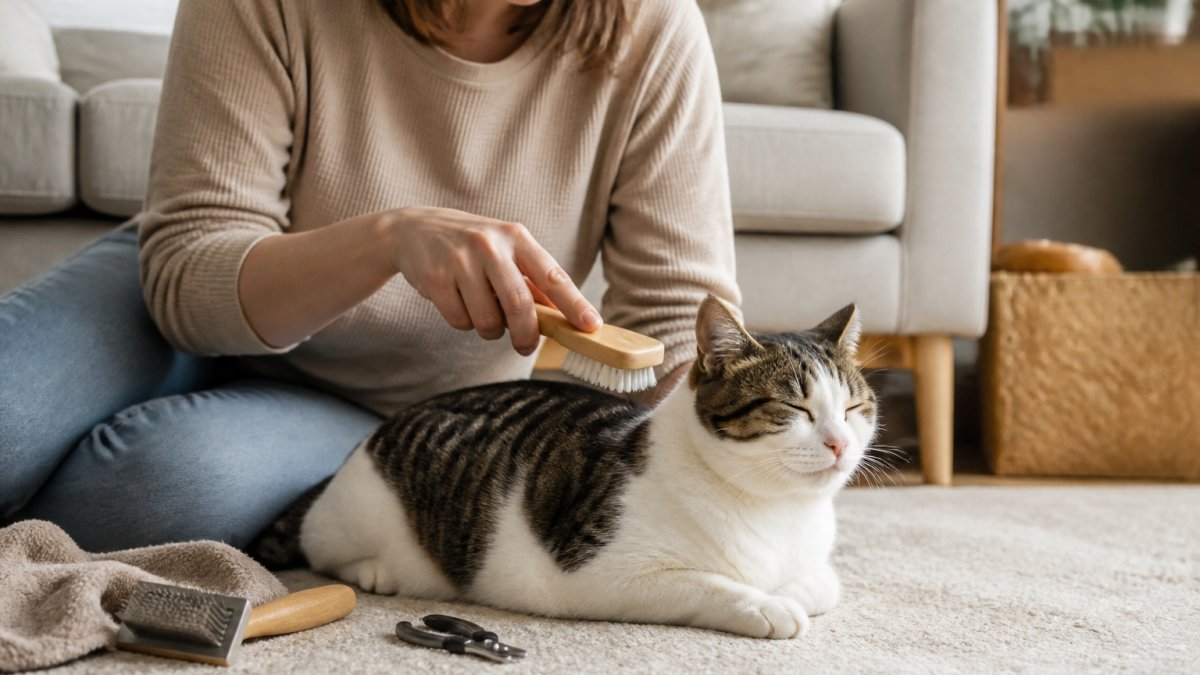
Start With the Right Tool for the Cat in Front of You
A cat's tolerance is set partly by coat and skin, not just personality. Match the tool before working on the routine:
- Fine or thin coats: a soft-bristle brush or grooming glove. Stiff wire slickers scratch thin skin and cause most first-stroke flinching.
- Dense double coats: a wide-tooth metal comb for the undercoat, then a bristle brush for the topcoat. Skip the slicker until the cat accepts the comb.
- Curly or wavy coats: a stainless-steel comb with rotating teeth, worked in small sections. These coats mat close to the skin, so a brush alone skips the tangling layer.
Pressure, Stroke Count, and the Stop Signal
Pressure is the variable owners get wrong most. A cat's skin is thinner than a dog's, and dragging a tool across it triggers the nip, not the tool itself.
- Use the lightest pressure that still collects fur. If bristles bend against the skin, you are pressing too hard.
- Work in the direction the fur grows. Going against the grain lifts more undercoat but irritates skin faster, so save it for short passes on the back.
- Cap early sessions at 30 seconds or 10 to 15 strokes, whichever comes first. A cat that associates grooming with a quick, calm, treat-rewarded experience tolerates longer sessions within weeks.
A Gradual Introduction Sequence
The gradual approach matters more than the tool. Our recommended sequence:
- Let the cat sniff the tool while it is switched off, then put it away
- One gentle stroke along the back, then a treat and a break
- Two or three strokes the next day, same spot
How Often to Groom, by Coat
Frequency matters as much as technique. Over-grooming irritates skin; under-grooming lets mats form.
- Short, single coats: weekly, more during spring and fall shedding.
- Long or double coats: every other day, with a full comb-out weekly.
- Kittens: short, playful sessions two or three times a week to build tolerance before the coat thickens.
When to Stop and Get Help
Some grooming problems are medical, not behavioral. Bald patches, constant scratching, greasy fur, sudden matting in a cat that previously groomed fine, or crying out when touched all warrant a vet visit rather than a new brush.
When to See a Vet Instead
Some grooming problems are medical, not behavioral.
A vet can also advise on sedation-free handling for cats with severe anxiety, and on whether a coat condition needs treatment before grooming resumes. No tool replaces that assessment.
Frequently Asked Questions
What is the best brush for cats who are shedding?
The best brush for shedding depends on coat length. For cats with fine fur, a gentle steam brush softens the coat and loosens dead fur without pulling. For dense undercoats, a de-shedding brush or undercoat rake reaches deeper. Weekly grooming with the right tool removes more loose fur than daily brushing with the wrong one. The 3-in-1 Gentle Steam Brush ($18.99) is a solid starting point for most coat types because it combines steam, brushing, and detangling in one pass.
Which grooming tools are best for cats with sensitive skin?
Cats with sensitive skin need tools with soft bristles, rounded tips, and gentle pressure. Avoid metal combs with sharp teeth on irritated areas. The 3-in-1 Gentle Steam Brush is designed for sensitive skin and fine fur, using steam to soften the coat so brushing causes less friction. The Electrostatic Pet Hair Remover Glove ($12.99) is another option because it uses electrostatic attraction rather than bristles, making it gentle on skin and useful for cats that dislike traditional brushes.
How do I groom a cat that doesn't want to be groomed?
Start with short sessions of one to two minutes and one tool at a time. Let the cat sniff the brush before you use it. Pair grooming with treats or a meal so the cat associates the tool with something positive. If your cat is noise-sensitive, choose a low-noise trimmer or a quiet dryer. Stop immediately if you see flattened ears, tail twitching, or skin rippling, and try again later. Building tolerance over weeks works better than forcing a full session.
What tools should I use to remove mats from my cat's coat?
For mats, use a cat grooming comb with wide-set metal teeth to work through tangles from the tip inward, never pulling against the skin. For tight mats, apply gentle steam first to soften the fur, then use a comb or detangling brush. The 3-in-1 Gentle Steam Brush helps here because the steam loosens tangles before the bristles pass through. If a mat is tight against the skin or the area looks red or irritated, stop and consult a veterinarian or professional groomer.
How often should I brush my cat?
Short-haired cats generally need brushing once or twice a week. Long-haired cats need daily or every-other-day sessions to prevent mats and control shedding. During shedding season, increase frequency to daily for both coat types. Cats with sensitive skin may tolerate shorter but more frequent sessions better than one long grooming session. Weekly grooming with a gentle tool is the minimum for most cats, but adjust based on how much loose fur you see on furniture and bedding.
