

How to Puppy Proof Your Living Room: 7 Simple Steps
Last Updated: October 23, 2026
Quick Summary
To puppy proof your living room, get on your hands and knees and check the room from your puppy's height, then remove small objects, lock away cleaners and toxic foods, and secure electrical cords. Add gates or a playpen for containment, supply safe chew toys, and run a short weekly checklist as your puppy grows.
- Chocolate, grapes, raisins, onions, and xylitol are all toxic to dogs, so store snacks sealed and off coffee tables.
- Run cords behind furniture or along walls, fit cord covers, and plug unused outlets with safety caps.
- Catch a puppy mid-chew, swap the furniture for a chew toy, and praise within a second or two.
- A daily two-minute reset means scanning the floor, picking up remotes and chargers, and checking the trash lid.
- Five minutes a week is enough for the weekly recheck of cords, cleaners, gates, and chew toys.
Table of Contents
- Step 1: See Your Living Room From Your Puppy's Perspective
- Step 2: Get Down Low and Remove Hazards From Puppy's Reach
- Step 3: Secure Electrical Cords, Outlets, and Cables
- Step 4: Protect Furniture, Baseboards, Walls, and Rugs
- Step 5: Use Dog Gates and a Puppy Playpen for Living Room Containment
- Step 6: Stock Up on the Best Chew Toys for Puppies
- Step 7: Run a Repeatable Puppy-Proofing Checklist Every Week
- Frequently Asked Questions
Step 1: See Your Living Room From Your Puppy's Perspective
Learning how to puppy proof your living room starts with a change of height, not a shopping list, and the first puppy proof step costs nothing.
At Furbabies4less, we've learned from our own rescue dog, Oz, that puppies explore the world with their mouths first. Everything within reach is a test.
So before you move a single item, do a slow crawl around the room. Check under the couch, behind the TV stand, and along the baseboards.
Step 2: Get Down Low and Remove Hazards From Puppy's Reach
Removing hazards from your puppy's reach is the core of home safety, and it comes down to two jobs: clearing small items and locking away anything toxic.
Small Objects, Choking Hazards, and Trash
Puppies mouth everything, and small objects are the biggest choking risk in a living room. Common culprits include:
- Coins, buttons, and hair ties
- Kids' toys with small parts
- Batteries and remote controls
Keep trash in a lidded can, or move it behind a closed cabinet door. Scan the floor each evening. A two-minute tidy up beats a vet visit.
Cleaners, Chemicals, Medications, and Food
Cleaners, chemicals, and medications belong in closed cabinets or high drawers, never on low shelves or the floor. Puppies chew bottles, and many household cleaners are genuinely dangerous.
Food needs the same care. Chocolate, grapes, raisins, onions, and xylitol (a sweetener in sugar-free gum) are all toxic to dogs. The ASPCA's guide to people foods toxic to dogs is a useful list to keep on your phone.
Step 3: Secure Electrical Cords, Outlets, and Cables
Electrical cords are one of the most underrated living room hazards. A teething puppy will chew a phone charger or lamp cord, and that risks electrical shock and burns to the mouth.
Here is how to secure them:
- Run cords behind furniture or along walls, not across open floor.
- Use plastic cord covers or raceways on any exposed length.
- Plug unused outlets with safety caps.
- Tape down loose cables with cord clips.
- Unplug chargers when you are not using them.
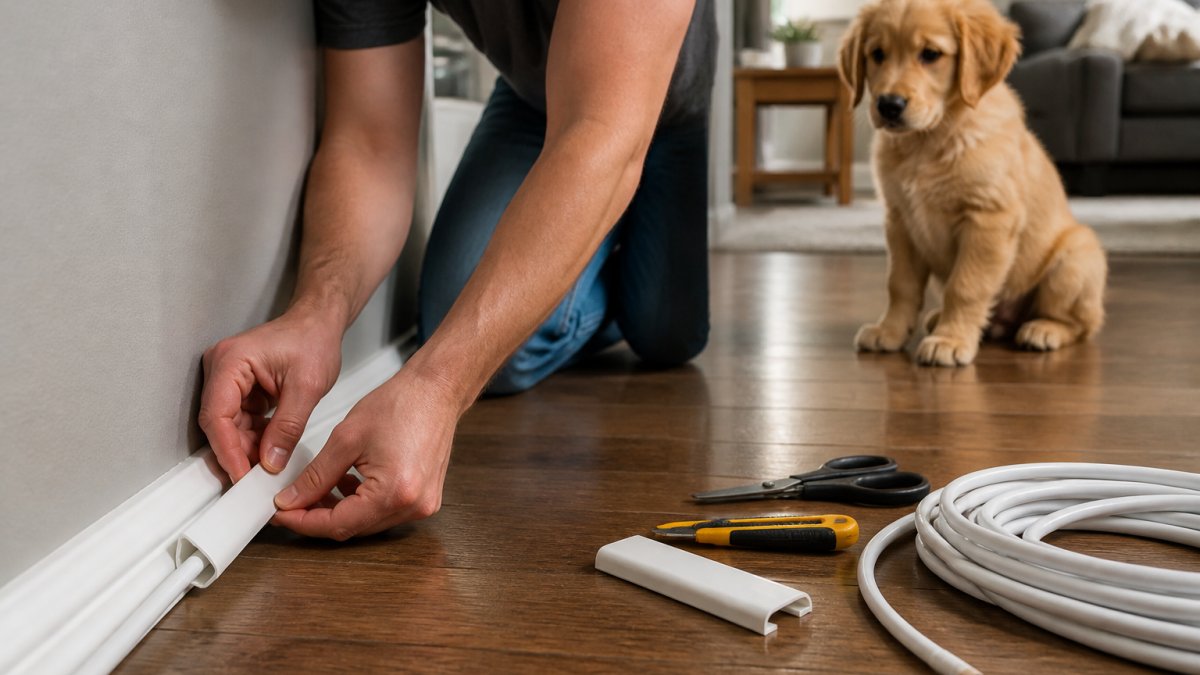
Cord covers are cheap and take minutes to fit. Do this step before your puppy finds the cables on their own.
Step 4: Protect Furniture, Baseboards, Walls, and Rugs
Furniture, baseboards, walls, and rugs take the most damage during teething. The fix is not to ban the puppy from the room. It is to protect the room and redirect the chewing. This is where a living-room guide can go further than a general home checklist: the fixed features in this room, sofa legs, skirting boards, rug edges, curtain hems, are the ones a puppy returns to day after day.
Start with the easy wins:
- Move rugs or use a non-slip pad so corners stay flat and do not flap like a tug toy.
- Fit corner guards on sharp table edges and hearth corners.
- Block access behind furniture where cords and dust collect.
Protecting Fixed Features: Baseboards, Walls, and Door Frames
Baseboards, wall corners, and door frames are prime targets because they sit at puppy mouth height and feel good to gnaw. A few practical defenses:
- Physical barriers. A freestanding playpen panel or a low gate held against the wall keeps a puppy away from a favorite baseboard run while you supervise. This is temporary, not permanent, move it as the puppy's habits change.
- Taste deterrents. Bitter-apple sprays sold for furniture and woodwork are a common first line. Test on an inconspicuous spot first, and reapply after cleaning because the taste fades.
- Chew-friendly coverings. Some owners wrap exposed furniture legs in fleece or buy slip-on leg covers; these absorb saliva and remove the bare-wood texture that invites chewing.
Protecting the Sofa and Upholstery
A sofa is the single most expensive chew target in most living rooms. Practical steps:
- Keep throws or a washable slipcover over the seat and arms during the teething months.
- Block the gap under the sofa with a rolled blanket or foam pool noodle so toys and treats do not roll underneath and lure the puppy into chewing the frame.
- Do not leave remotes, phones, or snack bowls on cushions, a puppy will climb for them.
Rugs and Floors
- Flatten rug corners with double-sided rug tape or a non-slip pad; a curled corner is an invitation to chew and trip.
- Pick up area rugs entirely during the worst teething weeks if your puppy fixates on them.
- Wipe up accidents promptly with an enzymatic cleaner, residual odor tells a puppy the spot is a bathroom.
How to Stop Dog Furniture Chewing
Stopping furniture chewing comes down to three things: supervision, redirection, and satisfying the urge to chew. Puppies chew because they are teething, bored, or anxious, not because they are being naughty.
A common mistake is scolding the puppy after the fact. They cannot connect punishment to something they did ten minutes ago.
Tough Chew Rubber Toy for Aggressive Chewers →
For a deeper plan, our guide on how to stop dog furniture chewing walks through the full routine, from supervision to safe chews.
Step 5: Use Dog Gates and a Puppy Playpen for Living Room Containment
Dog gates and a puppy playpen for living room containment let you control where your puppy roams. That means fewer hazards in reach and less damage while you are busy.
Use gates to block:
- Staircases, which are a fall risk for small puppies
- Kitchens and other off-limits areas
- Doorways during meals or cleaning
A playpen gives your puppy a safe area with their bed, water, and a couple of chew toys. It also helps with potty training, because you can watch for signs and take them out fast.
Adding a lick plate to the pen gives your puppy something to do while contained. Our enrichment licking plate for dogs sticks to smooth surfaces and keeps a puppy mentally busy instead of chewing the pen frame.

Step 6: Stock Up on the Best Chew Toys for Puppies
The best chew toys for puppies do one job well: they give a teething puppy a safe outlet so furniture and cords lose their appeal.
Look for:
- Tough rubber toys for strong chewers
- Hollow toys you can stuff with treats
- Toys sized for your puppy's mouth, not too small
Our tough chew rubber toy for aggressive chewers is built from durable non-toxic rubber and has a hollow center you can fill with treats or peanut butter.

Before you buy, read our guide to durable toys for aggressive dog chewers and our advice on how to choose safe dog toys.
Step 7: Run a Repeatable Puppy-Proofing Checklist Every Week
A weekly puppy-proofing checklist keeps the room safe as your puppy grows and learns new tricks. Puppies get taller, jump higher, and reach further every month, so a room that was safe in week one may not be safe in week eight. The unique angle here is treating the living room like a small inspection zone: a quick daily reset, a fuller weekly recheck, and a monthly adjustment as your puppy's reach and chewing change.
The Daily Two-Minute Reset
Do this every evening, ideally after the puppy is settled:
- Scan the floor and under furniture for small objects, food, and trash
- Pick up remotes, phones, and chargers left on cushions or tables
- Confirm the trash can lid is closed
The Weekly Recheck
Once a week, spend five minutes on the items that do not change day to day:
- Check cords and cord covers are intact and still tucked behind furniture
- Confirm cleaners and medications are locked away and out of reach
- Check gates and playpen latches hold and have not been nudged loose
The Monthly Adjustment
Every month, ask three questions and change the setup accordingly:
- Has the puppy grown? A barrier that stopped a small puppy may be jumpable now. Raise or replace gates and move tempting items higher.
- Is the puppy still teething? Teething typically eases as adult teeth come in, but persistent chewing can be boredom or anxiety. Rotate in new chew toys and add enrichment.
- Has a new hazard appeared? New furniture, a new houseplant, or a new charging cable all reset the risk. Walk the room from floor level again.
Five minutes a week is enough. If a room cannot be fully puppy-proofed, close the door and keep the puppy out when you cannot supervise. Supervision and containment are always safer than a room full of temptation.
For the wider home, our safe dog toys guide and the ASPCA's pet care and poison safety resources round out the basics. A Humane Society guide to puppy care is also a helpful reference for new pet parents.
| Problem | Fix | How Often |
|---|---|---|
| Small objects on floor | Tidy up and store out of reach | Daily |
| Exposed cords | Fit cord covers, tape down | Once, then check weekly |
| Cleaners and meds | Lock in high cabinets | Once, then check weekly |
| Furniture chewing | Redirect to chew toys | Every session |
| Open staircases | Fit a dog gate | Once, then check latches |
| Fresh chew marks | Inspect and adjust barriers | Monthly |
Frequently Asked Questions
How do I puppy proof my living room without spending a lot of money?
Most of the work is free: get on the floor, pick up small objects, move cleaners and medications to upper cabinets, and tuck cords behind furniture. The purchases that matter are cord covers, a dog gate, and a few durable chew toys. A tough chew rubber toy at $25.99 or an enrichment licking plate at $21.28 costs less than replacing a chewed couch cushion. Start with the free steps first, then buy only what your specific living room actually needs.
How do I stop my puppy from chewing furniture in the living room?
Redirect, don't just scold. Keep a durable chew toy within arm's reach in every corner of the room so you can swap it for the chair leg the moment your puppy starts nibbling. Block access to furniture legs with a playpen or gate when you can't supervise. Puppies chew because of teething and boredom, so an enrichment licking plate loaded with peanut butter gives them a calmer outlet. Consistent redirection for two to three weeks usually breaks the habit.
Can I leave a puppy alone in a puppy-proofed living room?
Only inside a contained area, not loose in the whole room. Use a puppy playpen or a gated section with water, a bed, and safe chew toys. Puppies under six months should not have free run of a living room unsupervised, because they can find hazards you missed. Keep sessions short at first, 15 to 30 minutes, and check the space before each one. A pee pad in the contained area protects your floor during training.
What household items are most dangerous for puppies in a living room?
The biggest risks are electrical cords, remote controls and batteries, prescription medications, cleaning sprays, chocolate and gum, small toys, and loose change. Anything a puppy can swallow or chew through belongs out of reach. Secure cords with covers, move medications to a closed upper cabinet, and check under couch cushions weekly. If you suspect your puppy swallowed something toxic, call your veterinarian or a pet poison hotline immediately rather than waiting for symptoms.

