

Durable Toys for Aggressive Dog Chewers: A 2026 Guide
Table of Contents
- Understanding Aggressive Chewing and Why Toy Selection Matters
- Durable Toys for Aggressive Dog Chewers: Material Comparison & Durability Ratings
- Safe Materials for Dog Chew Toys: What to Look For and What to Avoid
- How to Choose a Durable Dog Toy for Your Chewer's Bite Force
- Dog Enrichment Toys for Aggressive Chewers: Beyond Simple Durability
- Maintenance, Wear Detection, and Replacement Protocols
- Supervised Play Guidelines and Preventing Destructive Behavior
- Frequently Asked Questions
Last Updated: September 3, 2026
Understanding Aggressive Chewing and Why Toy Selection Matters
Aggressive chewing is a dog's natural way of exploring, relieving stress, and maintaining dental health. When your dog's jaw strength threatens your furniture, durable toys engineered to withstand serious bite force, resist puncture and tearing, and remain safe for months become essential.
At Furbabies4less, we understand the frustration of dog owners whose pups destroy toys quickly. The solution is choosing materials and construction that withstand power chewers. The right durable toy becomes an investment in your dog's mental health and your home's survival.
This guide helps you select durable toys based on your dog's bite force, chewing style, and specific needs.
Durable Toys for Aggressive Dog Chewers: Material Comparison & Durability Ratings
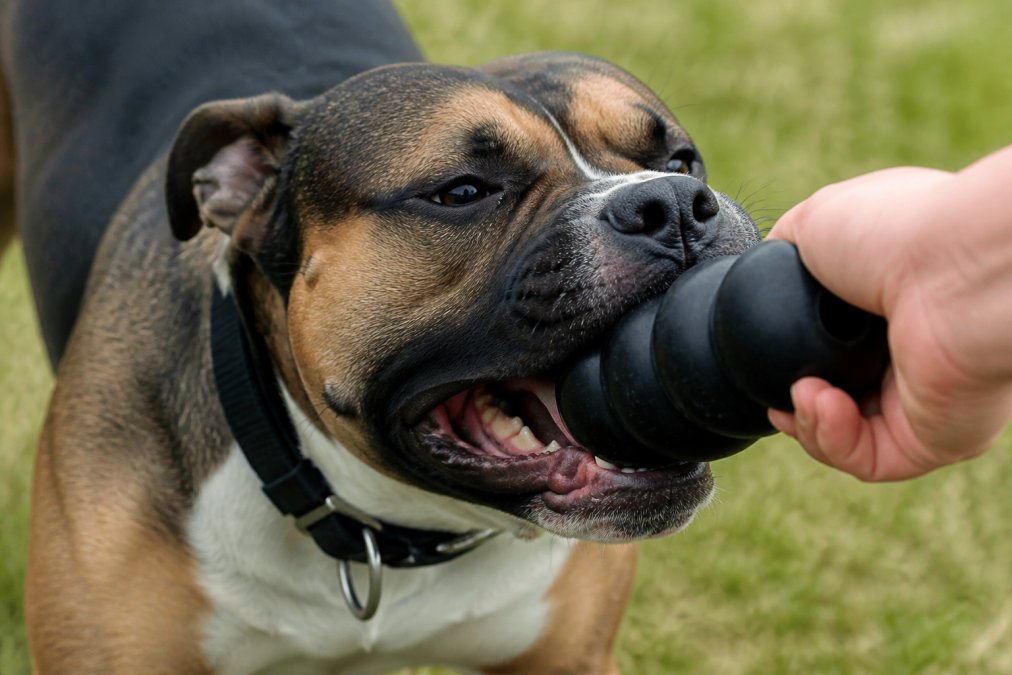
The three most reliable options for power chewers are natural rubber, nylon, and rope, each with distinct durability profiles, safety considerations, and ideal use cases.
| Material | Durability Rating | Best For | Lifespan | Safety Concerns |
|---|---|---|---|---|
| Natural Rubber | 9/10 | Extreme power chewers | 6-12 months | Rare choking risk if pieces detach |
| Nylon | 7/10 | Heavy chewers | 3-6 months | Can splinter; monitor for ingestion |
| Rope | 5/10 | Moderate chewers | 1-3 months | High choking risk; requires supervision |
Rubber Chew Toys: Heavy-Duty Construction for Power Chewers
Rubber toys designed for aggressive chewers are built from non-toxic, food-grade natural rubber that bounces back under pressure instead of cracking. The Tough Chew Rubber Toy for Aggressive Chewers from Furbabies4less exemplifies this construction.

Rubber resists puncture and tear, deforming under pressure and returning to its original shape. The textured surface promotes dental health by massaging gums and reducing plaque buildup. Hollow center designs allow you to fill the toy with treats for extended engagement.
Rubber toys work best for dogs that chew intensely but don't thrash. They're ideal for solo chewing sessions and typically last 6-12 months with daily use.
Nylon Chew Toys: Toughness Ratings and Safety Considerations
Nylon toys offer a middle ground between rubber and rope but carry a higher risk of splintering under extreme bite force. They work well for heavy chewers without the most powerful jaws.
Nylon can fragment into sharp shards that pose choking or intestinal blockage risks (aaha.org). Nylon toys require supervised play and regular inspection for cracks, splits, or deterioration.
Nylon's advantage is cost and the variety of shapes available. Nylon toys typically last 3-6 months under aggressive chewing. They're best for dogs whose owners can commit to close supervision and frequent wear checks.
Rope Toys: When They Work and When to Avoid Them
Rope is the least durable option for aggressive chewers and carries the highest choking risk, as fibers separate easily and can tangle in the throat or intestines.
Rope toys are suitable only for moderate chewers under constant supervision and should never be left with aggressive chewers. Many veterinarians recommend avoiding rope toys for dogs with strong bite force or a history of eating non-food objects.
Safe Materials for Dog Chew Toys: What to Look For and What to Avoid
Look for toys made from non-toxic, BPA-free rubber or nylon that won't leach chemicals. Check product descriptions for certifications confirming the material is pet-safe.
Avoid PVC toys with harmful plasticizers, small detachable parts, or dyes that bleed. Rope toys should have tightly woven fibers that resist fraying.
The safest toys are designed specifically for aggressive chewers, tested for durability, and made from materials that won't splinter. Furbabies4less curates products chosen for safety and longevity.
How to Choose a Durable Dog Toy for Your Chewer's Bite Force
Match toy durability to your dog's bite force and chewing style. Use this framework to identify your dog's chewing profile and select materials accordingly.
Identify Your Dog's Chewing Style: Gnawer, Shredder, or Tugger
Dogs chew in distinctly different ways, and each style demands different material properties:
Gnawers apply steady, focused pressure to one spot, compressing and slowly wearing through material. They benefit from textured rubber toys that deform and return to shape without splintering.
Shredders pull, tear, and separate material into pieces, posing the highest ingestion risk. They require natural rubber only; nylon and rope fragment into swallowable pieces. If your dog has a history of eating non-food objects, use rubber-only toys under supervision.
Tuggers grab and shake toys violently. They need reinforced seams and materials that won't fray. Rope toys are dangerous for tuggers; solid rubber or heavily stitched nylon are better choices.
Observe a 10-minute chewing session to identify your dog's style: Does it focus on one area and compress (gnawer)? Pull and tear (shredder)? Grab and shake violently (tugger)? Most dogs exhibit a primary style with secondary behaviors.
Breed and Jaw Strength Profiles
Breed and size are reliable predictors of bite force and jaw anatomy, which directly impact toy selection:
Extra-Large Power Breeds (Mastiffs, Great Danes, Rottweilers, Pit Bulls, German Shepherds, Boxers) have bite forces of 200-330 PSI and need rubber toys rated 9-10 (peer-reviewed research). Avoid nylon and rope. Budget for frequent replacement and keep multiple toys on rotation.
Large Active Breeds (Labrador Retrievers, Golden Retrievers, Siberian Huskies, Weimaraners) have bite forces of 120-200 PSI (peer-reviewed research). They do well with high-durability rubber (8-9 rating) or supervised nylon. Remove rope toys if fraying begins.
Medium Breeds (Beagles, Cocker Spaniels, Australian Shepherds) have bite forces of 90-120 PSI and can handle mid-range rubber (7-8 rating) or supervised nylon. Never leave rope toys unattended.
Small Breeds (Terriers, Dachshunds, Chihuahuas) have lower bite force but often intense chewing drives. Match durability to observed chewing behavior rather than size alone.
Age and Chewing Intensity Progression
Young dogs (under 2 years) are typically more intense chewers. Start with the highest durability rating (9-10 rubber) for young large-breed dogs. As dogs mature (after 2-3 years), chewing intensity often decreases.
Senior dogs (over 7 years) may have worn teeth or dental disease, making softer rubber or enrichment toys like lick mats more appropriate.
Honest Assessment: The Destruction History Test
If your dog has destroyed three or more toys in six months or required toy removal within two weeks, your dog is an extreme chewer. Extreme chewers need rubber toys rated 9-10 and should not have access to nylon or rope without direct supervision.
If your dog has the same toy for six months with only minor wear, your dog is a moderate chewer and can safely use a wider range of materials.
Dog Enrichment Toys for Aggressive Chewers: Beyond Simple Durability
Durable toys serve two purposes: they satisfy the chewing instinct and provide mental enrichment.
The Enrichment Licking Plate for Dogs from Furbabies4less is a durable silicone toy that doubles as a slow feeder. Spreading wet food, peanut butter, or yogurt across the textured surface transforms it into a mental puzzle that keeps your dog engaged and naturally calms anxious dogs.

Interactive Lick Ball toys require dogs to rotate and manipulate the toy to access treats, reducing boredom-driven destructive behavior while providing durability.
Maintenance, Wear Detection, and Replacement Protocols
Even durable toys eventually show wear. Establish a regular inspection routine, weekly for aggressive chewers, bi-weekly for moderate chewers, to decide whether to clean and reuse or discard.
Damage Pattern Guide: When to Replace vs. When to Clean
Safe to Continue (Clean and Reuse):
- Surface scratches, scuffs, or minor discoloration
- Slight flattening or compression of textured areas
- Small dents that spring back when pressure is released
Replace Immediately (Do Not Reuse):
- Micro-tears or punctures: Any visible crack, split, or hole expands rapidly under chewing and creates sharp edges.
- Chunks or pieces missing: Material loss indicates structural failure.
- Seam separation: Loose stitching or splitting seams compromise integrity and create choking hazards.
- Fraying or fiber separation: Loose fibers are easily swallowed and can cause intestinal blockage.
- Discoloration with texture change: Material degrading chemically increases fragmentation risk.
- Visible mold or mildew: Discard immediately.
- Odor changes: Chemical, sour, or decay smells indicate material breakdown or bacterial growth.
Inspection Checklist: Weekly for Aggressive Chewers
Perform this inspection at least once per week:
-
Visual scan: Hold the toy up to light and look for cracks, holes, or compromised surfaces. Feel for rough edges, splinters, or separating material.
-
Flex test: Gently flex the toy. Does it return to its original shape, or stay deformed? Permanent deformation suggests material fatigue.
-
Seam check: Examine seams, stitching, and glued areas for loose threads, gaps, or separating layers.
-
Mouth and stool check: After each session, look inside your dog's mouth for fragments. Check stool for toy material. If you see fragments, replace the toy immediately.
-
Odor and mold check: Smell the toy and look for mold or mildew. Dry wet toys completely within 24 hours.
Replacement Frequency by Material and Use Intensity
Rubber toys with daily aggressive chewing: Replace every 6-12 months. Extreme chewers may need replacement every 3-6 months.
Nylon toys with daily heavy chewing: Replace every 3-6 months. If your dog is a shredder, replace at the first sign of micro-tears.
Rope toys: These should be replaced every 1-3 months with any chewing, or immediately upon first signs of fraying. Rope toys are the least durable option and carry the highest choking risk, so err on the side of caution.
Enrichment toys (lick mats, treat-dispensing toys): These typically last 12+ months. Replace only when material shows cracks, permanent deformation, or mold.
Cleaning and Storage to Extend Toy Lifespan
Proper cleaning extends toy life and prevents bacterial growth:
-
After each use: Rinse with warm water to remove saliva and debris.
-
Weekly deep clean: Wash with warm soapy water or run through a dishwasher on low heat if the manufacturer allows it. Avoid bleach or harsh chemicals.
-
Dry completely: Air-dry toys thoroughly before returning them to your dog.
-
Storage: Store toys in a cool, dry place away from direct sunlight.
-
Rotation: Keep 3-5 toys on rotation to reduce daily wear and maintain novelty.
When to Discard Without Hesitation
Do not attempt to repair or continue using a toy if your dog has ingested pieces, it has been in use for more than 12 months daily, your dog shows distress when chewing it, or you have any doubt about its safety. When in doubt, replace it.
Supervised Play Guidelines and Preventing Destructive Behavior
Supervised play is essential with toys for aggressive chewers, especially during initial sessions. Watch for excessive aggression, violent shaking, attempts to tear the toy apart, or frustration. If your dog becomes overly fixated or aggressive, remove the toy and redirect.
Start with 15-30 minute supervised sessions. As you confirm the toy's durability and your dog's safe interaction, extend unsupervised time.
Rotate toys regularly to maintain novelty and prevent overuse of any single toy.
Destructive chewing often signals boredom, anxiety, or excess energy. Combine durable toys with adequate exercise and mental enrichment.
Choosing durable toys for aggressive dog chewers means investing in materials that truly withstand serious bite force, not just marketing claims. At Furbabies4less, we select products like the Tough Chew Rubber Toy for Aggressive Chewers because they combine proven durability with safety features that protect your dog during months of heavy use. When you add enrichment toys like our Enrichment Licking Plate or Interactive Lick Ball, you're addressing both the physical need to chew and the mental need for engagement. Every purchase from Furbabies4less also supports animal rescues, so your choice to invest in quality enrichment directly helps rescue dogs find their forever homes. Shop our curated collection of durable, vet-informed pet supplies today and give your aggressive chewer the toy that finally fights back.

Frequently Asked Questions
What is the toughest durable toy for aggressive dog chewers?
Rubber chew toys built from ultra-durable, non-toxic rubber are the toughest option for aggressive chewers. Unlike softer materials, heavy-duty rubber resists puncturing and tearing even under extreme bite force. The Tough Chew Rubber Toy for Aggressive Chewers ($25.99) features hollow construction that lets you fill it with treats, keeping dogs engaged longer while the textured surface promotes dental health. Rubber toys bounce back from aggressive chewing without cracking, making them ideal for power chewers that destroy soft toys in minutes.
How do I know if a dog toy is safe for my aggressive chewer?
Look for toys made from non-toxic, BPA-free materials. Safe materials include natural rubber, food-grade silicone, and durable nylon designed specifically for heavy chewers. Avoid toys with small parts that can detach, foam that tears easily, or materials that splinter. Check for tear-resistant construction and seams that hold under pressure. Reputable brands like Furbabies4less test products for safety standards and durability before offering them. Always supervise play, especially with new toys, and inspect regularly for signs of wear.
Are nylon toys safe for aggressive chewers?
Nylon toys can be safe for aggressive chewers when they're specifically engineered for heavy-duty use and made from durable, non-toxic nylon. Standard nylon toys may splinter or break into small pieces that pose choking hazards. Heavy-duty nylon chew toys have higher toughness ratings and are designed to withstand powerful jaw force. However, rubber toys generally outlast nylon for the most aggressive chewers. Always choose nylon toys labeled for aggressive chewers, supervise play, and inspect frequently for signs of deterioration or small fragments.
How often should I replace durable dog toys for an aggressive chewer?
Replace toys when you notice visible wear, punctures, tears, or pieces missing. High-quality rubber toys for aggressive chewers typically last 6-12 months of regular play, depending on chew intensity. Check toys weekly for damage, loose seams, or material breakdown. If your dog can tear chunks off a toy, remove it immediately to prevent choking. Rotating multiple toys extends the life of each one and keeps your dog mentally engaged. Quality matters: investing in heavy-duty toys from trusted brands like Furbabies4less reduces replacement frequency and keeps your dog safer.
This article was written using GrandRanker
