

How to Choose Safe Dog Toys: A 2026 Guide
Table of Contents
- Why Choosing Safe Dog Toys Matters
- Material Safety and Toxicity Standards
- Durable Dog Toys for Aggressive Chewers
- Dog Toy Safety Hazards to Avoid
- Vet-Recommended Puppy Chew Toys
- Size, Breed, and Age Considerations
- Toy Rotation and Maintenance Strategies
- Frequently Asked Questions
Last Updated: September 28, 2026
Why Choosing Safe Dog Toys Matters
Pet parents often assume all dog toys meet the same safety standards. They don't. The difference between a safe toy and a hazardous one can mean the difference between a happy pup and an emergency vet visit. Choosing safe dog toys requires understanding what materials won't poison your dog, what sizes won't lodge in their throat, and what construction won't fall apart into choking hazards during play.
Your dog's safety depends on your choices. A toy that seems fine one day might shed pieces the next. A squeaker that entertains today could become a suffocation risk tomorrow. Pet parents deserve clear guidance on how to evaluate toys before bringing them home, especially when caring for a rescue dog with anxiety or a teething puppy.
This guide covers material safety, durability standards, hazard recognition, and maintenance strategies that keep your dog protected through every play session.
Material Safety and Toxicity Standards
The materials in your dog's toy matter far more than the brand name. Non-toxic materials are foundational, but "non-toxic" only means the material won't poison your dog in small amounts. The real concern is whether the toy sheds, breaks down, or releases particles during chewing.
Look for toys made from natural rubber, BPA-free plastics, or certified non-toxic materials. Natural rubber toys are inherently safer because they biodegrade if swallowed. When evaluating a toy, check whether the manufacturer has tested the materials for toxicity and can provide documentation.
Stuffed toys present a unique challenge. The outer fabric might be safe, but the stuffing, squeaker, and seams are where problems hide. Stuffing can cause intestinal blockages, squeakers can lodge in the throat, and poorly sewn seams unravel quickly for aggressive chewers. If you choose a plush toy, inspect it weekly for loose threads, tears, and stuffing exposure. Many rescue dogs with anxiety do better with stuffing-free alternatives.
According to the American Veterinary Medical Association's pet safety guidelines, toys should be inspected regularly for wear and replaced when they show signs of deterioration. A toy that passes the safety test on day one might fail by week two if your dog is an aggressive chewer.
Durable Dog Toys for Aggressive Chewers
Aggressive chewers destroy standard toys in minutes. The solution isn't to keep buying cheap toys, but to invest in toys engineered specifically for destructive chewing.
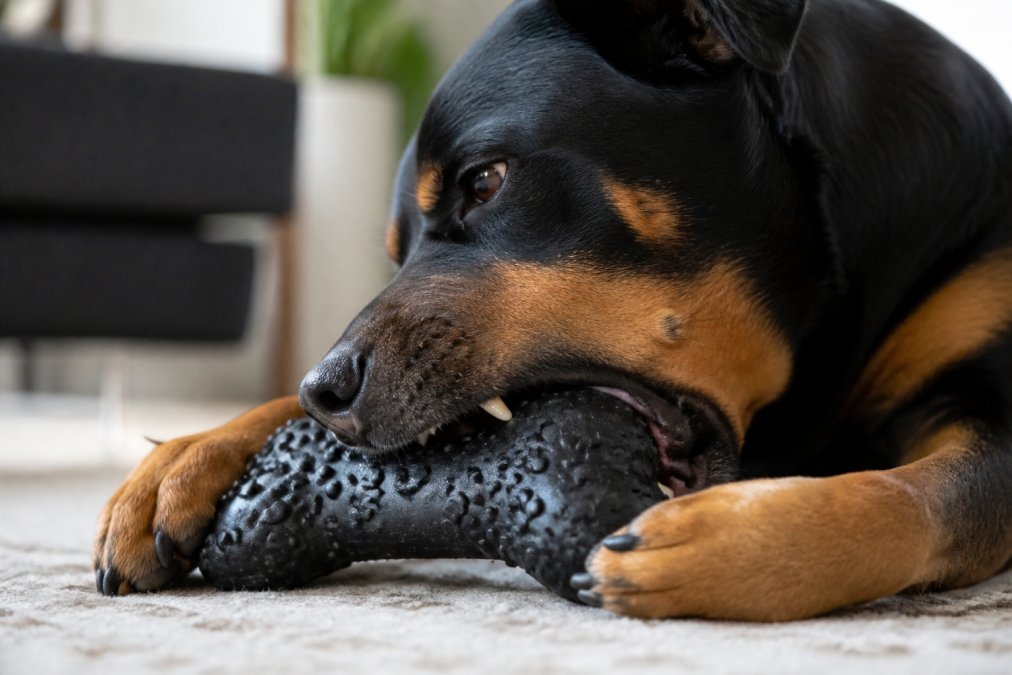
Durable dog toys for aggressive chewers must have three characteristics: heavy-duty rubber construction that doesn't crack under pressure, no small parts that can break off, and a design that interests your dog. Textured surfaces satisfy the chewing instinct while promoting dental health by cleaning teeth and massaging gums.
The Tough Chew Rubber Toy from Furbabies4less is made from ultra-durable non-toxic rubber designed to withstand the strongest chewers. The hollow center lets you fill it with treats or peanut butter, extending engagement time and redirecting destructive energy. At $25.99, it reduces anxiety-driven destruction.

Test durability by applying hand pressure before giving the toy to your dog. If you can puncture, crack, or bend it, your aggressive chewer will destroy it within hours. A truly durable toy should feel nearly indestructible to human hands.
Rotation matters for aggressive chewers. Giving your dog the same toy every day leads to obsessive chewing and faster wear. Rotate between two or three durable toys, removing each one after 20-30 minutes of intense chewing to extend toy life and prevent compulsive behavior.
Dog Toy Safety Hazards to Avoid
Understanding what makes a toy unsafe is as important as knowing what makes it safe. Certain hazards appear in toys across price ranges, even premium brands.
Tough Chew Rubber Toy for Aggressive →
Choking hazards are the most obvious danger. Any toy with detachable parts, squeakers, bells, plastic eyes, or small attachments poses a choking risk. Test every attachment by pulling on it with your hands. If it comes loose, remove it before giving the toy to your dog.
Toxic dyes and coatings can leach into your dog's mouth during chewing. Cheap toys sometimes use non-food-grade paints or dyes that aren't tested for safety. Stick with toys that use natural or certified safe dyes, or choose toys without artificial coloring.
String and rope toys seem safe until your dog swallows the fibers.
Vet-Recommended Puppy Chew Toys
Puppies have different needs than adult dogs. Their teeth are erupting, their jaws are weaker, and their impulse control is nearly nonexistent. A toy safe for an adult dog might be too hard for a teething puppy or too fragile for unpredictable chewing.
Size, Breed, and Age Considerations
A toy that's perfect for a Chihuahua is a choking hazard for a Great Dane. Size matching isn't optional, it's critical for safety. The toy should be large enough that your dog can't fit it entirely in their mouth, but not so large that it's impossible for them to hold or carry.
| Dog Size | Toy Size Range | Best Materials | Toys to Avoid |
|---|---|---|---|
| Small (under 20 lbs) | Tennis ball to softball | Natural rubber, soft plush | Hard nylon, toys with small parts |
| Medium (20-60 lbs) | Softball to grapefruit | Natural rubber, durable plastic | Rope toys, toys with squeakers |
| Large (over 60 lbs) | Grapefruit to cantaloupe | Heavy-duty rubber, nylon | Soft plush, toys that break easily |
| Senior (7+ years) | Medium-sized, soft | Soft rubber, plush | Hard toys, toys requiring aggressive chewing |
Toy Rotation and Maintenance Strategies
A single toy, no matter how well-designed, becomes boring and can encourage obsessive chewing behavior. Toy rotation keeps play fresh, extends toy life, and reduces anxiety-driven destruction. Maintain a collection of 4-6 toys and rotate them weekly.
Frequently Asked Questions
What are the safest toys for dogs to play with?
The safest dog toys are made from non-toxic materials like natural rubber or BPA-free nylon, have no small parts that pose a choking hazard, and are appropriately sized for your dog's breed. Look for toys that are machine washable, have no squeakers that can be removed, and bear veterinary approval. Toys like the Tough Chew Rubber Toy for Aggressive Chewers are engineered with ultra-durable non-toxic rubber and designed specifically to prevent ingestion risks while promoting dental health.
What types of toys should be avoided for dogs?
Avoid toys with small removable parts like plastic eyes, buttons, or squeakers that dogs can swallow and cause choking hazards. Skip toys made from toxic materials, toys with loose stuffing that can be ingested, and overly soft plush toys for aggressive chewers. Also avoid toys with sharp edges, toys that splinter easily, and anything containing lead or harmful chemicals. Never give your dog toys designed for children, as they often lack pet safety standards.
How do I know if a dog toy is the right size for my pet?
Choose toys larger than your dog's mouth so they cannot be swallowed whole. For small breeds, select toys no smaller than a ping-pong ball; for medium dogs, opt for toys at least tennis ball-sized; for large breeds, go significantly larger. The toy should be easy for your dog to carry but impossible to fit entirely in their mouth. When in doubt, size up rather than down to minimize ingestion risk and ensure safe, comfortable play.
Are rubber or plush toys safer for aggressive chewers?
Rubber toys are significantly safer for aggressive chewers. Natural rubber and BPA-free nylon withstand intense chewing without breaking apart or splintering, eliminating ingestion risks. Plush toys are not recommended for aggressive chewers because they tear easily, releasing stuffing that can cause intestinal blockages. Durable rubber toys like the Tough Chew Rubber Toy for Aggressive Chewers are engineered to bounce back under strong bite force while promoting dental health through their textured surface.
What materials should I avoid when buying dog toys?
Avoid toys containing PVC, phthalates, BPA, or lead, which are toxic if ingested. Skip toys with dyes that bleed or fade, as this indicates poor material quality and potential toxicity. Avoid toys made from thin plastic, easily splinterable wood, or materials that break into sharp fragments. Do not purchase toys with glued-on parts that can separate, toys treated with harmful chemicals, or anything not certified by pet safety standards. Always check product listings for non-toxic material certifications.
What toys do vets recommend for dogs?
Veterinarians typically recommend toys made from non-toxic rubber or nylon that promote dental health and satisfy natural chewing instincts without posing ingestion risks. Interactive toys that provide mental stimulation help reduce anxiety and destructive behavior. Puzzle feeders and treat-dispensing toys encourage problem-solving. Vet-recommended options include durable chew toys for aggressive chewers, interactive ball toys for active dogs, and treat launchers for training and enrichment. Always consult your vet about toys suited to your dog's specific age, size, and chewing habits.
How often should I replace my dog's toys?
Inspect toys weekly for signs of wear and tear, including cracks, loose pieces, or material degradation. Replace toys immediately if they show damage or pose a choking hazard. Most toys last 3-6 months with regular supervised play, though durable rubber toys often last longer. Rotate toys every 1-2 weeks to maintain interest and prevent overuse of any single toy. Puppies may wear through toys faster during teething, so check frequently and replace as needed to ensure ongoing safety.
