

How to Stop Dog Furniture Chewing for Good
Table of Contents
- Why Dogs Chew Furniture: Root Causes First
- Signs of Boredom in Dogs You Might Be Missing
- How to Stop Puppy Teething Chewing on Furniture
- Step-by-Step: How to Stop Dog Furniture Chewing
- Why Taste Deterrents Fail (and How to Fix That)
- Best Enrichment Toys for Heavy Chewers
- Addressing Separation Anxiety and Destructive Chewing
- Frequently Asked Questions
Last Updated: August 31, 2026
Why Dogs Chew Furniture: Root Causes First
Dog furniture chewing is frustrating, but it's almost always fixable once you understand what's driving it. Most guides skip straight to "buy a bitter spray" without asking the more important question first: why is your dog chewing?
Chewing is a natural, instinctive behavior for dogs. It relieves stress, exercises jaw muscles, and provides sensory stimulation. The problem isn't that your dog chews, it's that your furniture is the most available target.
Boredom vs. Anxiety: Two Very Different Problems
This distinction matters because the fix for each is almost completely opposite.
Boredom chewing happens when a dog has excess energy and nothing appropriate to direct it toward. It tends to occur during moderate absences and is often exploratory and inconsistent. Bored dogs are generally happy dogs who just need more to do.
Anxiety-driven chewing is different. Dogs with separation anxiety chew compulsively, often targeting items that carry your scent. The behavior escalates, happens within minutes of you leaving, and is usually accompanied by pacing, whining, or house-soiling. Applying a taste deterrent to an anxious dog often just redirects the chewing to the next surface.
Misreading boredom as anxiety leads to over-medicating a dog who just needs a longer walk. Misreading anxiety as boredom leads to more exercise that doesn't solve the underlying panic response.
When Dog Furniture Chewing Is a Medical Signal
A dog who suddenly starts chewing furniture after years of good behavior deserves a veterinary check before you assume it's behavioral. Dental pain, gastrointestinal discomfort, and thyroid imbalances can all trigger compulsive chewing. According to the American Veterinary Medical Association's guidance on behavioral changes, sudden behavioral shifts in adult dogs often have an underlying physical component worth ruling out first.
If your dog is also scooting, dripping saliva, or pawing at their mouth alongside the furniture chewing, schedule a vet visit before investing in training solutions.
Signs of Boredom in Dogs You Might Be Missing
Most owners recognize obvious boredom: staring, whining, and zoomies. But subtler signs often go unnoticed until something gets destroyed.
Watch for these patterns:
- Chewing in predictable windows (right after you leave, mid-afternoon)
- Chewing focused on hard objects like table legs rather than soft items
- Destructive behavior during the day but calm when you're home
- Excessive pawing, digging at carpets, or rearranging bedding
- Pestering behavior: nudging, dropping toys repeatedly, barking at nothing
Boredom in dogs isn't just about physical activity. A dog who runs five miles a day can still be mentally under-stimulated. Scent work, puzzle feeders, and training sessions engage the brain in ways a walk doesn't. Mental stimulation and physical exercise serve different needs.
How to Stop Puppy Teething Chewing on Furniture
Puppy teething chewing is biologically driven and impossible to eliminate entirely. The goal is to redirect it to appropriate surfaces while protecting your furniture during the developmental window.
Puppies begin teething around three to four months of age, and the process continues until around six to seven months. During this period, chewing relieves the discomfort of emerging teeth and is completely normal. The mistake many new owners make is punishing teething behavior rather than managing it.
Age-Specific Protocols: Puppies vs. Adult Dogs
The approach to dog furniture chewing changes significantly depending on your dog's life stage.
Puppies (8 weeks to 7 months):
- Focus on management over correction. Puppies cannot reliably control impulses, so preventing access to furniture is more effective than training alone.
- Provide chilled or frozen chew toys specifically designed for teething relief.
- Rotate toys frequently. Novelty matters more for puppies than for adult dogs.
- Expect the behavior to decrease naturally as adult teeth come in.
Adult dogs (1 year and older):
- Destructive chewing in adult dogs is almost always behavioral, not developmental.
- Training and enrichment carry more weight than management alone.
- Consistency in redirection is critical.
Senior dogs (7+ years):
- Sudden chewing in older dogs warrants a vet visit first.
- Cognitive changes in aging dogs can cause anxiety-driven behaviors that weren't present earlier.
| Life Stage | Primary Cause | Best Approach | Key Tool |
|---|---|---|---|
| Puppy (8 wk - 7 mo) | Teething discomfort | Management + redirection | Chilled chew toys |
| Adolescent (7 mo - 2 yr) | Boredom + energy | Exercise + enrichment | Puzzle feeders, tug toys |
| Adult (2 - 7 yr) | Boredom or anxiety | Training + root cause fix | Enrichment + deterrents |
| Senior (7+ yr) | Anxiety or medical | Vet check first | Comfort items, low-stress env. |
Step-by-Step: How to Stop Dog Furniture Chewing
Stopping dog furniture chewing requires a layered approach. No single tactic works in isolation.
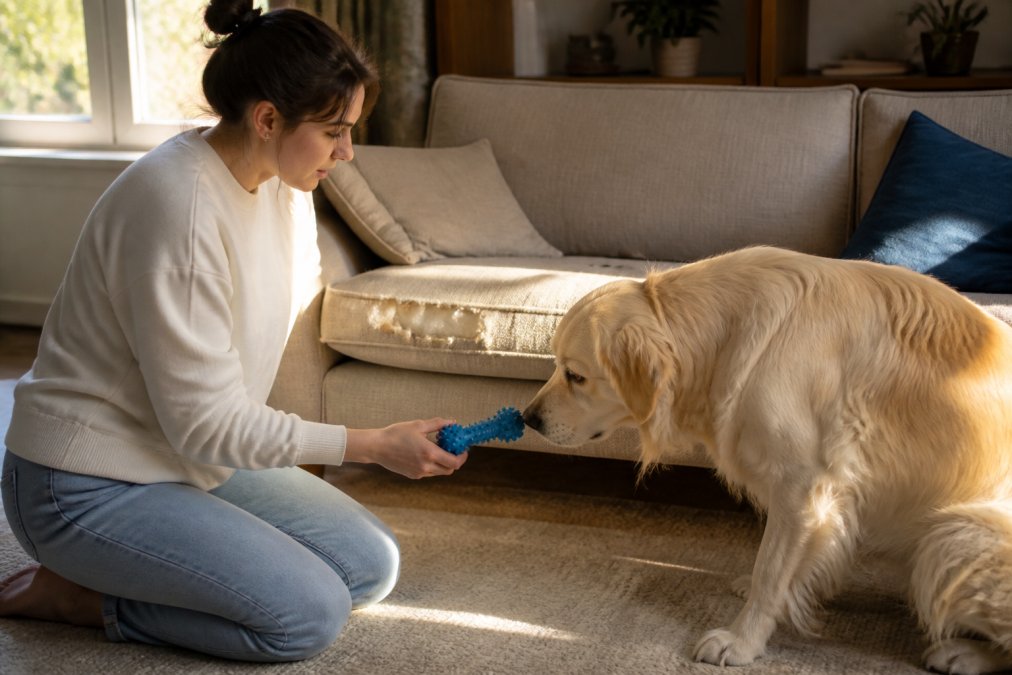
A dog owner kneels calmly on a living room floor, gently guiding their dog away from a chewed couch cushion and offering a textured rubber chew toy, with warm afternoon light coming through a nearby window.
Step 1: Supervise, Manage, and Confine
Direct supervision is the foundation. If your dog is chewing furniture, they need to earn unsupervised freedom gradually. Use a crate, exercise pen, or dog-proofed room when you can't actively watch your dog. The goal is to prevent rehearsal of the unwanted behavior. Every time your dog successfully chews furniture, that behavior is reinforced through the satisfaction of the act itself.
Start with short absences and expand gradually as your dog demonstrates reliability.
Step 2: Apply Taste Deterrents and Bitter Spray
Taste deterrents work by making furniture surfaces unappealing to chew. Most commercial bitter sprays use bitter apple or similar compounds that dogs find aversive. Apply the deterrent consistently to all targeted surfaces and reapply every one to two days, as the taste fades.
Step 3: Redirect with Positive Reinforcement
Positive reinforcement is the most effective long-term behavior modification tool available. When your dog chews the right thing, reward it immediately and consistently.
The redirection process:
- Catch your dog approaching furniture or beginning to chew it.
- Calmly interrupt with a neutral sound or your dog's name.
- Immediately offer an appropriate chew toy.
- The moment your dog engages with the toy, mark the behavior with "yes" or a clicker and reward.
- Repeat this sequence every time you observe furniture-directed chewing.
Consistency is everything. Redirecting 80% of the time teaches your dog that persistence sometimes pays off.
Step 4: Protect Material-Specific Surfaces
Different furniture materials require different protection strategies.
Wood furniture: Furniture wraps, cable protectors, or PVC corner guards physically block access. Bitter sprays work well on sealed wood but can strip unsealed finishes.
Upholstered furniture: Slipcovers reduce the appeal of fabric textures. Double-sided tape applied to cushion edges creates an unpleasant tactile experience many dogs avoid.
Leather and faux leather: Leather conditioner can reduce the appealing smell of natural leather. Test a hidden area first before applying bitter spray.
Baseboards and drywall: Physical barriers like furniture pushed against walls or adhesive corner guards are more practical than taste deterrents.
Why Taste Deterrents Fail (and How to Fix That)
The most common reason bitter spray stops working is habituation. A dog who is highly motivated to chew will, over repeated exposure, stop registering the bitter taste as aversive. This is especially true for anxiety-driven chewing, where the compulsion overrides the taste signal.
The second reason deterrents fail is inconsistent application. Owners spray once, see improvement, and assume the problem is solved. When they stop reapplying, the scent and taste fade within days.
Three fixes that actually work:
- Rotate deterrents. If your dog has habituated to one product, switch to a different formulation with a different active ingredient.
- Pair deterrents with redirection. A deterrent alone teaches a dog what not to chew. Pairing it with consistent redirection teaches them what to chew instead.
- Address the root cause. If your dog's chewing is anxiety-driven, no deterrent will hold long-term. According to the ASPCA's guidance on separation anxiety, dogs with true separation anxiety require behavior modification protocols, not just surface deterrents.
Best Enrichment Toys for Heavy Chewers
The right chew toys make the difference between a dog who redirects well and one who goes back to the furniture. For heavy chewers specifically, durability and engagement level both matter.
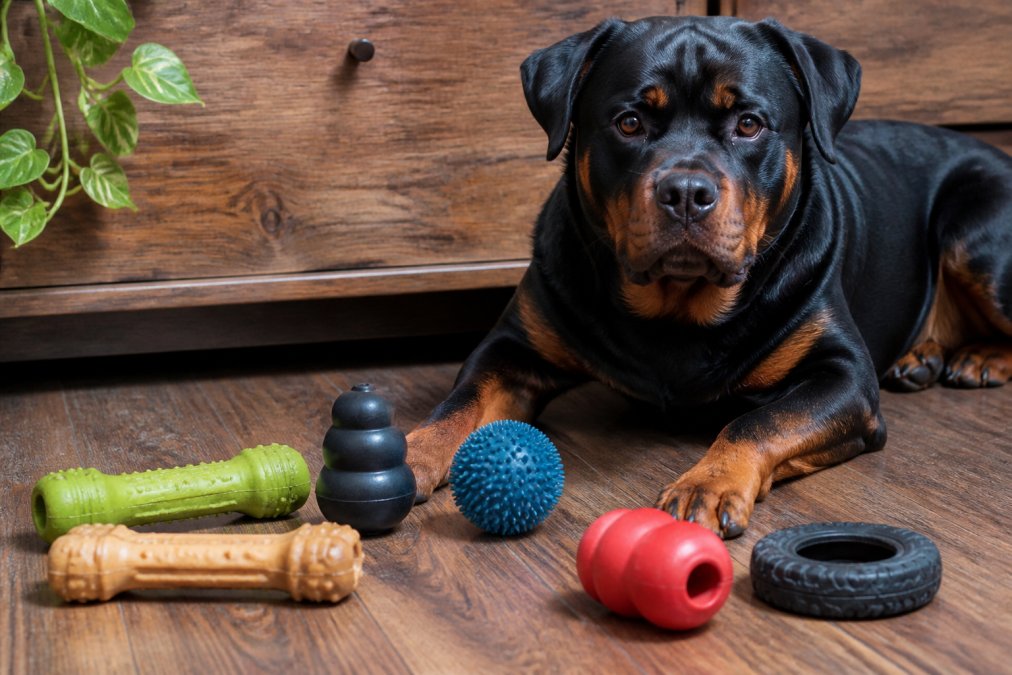
Look for toys rated for heavy or aggressive chewers. These use thicker rubber compounds, reinforced stitching, or natural materials like antler or compressed rawhide alternatives.
The best enrichment toys for heavy chewers share a few characteristics:
- Stuffable or fillable: Toys packed with food extend engagement significantly. A stuffed and frozen rubber toy can keep a motivated chewer occupied for 20 to 45 minutes.
- Size-appropriate: Match the toy size to your dog's jaw width.
- Varied textures: Dogs have preferences. Offer a few options and observe which your dog returns to unprompted.
- Rotated regularly: Rotate a set of four to six toys, bringing each out every few days to maintain novelty.
At Furbabies4less, our vet-informed enrichment toy selection is built specifically for dogs who chew hard, including rescue dogs managing anxiety or excess energy. Every product is chosen with durability and safety in mind, and a portion of every purchase supports animal rescue organizations.
Interactive Play vs. Passive Chew Toys
Passive chew toys (rubber chews, antlers, bully sticks) give a dog something to do independently. They're ideal for managing chewing during periods when you're unavailable. The limitation is that they don't build the human-dog relationship or address social needs.
Interactive toys (tug toys, fetch toys, puzzle feeders) provide mental stimulation and strengthen your bond. They're more effective for dogs whose chewing is rooted in attention-seeking or under-stimulation.
The most effective enrichment strategy combines both. Passive toys cover periods when you're unavailable. Interactive play sessions fill the dog's social and mental stimulation needs during the time you're present.
Addressing Separation Anxiety and Destructive Chewing
Separation anxiety is the hardest root cause to address. Most "solutions" people try for anxious dogs, including more exercise, more toys, and more deterrents, don't touch the underlying panic response.
Separation anxiety is a clinical behavioral condition in which a dog experiences genuine distress when separated from their attachment figure. The dog isn't "getting back at you" for leaving. They're panicking, and chewing is a self-soothing behavior.
Signs that separate anxiety-driven chewing from boredom chewing:
- Destruction begins within 15 to 30 minutes of departure
- Chewing targets items with your scent specifically
- Other anxiety signs are present: vocalization, house-soiling, pacing, self-injury
- The dog is hyper-attached when you're home
The evidence-based approach is gradual desensitization: systematically exposing the dog to departure cues and brief absences at a level they can tolerate, then building duration incrementally. As documented by the Merck Veterinary Manual on separation anxiety, this process takes weeks to months and requires consistency across all household members.
For dogs with moderate to severe separation anxiety, working with a certified professional trainer or veterinary behaviorist is worth the investment. Enrichment toys help manage symptoms during the process, but they won't resolve the condition on their own.
Dog furniture chewing is solvable, but it takes the right diagnosis before the right solution. Most dogs who destroy furniture are either under-stimulated, under-supervised, or genuinely anxious, and each requires a different response.
At Furbabies4less, our vet-informed enrichment toys and chew-safe supplies are selected specifically for dogs with high chewing needs, including rescues working through anxiety. Shop our enrichment collection to find durable, dog-safe options that give your dog a better outlet than your furniture.
Frequently Asked Questions
At what age do dogs stop chewing on furniture?
Most puppies chew heavily between 3 and 6 months during teething, then again between 6 and 18 months as adult teeth settle in. Many dogs reduce destructive chewing by age 2, once they have adequate physical activity, consistent training, and appropriate chew toys. Adult dogs that continue chewing furniture past age 2 are usually signaling unmet mental stimulation needs, separation anxiety, or a behavioral issue that benefits from professional trainer guidance.
What repels dogs from chewing furniture?
Bitter spray and taste deterrents applied directly to furniture surfaces are the most common tools. These work by making surfaces unappealing to chew. Dog-safe sprays containing bitter apple or citrus extracts are widely used. However, deterrents alone rarely solve the problem long-term. They work best as part of a broader behavior modification plan that includes redirection to approved chew toys, increased exercise, and positive reinforcement training to build impulse control.
Is my dog chewing furniture due to separation anxiety?
Possibly. Dogs with separation anxiety typically chew furniture near exit points like doors and windows, and the behavior happens specifically when left alone. You may also notice pacing, whining, or destructive chewing that escalates over time. Boredom-driven chewing, by contrast, tends to be more random and occurs even when you are home. If your dog shows signs of distress when you leave, consult a veterinary professional or certified trainer before relying only on deterrents or enrichment toys.
How can I use enrichment toys to stop destructive chewing?
Enrichment toys work by giving your dog an approved, satisfying outlet for the same chewing urge that targets your furniture. For heavy chewers, choose toys rated for their size and chewing strength. Rotate toys every few days to prevent habituation, and use interactive options like puzzle feeders alongside passive chew toys. Introduce new toys when your dog is calm and supervised, and pair the toy with praise to reinforce the behavior. Consistent environmental enrichment significantly reduces boredom-driven destructive chewing.
This article was written using GrandRanker
