

How to Choose Safe Enrichment Toys for Senior Dogs
Table of Contents
- Why Senior Dogs Need Enrichment Toys (and What Changes With Age)
- The Best Puzzle Toys for Senior Dogs: Low-Effort, High-Reward
- Toys to Avoid for Senior Dogs: What to Skip and Why
- Enrichment Toys for Dogs With Dental Problems: Soft, Gentle, and Safe
- Senior Dog Enrichment Ideas: Gentle Play and Mental Stimulation
- Safety Checklist: Inspecting Toys, Sizing, and Supervision
- How to Introduce and Adjust Enrichment Toys
- Frequently Asked Questions
Last Updated: October 17, 2026
Why Senior Dogs Need Enrichment Toys (and What Changes With Age)
Learning how to choose safe enrichment toys for senior dogs starts with one fact: aging changes everything about how a dog plays. At Furbabies4less, we built our enrichment line around that shift, because our own rescue dog Oz needed gentler options as he healed.
Older dogs still need mental stimulation. They still want to work for a treat. What fades is the body's ability to keep up.
Physical and Mental Shifts That Affect Toy Choice
Aging bodies move differently. Arthritis stiffens joints. Muscle tone drops. Vision and hearing often dull. Many senior dogs also face dental disease or worn teeth.
Mental changes matter too. Some older dogs sleep more and engage less. Others get anxious when left alone. Both need enrichment that meets them where they are.
- Stiff joints make hard floors and jumping painful
- Weak teeth rule out rock-hard chews
- Cloudy eyes mean a dog may not spot a rolling ball
- Shorter attention spans favor simple, low-effort puzzles
The fix is not fewer toys. It is the right toys.
The Best Puzzle Toys for Senior Dogs: Low-Effort, High-Reward
The best puzzle toys for senior dogs are low-effort puzzles that reward a dog for simple actions like licking, nosing, or pawing. Difficulty is the enemy here.
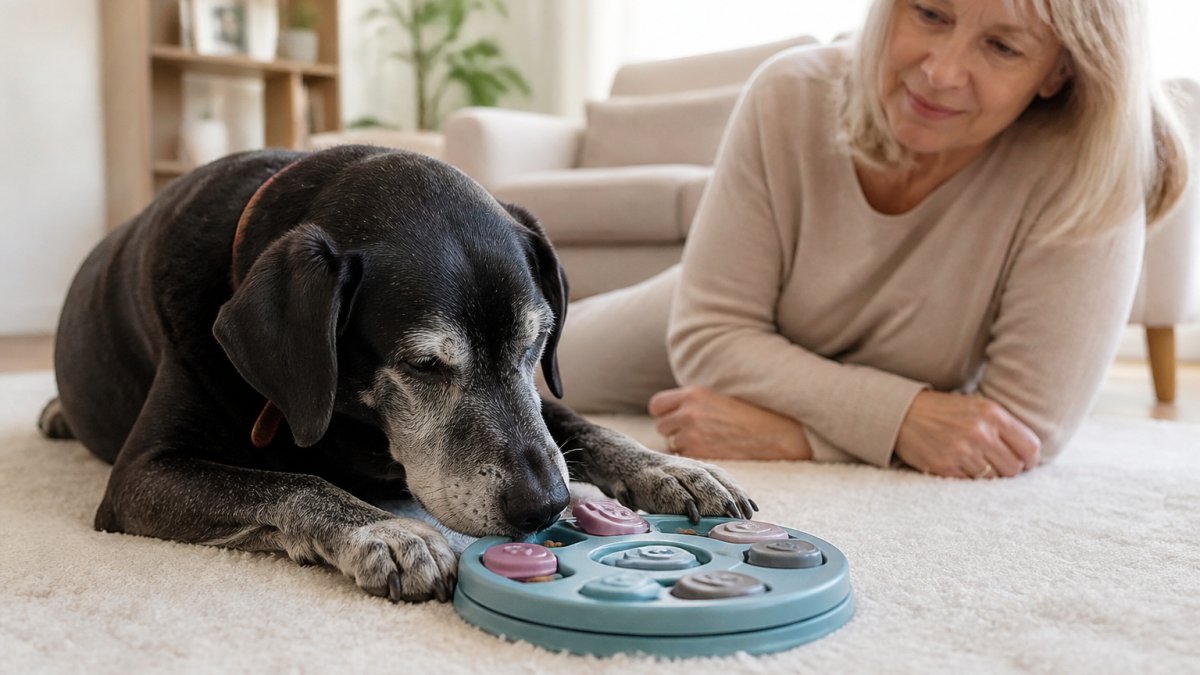
Look for wide openings, shallow grooves, and stable bases. A toy that slides across the floor forces a stiff dog to chase it. A toy that stays put lets them work comfortably.
Puzzle Feeders and Treat-Dispensing Toys
Puzzle feeders and treat-dispensing toys turn a meal into a calm, focused activity. For seniors, the gentlest version is a lick mat or licking plate.

Our Anxiety Relief Lick Mat is a good starting point. It sticks to floors or walls with a suction base, so a dog can lick without holding anything.
For dogs who want more challenge, our Interactive Lick Ball adds a 3D twist. Pets nose and paw the ball to reach the treat inside.
Toys to Avoid for Senior Dogs: What to Skip and Why
The toys to avoid for senior dogs are hard chews, high-bounce balls, and anything small enough to swallow. These carry real risk for aging mouths and bodies.
Start with the obvious dangers:
- Antler and bone chews. These crack worn teeth and damage gums.
- Tennis balls. The fuzzy surface wears down enamel, and the firm core strains old jaws.
- Small balls and squeakers. A dog with dull senses can swallow these.
- High-bounce fetch toys. Chasing and sudden stops jar arthritic joints.
- Rope toys with loose threads. Swallowed strands can block the gut.
One more to skip: any toy with a strong chemical smell. Sensitive older noses and immune systems do better with simple, non-toxic materials.
Enrichment Toys for Dogs With Dental Problems: Soft, Gentle, and Safe
Enrichment toys for dogs with dental problems must be soft enough to protect sore gums while still offering a satisfying chew or lick. Skip anything you cannot press a thumbnail into. But dental disease is only one of several common senior conditions that should shape your toy choices, the guidance below covers the full range so you can match toys to your dog's specific health profile.
Dental Disease and Tooth Loss
Soft toys and plush toys suit dogs who like to carry and cuddle. For chewers, look for soft chew toys made from flexible rubber or food-grade silicone. These give gently without cracking teeth.
Lick-based enrichment is the safest bet for dental cases. A textured lick plate or mat lets a dog work for food without biting down at all.
- Check for non-toxic, food-grade materials
- Choose washable toys so bacteria does not build up
- Avoid frozen-solid textures if gums are sensitive
- Replace any toy with cracks, tears, or missing pieces
If your dog has had extractions or gum surgery, ask your vet before introducing any chew toy. Healing tissue is fragile.
Arthritis and Reduced Mobility
For dogs with arthritis, choose toys that stay in one place and require minimal movement. A suction-base lick mat or a weighted puzzle feeder that does not slide across the floor lets a stiff dog work comfortably without chasing. Avoid high-bounce fetch toys and anything that encourages sudden stops or jumps. Low-impact play, rolling a soft toy along the floor rather than throwing it, protects joints while still providing enrichment.
Vision or Hearing Loss
Dogs with reduced vision rely more on scent and touch. Scent-based enrichment (hiding treats, using lick mats with strong-smelling food) works well because it does not depend on sight. For hearing loss, avoid toys that rely on sound cues (like squeakers) as the primary reward; instead, use treat-dispensing toys where the payoff is food. Keep the play area consistent and free of obstacles so a dog with limited vision can navigate confidently.
Cognitive Decline
Dogs with cognitive dysfunction may benefit from simple, familiar puzzles that build confidence without frustration. Rotate toys regularly to provide novelty, but keep the difficulty low. A lick mat or a basic treat-dispensing toy that requires only nosing or pawing is often ideal. Avoid complex multi-step puzzles that can cause confusion or anxiety.
Reduced Dexterity
For dogs with reduced dexterity (common with age or neurological conditions), choose toys with wide openings and shallow grooves that are easy to nose or paw. Avoid toys that require precise paw movement or holding.
If your dog has a diagnosed health condition, talk to your vet about which toys fit their specific needs. A dog with heart issues, for example, may need calmer activities than one with mild arthritis. Your vet knows your dog's limits best.
Anxiety Relief Lick Mat for Dogs – Calm Stress, Fear & Hyperactivity →
Senior Dog Enrichment Ideas: Gentle Play and Mental Stimulation
Good senior dog enrichment ideas share one trait: they ask for movement without impact. Mental stimulation tires a dog out just as well as a long walk, and it is far kinder to aging joints.
Low-Impact Play and Comfort-First Activities
Build a short daily routine. Ten to fifteen minutes of focused enrichment often does more than an hour of restless wandering.
- Sniff walks. Let your dog set the pace and stop to sniff. Nose work is real mental exercise.
- Lick sessions. Load a mat with soft food and let your dog work calmly.
- Gentle fetch. Roll a soft toy along the floor instead of throwing it.
- Hide-and-seek treats. Hide small soft treats around one room and let your dog find them.
- Slow feeders. Swap the food bowl for a licking plate to stretch mealtime.
Rotate toys every few days. Novelty keeps an older brain engaged, and a rotating set feels new without costing more.
Our Enrichment Licking Plate is built for exactly this kind of session. The textured grooves turn a snack into a focused, calming activity.

Safety Checklist: Inspecting Toys, Sizing, and Supervision
Every toy needs a check before it reaches your dog. A two-minute inspection prevents most injuries, and it is the step most owners skip. The checklist below goes beyond a quick glance and ties each item to a specific risk for aging dogs.
Run through this list before and after each play session:
- No cracks, tears, or holes in the material, even a pinhole can let stuffing escape
- Squeakers and stuffing still fully inside; squeeze the toy to confirm nothing shifts
- No loose threads, buttons, or plastic parts; tug seams gently to test for weakness
- Toy is too large to fit fully in your dog's mouth (see sizing guidance below)
- Material is non-toxic and free of strong chemical odor
- Toy is washable, and washed regularly, aim for at least weekly for daily-use toys
- No sharp edges or exposed seams
- Toy still suits your dog's current mobility and teeth
Toy Sizing and Choking Risks
Size is the most common mistake. A toy should be big enough that your dog cannot swallow it whole. Small dogs need small toys, but not tiny ones.
Use this measurable rule: the toy should be wider than the distance across your dog's muzzle at the widest point, and long enough that it cannot pass behind the teeth.
For senior dogs with reduced jaw strength or missing teeth, avoid toys with small protruding parts (like attached bells or small squeaker capsules) that can detach.
Supervision and Safe Play Protocols
Supervise every new toy for the first few sessions. Watch how your dog uses it. Some dogs chew, some carry, some lick. Each style carries different risks.
Set a session length that matches your dog's stamina.
Put toys away after play. A toy left on the floor overnight can be chewed apart in boredom. Check it again before the next session.
How to Introduce and Adjust Enrichment Toys
Introduce one new toy at a time, and start easier than you think.
Follow these steps:
- Start simple. Offer the toy with an easy treat visible on the surface.
- Show, don't force. Let your dog sniff and investigate at their own pace.
- Praise small wins. Reward any interaction with the toy.
- Increase difficulty slowly. Add a little challenge only when the current level is easy.
- Watch for frustration. Walking away, whining, or ignoring the toy means it is too hard. Step back down.
- Adjust for bad days. On stiff or tired days, switch to a lick mat instead of a puzzle.
A common mistake is buying the hardest puzzle first. Most senior dogs do better with low-effort puzzles they can solve in under a minute.
Our Dog Slow Feeder Lick Mat is a gentle first step.

If your dog has a diagnosed health condition, talk to your vet about which toys fit their specific needs.
Frequently Asked Questions
How do I choose a toy for a senior dog with dental problems?
Look for soft, plush, or gentle rubber toys with no hard edges or abrasive textures. Avoid antlers, bones, and hard nylon chews that can crack weakened teeth. Enrichment toys for dogs with dental problems should be easy to lick or nuzzle, like a lick mat or a soft treat-dispensing toy. Check with your vet about any mouth pain before introducing new textures, and inspect toys regularly for wear.
What toys should I avoid giving my senior dog?
Skip toys to avoid for senior dogs include hard chews (antlers, hooves, bones), small balls that can be swallowed, toys with squeakers or plastic parts that can be torn out, and heavy fetch toys that encourage jumping or sharp turns. Also avoid rope toys if your dog is a heavy chewer, since strands can be ingested. Choose sturdy, washable toys sized appropriately for your dog's mouth.
How long should a senior dog play with a puzzle toy?
Start with 5 to 10 minutes and watch for signs of frustration or fatigue. Low-effort puzzles and treat-dispensing toys can be left out for 15 to 20 minutes under supervision. Senior dogs tire faster, so short, frequent sessions work better than one long one. If your dog loses interest or walks away, end the session and try again later. Adjust difficulty as needed to keep it fun.
How can I tell if my senior dog is enjoying a toy?
Signs include a relaxed body, wagging tail, gentle nosing or pawing at the toy, and staying engaged without stress signals like lip licking, yawning, or turning away. A happy senior dog may bring the toy to you or return to it repeatedly. If your dog ignores the toy or seems stiff, try a different texture or a lower-effort option. Always supervise first sessions.
Picking the right toy for an aging dog takes a little thought, and it pays off in comfort and confidence. Furbabies4less makes that choice easier with vet-informed enrichment toys, non-toxic materials, and prices that stay affordable. Every purchase also helps support animal rescues. Shop our enrichment collection and give your senior dog a calmer, happier day.
