

Gentle Grooming Tools for Senior Dogs With Arthritis
Table of Contents
- Why Senior Dogs With Arthritis Need a Gentler Grooming Routine
- Quick Comparison: Gentle Grooming Tools for Senior Dogs With Arthritis
- Best Brushes for Senior Dogs: Soft Bristles and Steam
- Grooming a Dog With Arthritis: Positioning and Pressure Tips
- How to Bathe an Older Dog Without Adding Joint Stress
- Senior Dog Grooming Tips: Nails, Paws, and Coat Care
- Conclusion
- Frequently Asked Questions
Last Updated: October 15, 2026
Why Senior Dogs With Arthritis Need a Gentler Grooming Routine
Arthritis changes how a dog moves, and it changes how you should groom. A stiff hip makes a standard slicker brush feel like a scratch, and a long session on a hard floor can leave your dog sorer than before you started. Gentle grooming tools for senior dogs with arthritis are built around that reality: softer bristles, quieter motors, and shorter sessions that work with a dog's limited range of motion instead of against it.
At Furbabies4less, we built our grooming line around the same care routine that helped our own rescue dog, Oz, recover and stay comfortable. The core principle is simple. Grooming a senior dog is not about getting the coat perfect in one sitting. It is about keeping the coat clean and mat-free without triggering pain, and that means changing the tools and the pace.
Most owners get this backwards. They buy a gentler brush but keep the same 45-minute routine, then wonder why their dog still limps away from the mat. The tool is only half the fix. The other half is positioning, session length, and knowing which parts of the body to skip on a bad day. Below, we break down the tools worth owning, how to hold your dog so joints stay supported, and a bathing method that takes pressure off the spine.
Quick Comparison: Gentle Grooming Tools for Senior Dogs With Arthritis
The right gentle grooming tools for senior dogs with arthritis fall into four jobs: brushing, trimming, nail care, and cleanup. Each one should reduce force, noise, or time on task.
| Tool | Price | Best For | Why It Helps Arthritic Dogs |
|---|---|---|---|
| 3-in-1 Gentle Steam Brush | $18.99 | Daily coat care | Steam softens tangles so brushing needs less pressure |
| Low-Noise Pet Grooming Trimmer | $24.99 | Face, paws, sanitary trim | Quiet motor reduces startle response and sudden movement |
| SafeGlow Nail Clippers | $27.99 | Nail trims on thick or dark nails | LED light shows the quick so you cut once, not twice |
| LED Pet Nail Clippers | $23.22 | Small to medium nails | Lightweight and compact for quick, low-stress trims |
| Electrostatic Pet Hair Remover Glove | $12.99 | Furniture and bedding | Cleans up shedding without asking the dog to stand |
A common mistake is buying only a brush and ignoring nail care. Overgrown nails shift a dog's weight backward and make arthritic joints work harder. Nail trims matter as much as coat care for a senior dog.

Best Brushes for Senior Dogs: Soft Bristles and Steam
The best brushes for senior dogs use soft bristles or steam to loosen tangles before the bristles touch skin. Stiff slickers and de-shedding rakes pull on tight coat, and that pull translates directly into joint guarding.
Our pick is the 3-in-1 Gentle Steam Brush ($18.99). It combines steam, brushing, and detangling in one pass. The steam softens the coat first, so you need less downward pressure to move through a tangle. For a dog with arthritis, less pressure is the whole point.
Match the brush to the coat, not the breed label. Short-coated seniors often need only a rubber curry or the steam brush on a low setting. Double-coated dogs need the undercoat loosened in stages across several short sessions rather than one long one.
Grooming a Dog With Arthritis: Positioning and Pressure Tips
Grooming a dog with arthritis starts with positioning, not tools. A dog that is balanced and supported will tolerate brushing far longer than one bracing itself on a slippery floor.
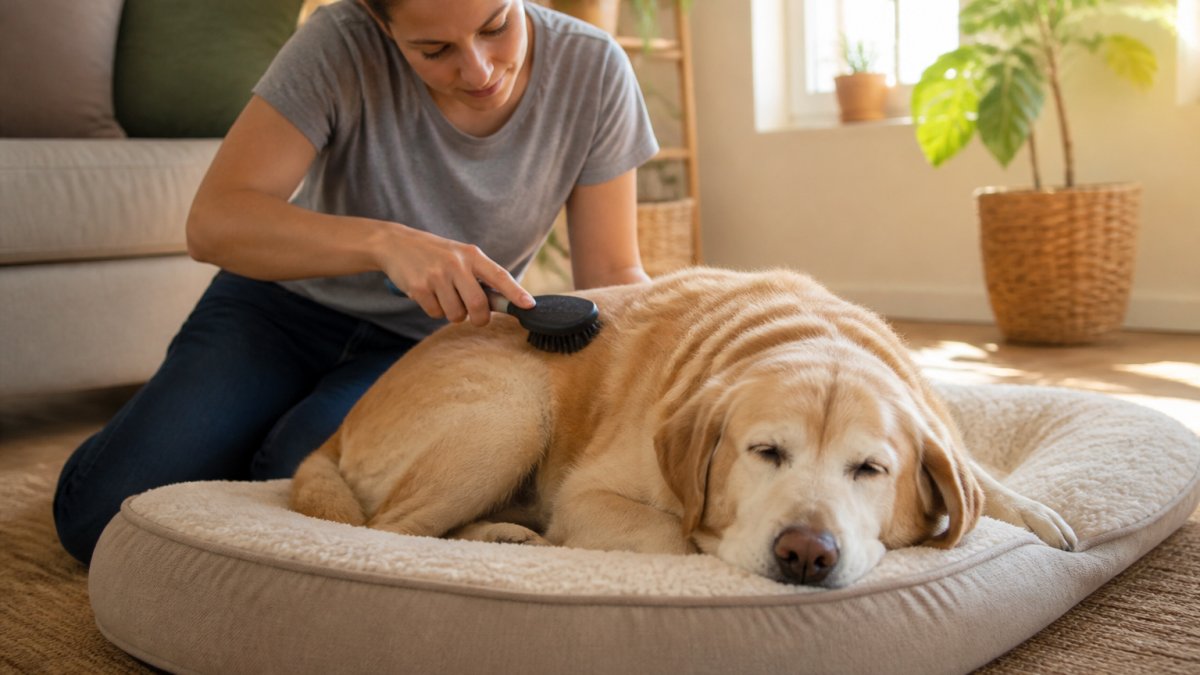
Follow these rules:
- Work at floor level on a non-slip mat, or use a low platform with a ramp so the dog never has to jump.
- Support the hindquarters with one hand while brushing the back half with the other.
- Keep sessions to 10-15 minutes, then stop. Two short sessions beat one long one.
- Never push a limb into a position it resists. If the leg will not extend, brush around it.
- Skip the sore side on bad days and return to it tomorrow.
Pressure should be light enough that the skin moves slightly but does not stretch. If you can see the skin pulling tight behind the brush, you are pressing too hard. For more on managing joint comfort at home, the American Veterinary Medical Association pet owner resources cover mobility and pain basics worth reviewing before you change a routine.
How to Bathe an Older Dog Without Adding Joint Stress
To bathe an older dog without adding joint stress, use warm water, a non-slip surface, and a no-rise or low-rise shampoo so the dog never has to stand for a long rinse. Slipping is the real danger. A dog scrambling for footing on a wet tub floor can strain already painful joints.
A workable method:
SafeGlow Nail Clippers for Safe & Stress-Free Grooming →
- Put a rubber mat in the tub or use a raised tub with a ramp.
- Fill two pitchers of warm water before you bring the dog in, so you are not waiting at the faucet.
- Wet the coat with a pitcher rather than a sprayer. Sprayers startle noise-sensitive dogs.
- Lather in sections and rinse with the second pitcher.
- Towel dry with light pressure, then let the dog finish drying in a warm room.
Keep the water warm, not hot, and keep the room draft-free. A senior dog loses body heat faster than a young one, and a chill tightens muscles. If your dog cannot stand for the full bath, wash the rear half and the front half in two separate short sessions on different days.
Senior Dog Grooming Tips: Nails, Paws, and Coat Care
Senior dog grooming tips come down to one idea: do less per session, more often. Nails, paws, and coat each need attention, but not all on the same day.
Nails. Overgrown nails change a dog's gait and push weight onto the wrong parts of the paw. The SafeGlow Nail Clippers ($27.99) include an LED light that shows the quick, so you can see exactly where to cut. That matters most on dark nails, where guessing leads to a painful nick and a dog that will not sit still again. The LED Pet Nail Clippers ($23.22) do the same job in a lighter, more compact body for smaller nails. Both include a safety guard to prevent overcutting.

Paws. Check the pads for cracks and trim the fur between the toes so it does not collect ice, grit, or burrs. Trim only what grows past the pad. Never dig into the space between toes with scissors.
Coat. Brush two or three times a week in short sessions rather than once a week for an hour. Between brushings, the Electrostatic Pet Hair Remover Glove ($12.99) lifts loose fur off beds, sofas, and car seats without asking your dog to stand at all. It uses electrostatic attraction, so there is no sticky residue and nothing to refill.
For guidance on recognizing pain and mobility changes in older dogs, the AAHA senior dog care guidelines are a solid reference to bring to your next vet visit.
Conclusion
Arthritic dogs do not need fewer grooming sessions. They need shorter ones, with tools that reduce force, noise, and time on their feet. The hardest part is unlearning the idea that grooming has to be finished in one go.
At Furbabies4less, we stock gentle grooming tools for senior dogs with arthritis that fit that slower routine, from the LED-lit SafeGlow Nail Clippers to the quiet Low-Noise Pet Grooming Trimmer and the steam brush that softens coat before bristles ever touch skin. Every product is vet-informed, affordable, and a portion of each sale supports animal rescues. Start with one tool, keep sessions short, and let your dog set the pace. Shop the grooming collection at Furbabies4less and make grooming something your senior dog tolerates, or even enjoys.

Frequently Asked Questions
What grooming tools are best for senior dogs with arthritis?
Look for tools that reduce pressure and noise. A low-noise trimmer with rounded blade tips works well for dogs who startle easily, while LED nail clippers let you see the quick so you avoid painful mistakes. A steam brush softens the coat for easier brushing, and an electrostatic glove removes loose fur without pulling. These senior dog grooming tools keep sessions short and comfortable.
How do you groom a dog with arthritis without causing pain?
Keep sessions under 10 minutes, support your dog's hips and chest with rolled towels or a non-slip mat, and never force a limb into a position it resists. Use gentle, slow strokes and stop if your dog stiffens or pulls away. Grooming a dog with arthritis is about working with their range of motion, not against it.
What kind of brush is gentle on an older dog's skin?
Soft-bristle brushes and steam brushes are the safest choices for thin or sensitive senior skin. A 3-in-1 gentle steam brush softens the coat first, which means less tugging and fewer tangles. Avoid wire slicker brushes with sharp pins, which can scratch skin that has less padding and elasticity than it did in younger years.
How often should you groom a senior dog?
Most senior dogs do well with brushing every two to three days and a bath every four to six weeks, depending on coat type and skin condition. Nails typically need trimming every three to four weeks. Shorter, more frequent sessions are easier on arthritic joints than one long grooming marathon.
Should I bathe a dog with arthritis at home?
Yes, if you can keep it low-impact. Use lukewarm water, a non-slip mat, and a handheld sprayer to avoid lifting. Never let your dog stand in a slippery tub for more than a few minutes. If your dog can't stand safely or gets distressed, a mobile groomer or vet clinic with a hydraulic tub is the safer option.
