

High Quality Dog Enrichment Feeders 2026: Top Picks
Table of Contents
-
Why High Quality Dog Enrichment Feeders Matter in 2026
- Mental Stimulation for Dogs: Beyond Physical Exercise
- How to Choose the Right Enrichment Feeder for Your Dog
- Durability and Material Quality: What Actually Holds Up
- Safety Considerations for Treat-Dispensing Toys
- Cleaning and Maintenance
- How to Introduce a New Puzzle Toy
- Enrichment for Senior Dogs With Cognitive Decline
- Using Enrichment Feeders With Raw and Wet Food Diets
- DIY Enrichment and Household Alternatives
- Budget-Friendly Enrichment Options
- Quick Comparison: Top High Quality Dog Enrichment Feeders
- 1. Smart Slow Puzzle Feeder Bowl for Dogs & Cats
- 2. Digestive Health Slow Feeder Bowl for Dogs
- 3. Interactive Lick Ball for Dogs & Cats
- 4. Enrichment Licking Plate for Dogs
- 5. Anxiety Relief Lick Mat for Dogs
- 6. Doggie Treat Launcher & Interactive Dog Toy
- Frequently Asked Questions
Last Updated: September 19, 2026
Why High Quality Dog Enrichment Feeders Matter in 2026
A dog that wolfs down dinner in 30 seconds and then stares at you isn't just a fast eater, that dog is bored, and bored dogs redecorate your furniture. High quality dog enrichment feeders solve two problems at once: they slow gulping that can contribute to bloat, and they give your dog a job to do.
Mental Stimulation for Dogs: Beyond Physical Exercise
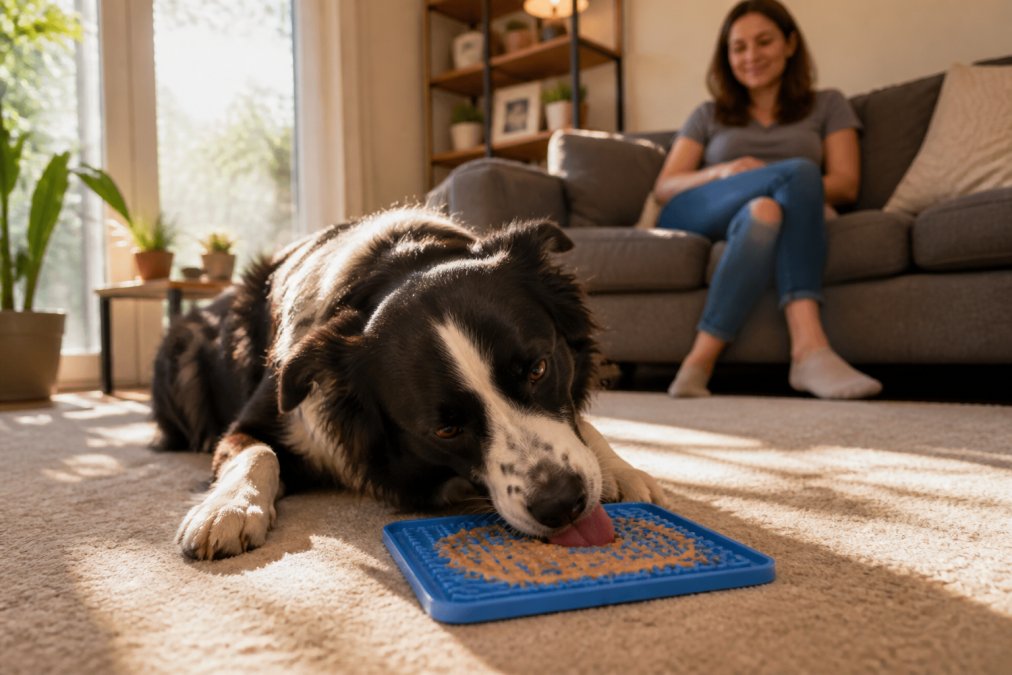
Mental stimulation for dogs is cognitive work that tires the brain the way a long walk tires the body. A sniff-heavy walk or a puzzle feeder engages problem-solving, satisfies natural foraging behavior, and burns energy a backyard lap never touches. A mentally tired dog settles faster and chews less, so canine enrichment belongs in your daily routine, not just on rainy days.

How to Choose the Right Enrichment Feeder for Your Dog
Work through these five filters in order.
1. Match the feeder to your dog's eating style, not their breed. A gulper needs a maze bowl with raised ridges that force the muzzle sideways. A grazer needs a stationary puzzle that holds a full meal without tipping. A dog who noses and paws at everything needs a movable ball or launcher.
Durability and Material Quality: What Actually Holds Up
Durability is where cheap enrichment feeders fail: a cracked seam, a suction cup that stops sticking after two weeks, or a silicone surface that holds a smell no dish soap removes.
- Silicone licking mats and plates last longest because there are no moving parts. The weak point is the suction base, which degrades faster when pulled off dry instead of peeled from a corner.
- Hard plastic maze bowls crack most often, especially through repeated hot dishwasher cycles. Hand-washing extends their life.
- Weighted or rubberized bowls survive enthusiastic eaters best but are heavier to store and harder to clean.
- Treat launchers and mechanical toys have the shortest lifespan because springs and triggers wear out. Treat them as consumables.
Safety Considerations for Treat-Dispensing Toys
Enrichment feeders are only as safe as the way they're used. A few rules cover most risk:
- Supervise the first several sessions. Watch for pieces your dog can break off and swallow, and for any part small enough to become a choking hazard.
- Never leave a chewer alone with a soft plastic or silicone feeder. Heavy chewers shred silicone into swallowable pieces. Choose hard plastic or stainless, or use the feeder only while you're in the room.
- Skip peanut butter with xylitol. Xylitol is toxic to dogs, and some reduced-sugar nut butters contain it (the FDA). Check the label every time.
- Watch total calories. A stuffed feeder can add a meaningful share of daily calories. Reduce the regular meal to compensate.
- Clean before every refill. Residual wet food, yogurt, or raw meat in grooves is a bacterial problem, not just a smell problem.
Cleaning and Maintenance
Most silicone and hard plastic feeders are top-rack dishwasher safe, but the dishwasher doesn't scrub the grooves, a bottle brush reaches channels a sponge can't. Rinse and air-dry suction bases before storage, since trapped moisture starts mildew. Stainless steel can go in the dishwasher indefinitely; hand-wash silicone if it starts holding odors.
How to Introduce a New Puzzle Toy
Dropping a difficult puzzle in front of a hungry dog creates a dog who ignores it. Introduce in stages:
- Start easy. Use a shallow licking mat or a bowl with wide channels and loose kibble. The goal is a quick win, not a challenge.
- Make it easier than you think. Scatter treats on top so your dog succeeds within seconds. Confidence is the prerequisite for problem-solving.
- Increase difficulty one notch at a time. Move from scattered to tucked, wide channels to narrow, stationary to movable. If your dog walks away twice in a row, you moved too fast.
- Pair it with calm. Feed enrichment in a quiet spot at first, then add normal household noise. This is how a feeder becomes a settling tool instead of a source of arousal.
- Rotate, don't replace. Keep two or three feeders in circulation and swap them weekly. Novelty is the active ingredient.
Enrichment for Senior Dogs With Cognitive Decline
Most enrichment content targets puppies and high-energy adults, leaving owners of aging dogs guessing. A senior dog with early cognitive decline often loses interest in complex puzzles, not from lack of motivation, but because the task no longer makes sense. Simplify rather than stop.
- Go back to wide channels and shallow surfaces. A licking plate with broad grooves is easier to understand than a multi-step maze.
- Use scent as the cue. Warming wet food or smearing a strong-smelling topper gives a senior dog a clear target even when vision or hearing fades.
- Shorten sessions. Five to ten minutes of easy enrichment beats a twenty-minute puzzle the dog abandons.
- Keep the routine identical. Same spot, same time, same feeder for a week before rotating. Predictability reduces confusion.
- Talk to your veterinarian. Disorientation, night pacing, or getting stuck in corners is a medical conversation, not a toy problem.
Using Enrichment Feeders With Raw and Wet Food Diets
Most licking surfaces handle wet and raw food well, with a few adjustments:
- Freeze it. A silicone licking mat loaded with raw or wet food and frozen solid turns a five-minute meal into a thirty-minute project.
- Skip the maze bowls. Kibble-style maze bowls are designed for dry food; wet food becomes a paste that's hard to clean and easy to miss in the channels.
- Use stainless or silicone, not porous plastic. Raw residue in scratched plastic is a food-safety issue; smooth, non-porous surfaces sanitize properly.
- Portion carefully. Raw and wet diets are calorie-dense, so a stuffed feeder can exceed a meal. Weigh or measure the portion before it goes in the mat.
- Clean immediately. Wash with hot water and soap right after the session, and sanitize the surface weekly.
DIY Enrichment and Household Alternatives
You don't need to buy anything to start. A few safe, low-cost options from your kitchen:
- Muffin tin + tennis balls. Drop kibble into the cups and cover each with a ball. Your dog noses the balls out to reach the food.
- Cardboard box shredder. A plain cardboard box with treats tucked in crumpled paper gives a destruction outlet that isn't your couch. Remove tape, staples, and labels first.
- Snuffle setup. Scatter kibble in a shallow cardboard box filled with crumpled paper or a folded towel. This mimics foraging and is one of the easiest activities to set up.
- Frozen broth cube. Freeze low-sodium, onion- and garlic-free broth in a silicone tray for a hot-weather licking project.
- Ice block. Freeze kibble in a bowl of water for a long-lasting summer challenge. Skip this for dogs who gulp, since chewing ice aggressively can damage teeth.
Budget-Friendly Enrichment Options
Enrichment doesn't require specialty products. The cheapest effective setup is a silicone licking mat, a slow-feed bowl, and a rotation of DIY scatter games. Build a starter kit in this order: licking surface first, slow-feed bowl second, movable puzzle third. That covers calming, meal pacing, and problem-solving, the three jobs enrichment feeders actually do.
Quick Comparison: Top High Quality Dog Enrichment Feeders
Use this table as a starting filter, then read the individual reviews below for the trade-offs that don't fit in a grid. Prices reflect what we're seeing in 2026 and can move with sales.
| Product | Price | Best For | Type | Key Feature |
|---|---|---|---|---|
| Smart Slow Puzzle Feeder Bowl | $25.99 | Fast eaters, all sizes | Stationary | Puzzle maze slows eating up to 10x |
| Digestive Health Slow Feeder Bowl | $19.99 | Bloat-prone breeds | Stationary | Anti-skid suction base |
| Interactive Lick Ball | $3.74 | Multi-pet homes | Interactive | 3D rotating design |
| Enrichment Licking Plate | $21.28 | High-energy breeds | Stationary | Sticks to any smooth surface |
| Anxiety Relief Lick Mat | $21.70 | Separation anxiety | Stationary | Suction base for hands-free calming |
| Doggie Treat Launcher | $16.28 | Training sessions | Interactive | Launches treats for chase play |
Interactive vs. Stationary Feeders: Which Category Does Your Dog Need?
The split matters more than the price.

Stationary feeders stay put while your dog works: slow-feed bowls, maze plates, and licking mats. They suit meal replacement, dogs who need to slow down, and calming work, because the body stays in one place and the activity is repetitive. The downside: they do nothing for a dog who needs to burn physical energy.
Best Puzzle Toys for Puppies
Puppies need easier puzzles than adults to shape behavior: a puppy who learns that working for food is normal is less likely to become a demand-barking adult.
- Start with a shallow licking mat. Wide, low grooves are easy to clean and easy for a puppy to understand. Freeze it for teething relief.
- Use a slow-feed bowl with wide channels. Narrow maze channels frustrate puppies and teach them to give up.
- Skip small movable parts. Puppies mouth and swallow things they shouldn't; a treat launcher with small projectiles is an adult-dog tool.
- Keep sessions short. Five minutes is plenty. Two short sessions beat one long one.
- Supervise every session. Puppies are the most likely group to chew a feeder rather than use it.
Best Puzzle Toys for Heavy Chewers
Heavy chewers break feeders at a seam or a suction cup. For this group, material matters more than design.
- Stainless steel or thick hard plastic is the safest bet. Both resist puncturing and don't shred into swallowable pieces the way silicone can.
- Avoid soft silicone licking mats for unsupervised use. They're excellent for calm licking sessions, but a determined chewer can bite through them.
- Weighted bases beat suction cups. A chewer who paws at a suction-mounted mat will eventually rip it off the floor; a weighted bowl stays put.
- Rotate instead of replacing. Keep two in rotation and retire one when the surface shows bite marks.
1. Smart Slow Puzzle Feeder Bowl for Dogs & Cats
The puzzle maze design forces dogs to work around ridges and channels, slowing eating by up to 10x. Fast eating causes gulped air, bloating, and poor digestion; this bowl turns every meal into a brainteaser that also fixes the speed problem. The non-slip base keeps it planted even for enthusiastic eaters, and it's dishwasher safe.
2. Digestive Health Slow Feeder Bowl for Dogs
Deep-chested breeds like Labs and Golden Retrievers face real risk from speed eating, including the dangerous condition GDV. This textured plate slows eating by up to 10x and reduces the gulped air behind gas and post-meal discomfort. The anti-skid suction base locks to smooth floors, and the non-toxic materials hold up to daily use.
3. Interactive Lick Ball for Dogs & Cats
Flat mats get boring. This 3D ball forces pets to rotate, nose, and paw it to reach the treat inside, so engagement lasts longer. Fill it with peanut butter, yogurt, or wet food.
4. Enrichment Licking Plate for Dogs
A bored dog is a destructive dog, and this plate channels that drive into a safe outlet. Textured grooves require focus and strategy to lick clean, mimicking the foraging behavior dogs are wired for.
5. Anxiety Relief Lick Mat for Dogs
Repetitive licking triggers endorphins and serotonin while activating the parasympathetic nervous system, lowering heart rate and cortisol. That's the mechanism behind this mat's calming effect during thunderstorms, fireworks, and grooming. The suction base sticks anywhere for hands-free use, redirecting anxious energy into a focused activity. At $21.70, it's a practical tool for separation anxiety and noise phobia.
6. Doggie Treat Launcher & Interactive Dog Toy
This launcher shoots treats across the room, triggering chase and fetch instincts while keeping your dog physically active. It's excellent for training, letting you reward good behavior from a distance.
Frequently Asked Questions
What are the benefits of using an enrichment feeder for dogs?
Enrichment feeders slow eating, which reduces bloating and gulped air, and they provide mental stimulation for dogs by tapping into natural foraging instincts. The Smart Slow Puzzle Feeder Bowl, for example, slows eating by up to 10x, while the Anxiety Relief Lick Mat releases calming endorphins during stressful events like thunderstorms. These feeders also help redirect destructive chewing into a healthy outlet, making them a practical addition to any daily routine.
Are puzzle feeders safe for aggressive chewers?
Safety depends on material and supervision. The Interactive Lick Ball uses durable, pet-safe materials. Always supervise your dog during use, especially with new feeders, and check for wear. For heavy chewers, avoid thin plastic parts that can crack. Rotate feeders and inspect them regularly to keep play safe and extend product life.
How often should I rotate my dog's enrichment toys?
Rotate every 2-3 days to keep novelty high and prevent boredom. For example, offer the Smart Slow Puzzle Feeder Bowl at breakfast, then switch to the Interactive Lick Ball for an afternoon snack. This variety maintains problem-solving skills and reduces the chance your dog ignores a feeder. Keep 3-4 different feeders on hand and cycle them based on your dog's energy level and mealtime schedule.
Can enrichment feeders help with separation anxiety?
Yes. Licking and problem-solving release calming endorphins that lower stress hormones. The Anxiety Relief Lick Mat is designed for separation anxiety and noise phobias, and the Enrichment Licking Plate provides hands-free mental stimulation that tires dogs out before you leave. Pair with a consistent goodbye routine and a frozen feeder for longer-lasting calm. These tools work best as part of a broader anxiety management plan.
What materials are safest for high quality dog feeders?
Look for non-toxic, food-grade materials like BPA-free plastic and durable silicone. The Smart Slow Puzzle Feeder Bowl uses pet-safe, non-toxic materials and is dishwasher safe, while the Enrichment Licking Plate uses non-toxic, food-grade silicone. Avoid feeders with sharp edges or loose parts. Dishwasher-safe options make cleaning easier and reduce bacteria buildup, which is important for pets with sensitive stomachs or allergies.
Picking the right feeder comes down to your dog's specific challenge: speed eating, anxiety, or plain boredom. Furbabies4less curates vet-informed enrichment tools, from slow feeders to lick mats, at prices that make sense, and a portion of every sale supports animal rescues. Every product is chosen to support real wellness, not just fill a shelf. Get started with Furbabies4less and give your dog mealtime that actually works for their body and brain.
