

Why Premium Pet Toys Are Worth It (2026 Guide)
Table of Contents
- The Real Cost of Cheap Pet Toys
- Why Premium Pet Toys Use Safer Materials
- Durable Dog Toys for Aggressive Chewers: A Cost-Per-Use Analysis
- The Benefits of Enrichment Toys for Cats (and Dogs)
- How to Choose Safe Toys for Dogs: A Simple Checklist
- The Hidden Toll of Toy Fatigue and Boredom
- Our Top Picks for Worry-Free Play
- Investing in Your Pet's Wellness
- Frequently Asked Questions
Last Updated: September 9, 2026
Most pet owners don't realize that the true expense of a pet toy isn't the price tag, but the replacement cycle. A cheap toy that costs $5 but gets destroyed in a week runs you over $260 a year, while a durable option that lasts for months is the real bargain (consumerreports.org). This guide from Furbabies4less explains why premium pet toys are worth it by looking at the math, the materials, and the behavioral science behind what your dog or cat actually needs.
The Real Cost of Cheap Pet Toys
The bargain bin is the most expensive aisle in the pet store. When you factor in replacement frequency, a $3 toy that lasts three days costs $365 annually. A premium pet toy priced at $25 that survives a full year costs just $0.07 per day. That distinction between sticker price and cost-per-use is the core of the value proposition.
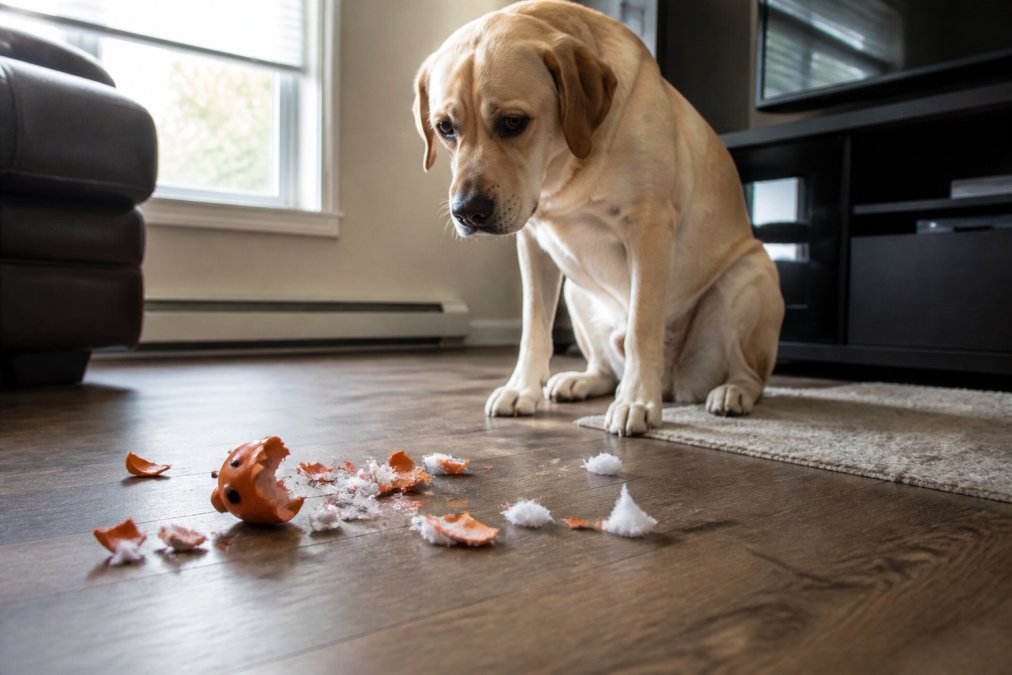
Cheap toys also carry hidden costs: destructive behavior often stems from frustration with toys that don't satisfy a dog's natural chew drive, leading to damaged furniture, shoes, and baseboards that cost far more to replace than any toy.
Why Premium Pet Toys Use Safer Materials
The price difference between a $5 toy and a $25 toy often comes down to what's in the rubber, the plastic, or the dye. Cheap toys are frequently made from recycled or unregulated compounds that may contain heavy metals, phthalates, or lead. Premium manufacturers invest in material science to create toys that are not only stronger but also safer for prolonged contact with saliva and gums.
The Material Science Behind the Price
Most premium rubber toys are made from natural rubber or high-grade thermoplastic elastomers (TPE). These materials are chosen for their ability to withstand shear force without tearing, but they also undergo a process called vulcanization, which strengthens the polymer bonds. This is why a premium toy can flex under pressure without cracking, while a cheaper toy snaps or fragments.
For plastics, the key distinction is between virgin and recycled content. Virgin, food-grade polypropylene or nylon is free from the contaminants often found in recycled plastics. When a manufacturer labels a toy as 'food-grade,' it means the material has been tested to ensure no harmful substances migrate from the toy into saliva. The FDA's regulations on food contact substances (FCS) require a rigorous review of the chemicals used in manufacturing, including their migration limits, a higher bar than general 'non-toxic' claims, which are often self-reported and not verified by a third party (the FDA).
Why Dyes and Finishes Matter
A less obvious cost driver is the dye. Cheap toys often use surface-level paints that chip off within days, while premium toys use colorants mixed into the material during molding or certified as safe for food packaging, preventing your pet from ingesting paint flakes, a common cause of gastrointestinal upset.
The Role of Third-Party Testing
While the FDA sets standards for materials that come into contact with food, pet toys are not pre-approved by any federal agency before hitting the market. This is why reputable brands voluntarily submit their products to third-party laboratories for testing. These labs check for lead content, phthalates, and BPA, and they also conduct mechanical safety tests to ensure the toy can withstand bite force without breaking into small parts. When a brand pays for this testing, it adds to the unit cost, but it also provides the only real assurance that the toy is safe for your pet.
A common pattern in the industry is that cheaper toys skip this step entirely, relying on the assumption that 'if it's sold in a store, it must be safe.' That assumption is false. The Consumer Product Safety Commission (CPSC) has recalled numerous pet toys for lead and phthalate violations, but the recall process is reactive, not proactive. By the time a recall is issued, your pet may have already been exposed.

This is the material safety gap that most 'best toy' lists ignore. They show you a picture of a rubber bone, but never explain why one costs $8 and another costs $25. The difference is in the polymer chemistry, the dye, and the testing protocol, choosing a premium toy means choosing a product engineered to fail safely, not just to look tough.
Durable Dog Toys for Aggressive Chewers: A Cost-Per-Use Analysis
For power chewers, the calculus changes completely. Dogs that destroy everything need toys engineered for their jaw strength, and this is where durable dog toys for aggressive chewers justify their price immediately. The Tough Chew Rubber Toy from Furbabies4less, priced at $25.99, is built from heavy-duty, non-toxic rubber designed to withstand the strongest chewers without cracking.
Consider the cost-per-use model:
| Toy Type | Price | Typical Lifespan | Cost Per Use |
|---|---|---|---|
| Cheap plastic toy | $5 | 3-7 days | $0.71/day |
| Standard plush toy | $12 | 2-4 weeks | $0.43/day |
| Premium rubber chew toy | $25.99 | 6-12 months | $0.07-0.14/day |
The Benefits of Enrichment Toys for Cats (and Dogs)
The benefits of enrichment toys for cats extend far beyond entertainment. Enrichment addresses the core behavioral needs of both species: hunting, foraging, problem-solving, and physical exercise. When these needs go unmet, pets develop their own coping mechanisms, which rarely align with human furniture.
Interactive toys provide cognitive engagement that tires a pet more effectively than physical exercise alone. The Interactive Lick Ball, available for just $3.74, creates a slow-feeding challenge that keeps dogs and cats focused and calm. A self-moving ball toy engages a dog's prey drive while you're busy.

How to Choose Safe Toys for Dogs: A Simple Checklist
Learning how to choose safe toys for dogs starts with understanding your pet's play style and chewing habits. A toy that's perfect for a gentle retriever is a choking hazard for a determined power chewer.
- Size matters: A toy too small can be swallowed; too large is frustrating. Follow the manufacturer's size guidance.
- Test flexibility: You should be able to dent a rubber toy with your thumbnail. If you can't, it's too hard and risks tooth fractures.
- Check for weak points: Seams, squeakers, and glued-on parts are failure points on cheap toys.
- Know your chewer: Aggressive chewers need solid rubber, not plush or rope.
- Inspect regularly: Replace any toy showing significant wear and tear, cracks, or missing pieces.
The Hidden Toll of Toy Fatigue and Boredom
Toy fatigue is not just a pet being 'picky.' It is a predictable behavioral response to a lack of novelty and cognitive challenge. When a toy is left in the same spot for weeks, the pet's brain stops associating it with reward, and the toy becomes part of the background scenery. This is why you can spend $30 on a new toy, watch your dog play with it for 20 minutes, and then never see them touch it again, the toy isn't broken; it's just boring.
The Science of Habituation
In behavioral psychology, this process is called habituation, the decrease in response to a stimulus after repeated exposure. For pets, the initial excitement of a new toy is driven by the novelty of scent, texture, and sound. Once those features become familiar, the brain stops releasing dopamine; the pet is not ungrateful, they are simply wired to seek out new stimuli for survival.
This is where premium toy design differs from cheap manufacturing. Premium toys are often designed with multiple textures, hidden squeakers, or treat-dispensing compartments that create a variable reward schedule. This is the same principle that makes slot machines addictive: the reward is unpredictable. When a toy occasionally dispenses a treat or makes an unexpected sound, the pet's brain stays engaged because it never knows when the next reward will come.
The 'Old vs. New' Toy Fallacy
Most pet owners respond to toy fatigue by buying more toys, creating a cycle of consumption where the old toy is discarded and the new toy is celebrated for a day. The solution is not more toys; it is smarter rotation and interactive design.
A common pattern among professional animal behaviorists is the 'toy rotation' system. Instead of leaving all toys out at once, you cycle them every three to four days. A toy that has been 'gone' for a week feels new again when it returns, because the pet's memory of the specific scent and texture has faded. This strategy extends the useful life of every toy you own, making a $25 premium toy last even longer than its physical durability would suggest.
The Link Between Boredom and Destructive Behavior
When a pet is under-stimulated, they will self-stimulate, often manifesting as destructive chewing, excessive barking, or repetitive pacing. The ASPCA notes that many common behavior problems stem from a lack of appropriate outlets for natural energy. A dog that has destroyed your sofa is not being 'bad'; they are expressing a need for an activity that engages their mind and body.
Premium toys address this by providing a more complex cognitive challenge. A simple plush toy offers a single action: shake and tear. An interactive puzzle toy requires the pet to figure out a sequence of movements to access a reward. This mental work is more tiring than physical exercise. A 15-minute puzzle session can be as tiring for a dog as a 45-minute walk, because it requires sustained focus and problem-solving.
This is the behavioral gap that most articles miss. They tell you to buy a durable toy, but not why your pet stops playing with it after a week. The answer is not durability; it is design and novelty. A premium toy that is rotated and used in structured play sessions will outperform a cheap toy left on the floor, not because of the material, but because of the engagement strategy you apply.
Our Top Picks for Worry-Free Play
For aggressive chewers, the Tough Chew Rubber Toy stands out as the clear winner. Its heavy-duty rubber construction is designed for dogs that have sent countless toys to the landfill. The Smart Interactive Dog Ball Toy, at $19.95, offers three automatic modes (bouncing, rolling, spinning) and USB rechargeability, making it ideal for high-energy dogs needing mental stimulation. The Interactive Lick Ball remains the best budget-friendly option for calming anxious pets during alone time or after stressful events.

Investing in Your Pet's Wellness
The decision to buy premium pet toys is ultimately a decision about your pet's quality of life. A durable toy provides consistent, safe enrichment that supports behavioral health and pet wellness, while a cheap toy creates a cycle of disappointment, waste, and potential danger.
The strongest argument for premium isn't luxury; it's responsibility. Choosing products with verified material safety and thoughtful design reduces the risk of injury, extends the life of your home, and gives your pet a reliable outlet for their energy.
Choosing the right toys is one of the most direct ways to improve your pet's daily life, but it requires looking past the initial price. At Furbabies4less, we curate vet-informed products like the Tough Chew Rubber Toy and interactive feeders that are tested for safety and built to last, all while keeping prices accessible. Because every purchase supports animal rescues, your investment helps pets beyond your own. Shop our collection and give your dog or cat the durable, enriching play they deserve.
Frequently Asked Questions
Are expensive dog toys actually more durable?
Often, yes. Premium toys like the Tough Chew Rubber Toy are engineered from heavy-duty, non-toxic rubber designed to withstand aggressive chewers. A $25.99 toy that lasts months has a lower cost-per-use than a $5 toy destroyed in an afternoon. Look for solid construction and reinforced designs rather than just a higher price tag.
What materials should I look for in safe, non-toxic pet toys?
Choose toys labeled non-toxic, BPA-free, and food-grade. Avoid cheap plastics with a strong chemical smell. For aggressive chewers, natural rubber is a durable and safe choice. Always check for small parts that could break off and become a choking hazard, and inspect toys regularly for wear and tear.
How does the cost of replacing cheap toys compare to buying premium ones?
Replacing a $5 toy every week costs $260 per year. One $25.99 durable dog toy that lasts several months is a better investment. When you add the cost of potential vet visits from ingesting unsafe materials, premium toys offer significant long-term savings and peace of mind.
How do high-quality enrichment toys improve a pet's mental health?
Enrichment toys like the Interactive Lick Ball provide mental stimulation by encouraging problem-solving. Licking and foraging release calming endorphins, which helps reduce anxiety and boredom. This cognitive engagement prevents destructive behaviors and supports better behavioral health, especially for pets with anxiety or high energy.
