

Why Rescue Dogs Have Separation Anxiety: A 2026 Guide
Table of Contents
- What Separation Anxiety Looks Like in a Rescue Dog
- Why Rescue Dogs Are More Prone to Separation Anxiety
- How to Help a Rescue Dog With Separation Anxiety
- Dog Separation Anxiety Training: A Gradual Alone-Time Plan
- How Long Can a Rescue Dog Be Left Alone?
- When to Involve a Veterinarian or Behavior Professional
- Conclusion: Patience Builds Trust
- Frequently Asked Questions
Last Updated: October 9, 2026
What Separation Anxiety Looks Like in a Rescue Dog
At Furbabies4less, our own rescue dog, Oz, fell apart the moment we picked up our keys, an experience that shaped how we think about anxious dogs and the supplies that help them.
Most guides treat every whimper as a disorder. Not every dog who struggles when you leave has separation anxiety, some are simply adjusting, others are bored.
Normal Adjustment vs. True Separation Anxiety
Normal adjustment: a newly adopted dog follows you around for a week or two, whines a little when you leave, then settles within 20 to 30 minutes.
True separation anxiety starts before you leave, often at the first departure cue like grabbing your bag or putting on shoes, lasts the entire time you are gone, and does not fade with repetition alone.
Watch for these signs of rescue dog anxiety symptoms:
- Pacing or circling near the door
- Whining, howling, or barking that starts within minutes
- Panting and salivation without heat or exercise
One or two signs during big changes likely means adjustment. Several signs, every time, point toward a behavioral issue worth addressing directly.
Why Rescue Dogs Are More Prone to Separation Anxiety
Here is the uncomfortable truth most articles skip: being a rescue dog does not cause separation anxiety. Rescue status is a label about how a dog arrived in your home, not a diagnosis. Plenty of shelter dogs settle in without distress, and plenty of breeder-bought dogs develop the same panic. Rescue dogs are simply more likely to have experienced the risk factors that predict it.
What Actually Raises the Risk
Separation anxiety is best understood as a panic disorder. The risk factors that show up most consistently in behavior literature are concrete:
- A sudden or repeated break in attachment. A dog who was surrendered, rehomed, or passed between foster homes has learned that a bonded person can vanish without warning. That learning is the risk factor, not the shelter stay itself.
- A single secure attachment followed by loss. Some of the most severe cases involve a dog who lived with one person for years, then lost them to death, divorce, or a move. The intensity of the prior bond predicts the intensity of the panic.
- A change in the household routine after adoption. The first weeks in a new home are often constant togetherness. When the adopter returns to work, the dog's baseline shifts abruptly, and the distress follows that shift.
Notice what is not on that list: "was adopted." A dog with a calm temperament, a stable foster history, and a gradual transition may never show separation anxiety at all.
Why the Rescue Narrative Gets Overapplied
Adopters understandably reach for a story. "He was abandoned, so of course he's anxious" feels like an explanation, but it can send you down the wrong path.
A more useful framing: treat rescue history as clues, not a verdict. Ask what the dog actually does, when the distress starts, and how long it lasts. Those observations, not the intake paperwork, tell you what you are dealing with.
What This Means for Your Dog
If your rescue dog shows distress when left alone, the productive question is not "what happened to him?" but "what is happening now?" You may never learn the full history, and you do not need to. What you need is a clear read on the behavior: when it starts, how intense it gets, and whether it responds to the gradual alone-time work below.
How to Help a Rescue Dog With Separation Anxiety
Helping a rescue dog with separation anxiety means changing the environment before the behavior. You cannot train a panicked dog, only a calm one.
That is why the first step is not a training plan. It is a safe space.
Build a Safe Space Before You Leave
Pick one spot and make it the dog's default calm zone.
Some dogs do fine in a crate; others find confinement terrifying and will hurt themselves trying to get out. If your dog shows distress when crated, use a gated room instead.
Our Calming Dog Bed was built for exactly this moment. Its donut shape mimics the security of curling up with a pack, and the raised rim gives anxious dogs something to lean into.

Use Calming Activities to Lower Stress
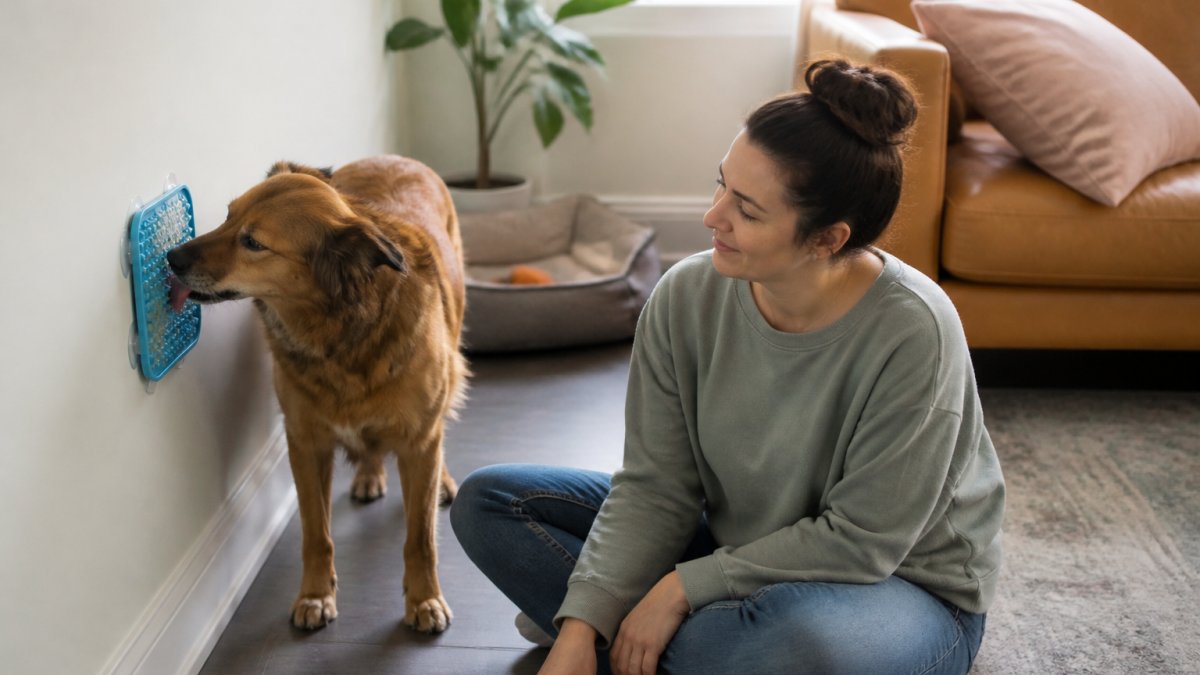
Licking is one of the most reliable ways to calm a dog. The repetitive motion releases endorphins and serotonin, the same feel-good chemicals that show up during play.
That is the idea behind our Anxiety Relief Lick Mat. Spread peanut butter, yogurt, or wet food across the textured surface, stick it to a wall or floor, and let your dog work.
For bath time or grooming, the Suction Lick Bowl does the same job on a tub wall.
Dog Separation Anxiety Training: A Gradual Alone-Time Plan
Dog separation anxiety training teaches the dog that leaving is boring, brief, and always followed by a return. This is gradual desensitization, paired with counterconditioning, linking your departure to something the dog enjoys.
The mistake most people make is going too fast. They leave for an hour on day two and wonder why nothing improved.
Here is a plan that respects how dogs actually learn:
Anxiety Relief Lick Mat for Dogs – Calm Stress, Fear & Hyperactivity →
- Day 1 to 3: Practice departure cues without leaving. Pick up your keys, put on shoes, then sit back down. Ten reps a day.
- Day 4 to 7: Step outside for 5 to 30 seconds. Return before your dog reacts. Repeat 10 to 15 times.
- Week 2: Extend to 1, 3, then 5 minutes. Keep returns calm and quiet.
- Week 3: Build to 15 and 30 minutes. Vary the length so the pattern is not predictable.
- Week 4 and beyond: Add 10 to 15 minutes per session, only after two clean sessions at the current length.
Keep sessions short. Three to four per day beats one long session.
How to Track Progress and Know It's Working
Progress in separation anxiety training is measured in seconds and stress signals, not how long your dog "held out."
Use a video monitor to record each absence. Then score the session:
| What to Watch | Good Sign | Warning Sign |
|---|---|---|
| Settling time | Under 5 minutes | Over 15 minutes |
| Vocalization | Silent or brief whine | Continuous barking or howling |
| Movement | Lies down, rests | Pacing the whole time |
| Destructive behavior | None | Chewing doors or frames |
| Recovery on return | Greets calmly | Takes 10+ minutes to settle |
If you see two or more warning signs, drop back to the last duration that worked and repeat it for three sessions before moving up.
How Long Can a Rescue Dog Be Left Alone?
Most adult dogs can handle four to six hours alone once settled. Puppies, seniors, and dogs with true separation anxiety need much shorter windows.
The honest answer depends on age, bladder control, and current stress level. A dog mid-training may only manage 20 minutes, that is normal.
For unavoidable absences, like a full workday, plan ahead:
- Hire a mid-day walker or use a doggy daycare for the first month
- Set up a camera so you can check in without guessing
- Leave a frozen lick mat and a safe chew before you go
A common mistake is coming home to a mess and shortening the next absence out of guilt. That stalls progress.

When to Involve a Veterinarian or Behavior Professional
Separation anxiety is one of the few behavior problems where waiting makes things worse. Every panic episode reinforces the belief that being alone is dangerous, so the longer the pattern runs unchecked, the more entrenched it becomes. Knowing when to escalate is part of the plan, not a sign of failure.
Escalation Signs That Warrant a Call Now
Contact your veterinarian promptly if you see any of the following:
- Self-injury. Broken teeth, torn nails, bloody paws, or raw spots from chewing at doors, crates, or window frames.
- Escape attempts that risk real harm. Digging under fences, chewing through drywall, or breaking through windows.
- House soiling in a dog who is otherwise reliably house trained, especially when it happens every time you leave.
What a Veterinary Assessment Actually Covers
A good first appointment is not just a prescription pad. Your vet should take a full behavior history, when the distress started, what it looks like, how long it lasts, what has been tried, then rule out medical causes that mimic anxiety.
If the exam is clean and the behavior pattern fits separation anxiety, your vet has three paths:
- Manage it in-house with a behavior-modification handout and a recheck in a few weeks.
- Refer to a certified behavior professional for a structured desensitization and counterconditioning plan.
- Refer to a board-certified veterinary behaviorist for complex or severe cases. These are veterinarians with additional residency training in behavior, and they are the right resource when medication and a training plan need to be coordinated carefully.
For trainers and behavior consultants, look for credentials rather than marketing language. Certifications such as CPDT-KA, CBCC-KA, or IAABC accreditation indicate verified coursework and supervised experience. Avoid anyone recommending punishment-based tools for separation anxiety, aversive methods reliably worsen panic disorders.
How Medication Fits Alongside Training
Medication is not a substitute for behavior modification, and it is not a last resort for hopeless cases. The two work together: a daily medication can lower baseline anxiety enough that training exercises take hold, since a dog too far over threshold cannot learn.
Make this decision with your vet, not a forum thread. Medication is a tool that makes training possible, not a cure on its own, and it is typically tapered or adjusted as the dog's skills improve.
What About Calming Treats, Pheromones, and CBD?
Over-the-counter calming products are popular, and some guardians find them helpful as a small piece of a larger plan. The evidence base is mixed, and none treats separation anxiety on its own. Pheromone diffusers and calming chews may take the edge off for mildly anxious dogs but will not resolve a true panic response. CBD products vary widely in quality and dosing and are not regulated like medications.
Building Your Support Team
The most effective setup for a severe case is a small team: a veterinarian for the medical side, a certified behavior consultant who designs and adjusts the training plan, and you doing the daily reps. If you are unsure where to start, your veterinarian is the right first call, they can rule out medical causes and point you toward a qualified behavior professional in your area.
Conclusion: Patience Builds Trust
Separation anxiety in rescue dogs is not a life sentence. It is a response to a history the dog did not choose, and it can change with time, structure, and the right environment.
At Furbabies4less, we built our catalog around that belief. A portion of every sale supports animal rescues, our products are selected with vet input, and our pricing keeps quality care within reach.
Frequently Asked Questions
Do rescue dogs have separation anxiety more often than other dogs?
Rescue dogs are more likely to develop separation anxiety because of past experiences like abandonment, rehoming, or time in a shelter. These events can weaken a dog's sense of security, making alone time feel unsafe. That said, not every rescue dog develops it. A dog's individual temperament, age, and how gradually they were introduced to being alone all play a role. If your rescue dog shows distress when you leave, a structured training plan and patience can make a real difference.
How can I tell if my rescue dog has separation anxiety or is just adjusting?
Normal adjustment usually fades within a few weeks as your dog learns your routine. True separation anxiety is more intense and consistent: pacing, panting, vocalization, destructive behavior, house soiling, or escape attempts that happen every time you leave. Video monitoring can help you see whether the distress starts before you're out the door (a key sign of separation anxiety) or only after a long absence, which may point to boredom instead.
What is the 3-3-3 rule and does it apply to separation anxiety?
The 3-3-3 rule says a rescue dog typically needs three days to decompress, three weeks to settle into a routine, and three months to feel fully at home. It applies to separation anxiety because rushing alone-time training before your dog feels secure can backfire. Give your dog time to build trust and attachment first, then start short absences and gradually increase duration. Rushing the timeline often makes distress worse, not better.
Should I crate my rescue dog with separation anxiety?
Crating can help some dogs feel secure, but for others it makes anxiety worse, especially if the dog has a history of confinement-related fear. Watch for signs like drooling, escape attempts, or frantic barking when crated. If your dog settles calmly, a crate with a cozy bed can be a safe space. If not, try a calming dog bed in an open room instead. A veterinarian or certified behavior professional can help you decide what works for your dog.
If your rescue dog is struggling with alone time, the right tools can make the training stick. Furbabies4less offers vet-informed essentials like the Calming Dog Bed, Anxiety Relief Lick Mat, and Suction Lick Bowl, all chosen to support anxious dogs through the adjustment period. Every purchase helps fund animal rescues. Shop today and give your dog a calmer, more confident start.
