

Pet Products That Support Rescues: A 2026 Guide
Table of Contents
- Why Pet Products That Support Rescues Matter
- How to Calm Rescue Dog Anxiety with the Right Supplies
- Vet-Informed Pet Supplies: What to Look For
- How to Donate Pet Supplies to Local Shelters
- Shop-to-Give Programs: How Your Purchase Helps Rescues
- Regional vs. National Donation Strategies
- Conclusion: Making Every Purchase Count
- Frequently Asked Questions
Last Updated: October 4, 2026
Why Pet Products That Support Rescues Matter
When you buy pet products that support rescues, a slice of your spending flows to shelters and foster programs instead of stopping at a warehouse.
At Furbabies4less, we built our catalog around this idea after fostering our own rescue dog, Oz. We watched how the right bed, the right feeder, and the right enrichment tool changed his recovery.
Here's the honest part most shopping guides skip: a "rescue-friendly" label means nothing on its own. You need to know what's actually in the box, whether it fits your pet, and how the giving side really works.
How to Calm Rescue Dog Anxiety with the Right Supplies
Calming a rescue dog's anxiety starts with meeting the nervous system where it is. Rescue dogs often arrive with noise phobias, separation distress, or a history of instability. The right supplies give them a physical anchor: something to curl into, something to lick, something that slows the chaos down.
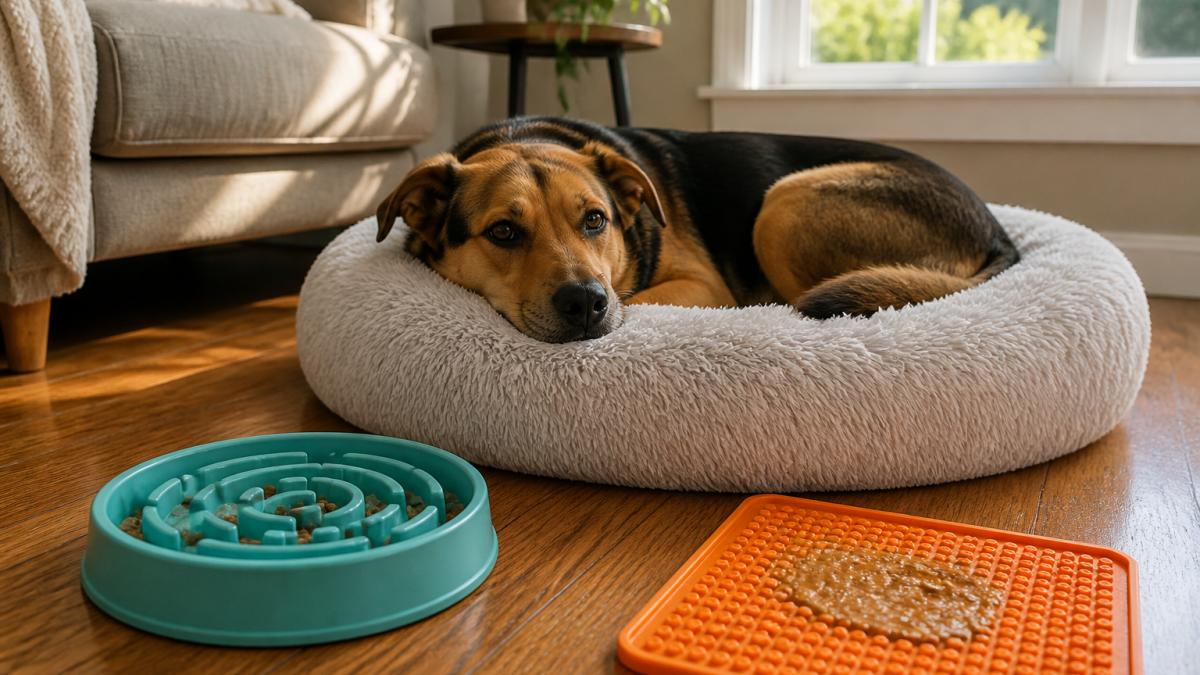
Calming Beds and Lick Mats for Anxious Rescues
A calming dog bed works because dogs self-soothe by curling into a ball. The donut shape mimics the security of sleeping against their pack, and the raised rim gives them something to lean into. Our Calming Dog Bed uses a deep-cushion, plush design with a non-slip bottom, and it's machine washable, which matters when anxiety comes with accidents.

Lick mats take a different route. Repetitive licking triggers endorphin release and activates the parasympathetic nervous system, which physically lowers heart rate.
Slow Feeders and Probiotics for Digestive Stress
Anxiety and digestion are linked. A dog that gulps food swallows air, which leads to bloating and discomfort. A textured slow feeder forces them to work around ridges, slowing eating dramatically and reducing gulped air. Our Digestive Health Slow Feeder Bowl has an anti-skid suction base and is dishwasher safe.
For dogs with loose stools or gas after a diet change, a daily probiotic can help restore gut balance. Our Daily Probiotic Support for Dogs comes in soft or chewy tablets, and the Probiotic Soft Chews use a chicken-flavored format dogs actually eat.
Vet-Informed Pet Supplies: What to Look For
"Vet-informed" should mean a licensed veterinarian reviewed the product's purpose, materials, and safety claims. In practice, the term is unregulated, so you have to check the details yourself. Look for named ingredients, clear materials, and honest limitations rather than vague wellness language.
Vetting Ethical Claims: Beyond the Label
A common mistake is trusting a badge without checking what backs it. Here's a quick vetting checklist we use:
- Does the product list specific materials or ingredients, not just "premium"?
- Is there a real return policy if it doesn't work for your pet?
- Does the giving claim state a percentage or a partner, not just "supports rescues"?
- Are safety claims tied to a standard or a named reviewer?
How to Donate Pet Supplies to Local Shelters
Donating pet supplies to local shelters works best when you match the shelter's actual inventory needs, not your closet cleanout. Call or check the shelter's wish list first.
A common pattern is that donors arrive with what they want to give, and staff spend limited volunteer hours sorting, storing, or disposing of items they can't use. Calling ahead fixes that. Ask two questions: what's on your wish list right now, and what won't you accept?
Used vs. New Items: Logistics and Tax Rules
New items are almost always welcome: sealed food, unopened treats, new toys, and clean bedding still in packaging. Used items are where most donations go wrong, and the reason is hygiene and liability, not pickiness.
Shelters generally apply three filters to used goods:
- Pathogen risk. Anything porous that has held bodily fluids, chewed plush toys, soiled bedding, used litter boxes, can carry parvovirus, ringworm spores, or kennel cough. Most shelters refuse these outright because disinfecting them reliably isn't feasible.
- Chew and choke hazards. Torn toys with exposed squeakers, loose stuffing, or frayed rope get tossed. Staff can't inspect every seam.
- Storage and staff time. A shelter with a small back room can't warehouse 40 mismatched towels when it needs 10 matching ones for a specific kennel run.
What typically clears the bar: freshly laundered towels and blankets with no stains or holes, hard plastic crates wiped down and disinfected, stainless steel or ceramic bowls run through a dishwasher, and unopened food within date.
If you're unsure, ask before you load the car. A five-minute call saves a volunteer an hour of sorting.
Tax Rules for Donated Pet Supplies
The IRS generally allows a deduction for donated goods to qualified 501(c)(3) organizations, valued at fair market value, what the item would sell for used, not what you paid (Topic no. 506, Charitable contributions). Rules and thresholds change, so confirm current requirements with the IRS guidance on charitable contributions before you file.
A practical note: fair market value for used towels and blankets is low, so the deduction rarely justifies the effort on its own.
Vest-Style Dog Harness – Comfort, Control & Safety →
Matching the Donation to the Shelter Type
Not every rescue can use every item. A foster-based rescue with no physical building often needs smaller quantities and specific items, puppy pads, formula, nursing bottles, because supplies live in volunteers' homes. A brick-and-mortar shelter with a medical wing can absorb bulk food, crates, and medical consumables. A sanctuary or senior-dog rescue may specifically need orthopedic bedding and joint supplements. Ask what kind of operation you're supporting before you shop, and the donation lands instead of sitting.
Shop-to-Give Programs: How Your Purchase Helps Rescues
Shop-to-give programs route a portion of each sale to rescue partners, turning routine purchases into recurring support. The model works because it doesn't ask you to spend extra or make a separate donation.
The catch is transparency. A strong program tells you the partner organizations and roughly what share of the sale moves. A weak one hides behind a logo. When you evaluate any shop-to-give promise, ask three questions: who receives the funds, how much, and how often.
| Giving Model | How It Works | Best For | What to Verify |
|---|---|---|---|
| Percentage of sale | Set share of each order goes to rescue partners | Ongoing, low-effort support | The stated percentage |
| Round-up at checkout | You add spare change to your total | Small, frequent contributions | Where funds are routed |
| In-kind match | Brand donates goods, not cash | Shelters needing supplies | Which items and how often |
| Named partner program | Funds go to specific rescues | Local, relationship-based giving | The partner list |
Regional vs. National Donation Strategies
Regional and national giving solve different problems, and the smartest approach uses both. The mistake is treating them as competing choices when they operate on different time horizons and different scales.
What Each Model Actually Does
Local and regional rescues are closest to the need. They know their immediate gaps: a litter of puppies, a broken HVAC unit, a foster home that just ran out of food. Money and supplies move within days, and you can usually see the result, a photo, a name, a kennel run that got fixed.
National organizations pool resources for large-scale needs: disaster response and emergency transport, spay/neuter funding across regions, animal cruelty legislation, and sheltering standards. They can move resources to a hurricane zone in 48 hours in a way no single local group can.
A Decision Framework
Ask three questions before you give:
- What outcome do you want? If you want to see a specific animal helped, give locally. If you want to fund infrastructure and policy, give nationally.
- What are you giving? Cash travels anywhere. Physical supplies usually only make sense locally, because shipping costs can exceed the value of the goods.
- How much time do you have? A recurring monthly gift to a national group is low-effort. Volunteering, fostering, or running supply drives is inherently local.
The Split Strategy Most Effective Donors Use
A common pattern among committed pet parents is to split giving into two buckets. The first bucket is a recurring monthly gift to a national organization, small, automatic, and aimed at systemic work. The second bucket is local and reactive: buying from a brand that supports rescue networks, then donating supplies directly to the shelter down the road when its wish list calls for something specific.
This split hedges against the weaknesses of each model. You're not dependent on one organization's priorities, and you're not limited to what's visible in your own zip code.
Vetting Both Types Before You Commit
For any organization, national or local, check three things:
- 501(c)(3) status. Verify through the IRS Tax Exempt Organization Search so your donation is deductible and the group is accountable.
- Financial transparency. National groups should publish annual reports and program-vs-overhead ratios. Local groups should be able to tell you where money goes without hesitation.
- Specificity. A credible organization can name what it's working on right now. Vague mission statements are a yellow flag at any scale.
Conclusion: Making Every Purchase Count
The gap between wanting to help and actually helping comes down to logistics. Shelters need specific supplies, on a schedule, with documentation, and most well-meaning donors never learn what that looks like.
At Furbabies4less, we make that easy. From the Calming Dog Bed to the Daily Probiotic Support, every item is built to help a rescue pet settle, heal, and thrive.

Get started with Furbabies4less and turn the supplies your pet already needs into support for the rescues still waiting for a home.
Frequently Asked Questions
How can I ensure my pet product purchases actually help rescues?
Look for brands that publish specific donation details, such as a fixed percentage of each sale or named shelter partners. Vetting ethical claims means checking for transparency: do they list which rescues receive funds and how much? Furbabies4less states that a portion of every sale helps rescue animals, and their product line is vet-informed. Avoid vague 'supports rescues' language without numbers or partners. You can also ask brands directly for their donation reports or IRS filings if they are nonprofits.
What are the most needed items for animal shelters?
Shelters consistently need pet food, pee pads, cleaning supplies, bedding, and enrichment items like lick mats and slow feeders. Emergency medical supplies and foster care support are also critical. When you donate pet supplies to local shelters, call ahead to confirm current needs, as inventory shifts. Many shelters maintain wish lists on their websites. In-kind donations of new items are preferred for hygiene, but some accept gently used beds and toys if washed. Tax-deductible contributions of new items are easier to document.
Do pet brands that donate to rescues offer high-quality supplies?
Quality varies, so check product specifications and customer reviews. Vet-informed pet supplies should list ingredients, materials, and safety standards. For example, Furbabies4less offers a Calming Dog Bed with a non-slip bottom and machine-washable cover, and a Slow Feeder Bowl made from non-toxic materials. These meet practical needs for rescue pets with anxiety or digestive issues. Look for return policies and whether the brand tests products. A donation program does not guarantee quality, but transparency about sourcing and materials is a good sign.
How do 'shop-to-give' programs for animal welfare work?
Shop-to-give programs typically donate a percentage of each sale to animal rescues or shelters. Some brands add a donation at checkout, while others build it into pricing. The key is transparency: reputable programs specify the percentage and the recipient organizations. Furbabies4less contributes a portion of every sale to rescue animals, supporting lifesaving programs. These programs let you support animal welfare through routine purchases. To maximize impact, combine shop-to-give with direct donations of supplies or volunteer coordination at local shelters.
