

Natural Grooming Supplies for Sensitive Skin
Table of Contents
- Why Sensitive Skin Changes Everything About Grooming
- Natural Dog Shampoo for Sensitive Skin: Soothing Ingredients That Work
- Dog Conditioner for Sensitive Skin: Locking In Moisture After the Bath
- Ingredients to Avoid in Pet Shampoo: A Label Reading Checklist
- How to Bathe a Dog with Sensitive Skin Without Triggering a Flare-Up
- Gentle Grooming Tools for Sensitive Skin and Every Coat Type
- When Sensitive Skin Needs a Vet: Symptoms You Should Not Ignore
- Conclusion: Building a Complete Sensitive Skin Grooming Kit
- Frequently Asked Questions
Last Updated: October 7, 2026
Why Sensitive Skin Changes Everything About Grooming
Sensitive skin turns a simple bath into a high-stakes decision: the wrong shampoo or a rough brush can trigger days of scratching, redness, and discomfort.
At Furbabies4less, we built our grooming line around this problem. Our rescue dog, Oz, arrived with irritated skin and a fear of every tool we owned, and rebuilding his routine taught us what works.
The core issue: sensitive skin is not just "dry skin." Its protective barrier is compromised, so it reacts faster and recovers slower.
The Skin Barrier and Why Harsh Products Make It Worse
The skin barrier is the outermost layer of your dog's skin, a thin shield of oils and cells that holds moisture in and keeps irritants out.
Harsh shampoos do the most damage. Detergents strong enough to cut grease strip the oils your dog needs, creating a cycle: itch, scratch, broken skin, more itch. The fix is gentler products used less often.
Natural Dog Shampoo for Sensitive Skin: Soothing Ingredients That Work
The best natural dog shampoo for sensitive skin is built on colloidal oatmeal, aloe vera, or chamomile, with a short ingredient list and no added fragrance.
- Colloidal oatmeal binds to skin and forms a protective layer that calms itching and holds in moisture.
- Aloe vera soothes redness and adds lightweight hydration without a greasy residue.
- Chamomile reduces visible irritation and has a mild calming effect on reactive skin.
Look for fragrance-free and paraben-free formulas. "Natural scent" often means added essential oils, a frequent trigger for sensitive dogs.
Oatmeal, Aloe Vera, and Chamomile: What to Look For
Read the label like a food label. Ingredients are listed by concentration, so oatmeal, aloe, or chamomile should appear near the top, not the end.
- The first ingredients should be water and a gentle cleanser, not sulfates.
- "Fragrance" or "parfum" anywhere on the list is a red flag for reactive skin.
- Fewer than fifteen ingredients is a good sign; long lists mean more chances for a reaction.
If your dog has never used a product before, test it on a small patch of skin and wait a day before a full bath.
Dog Conditioner for Sensitive Skin: Locking In Moisture After the Bath
A dog conditioner for sensitive skin is not optional for reactive coats. Shampoo opens the hair cuticle; conditioner closes it and seals moisture into the skin barrier.
Look for natural moisturizers such as coconut oil, argan oil, or mango butter, which coat hair and skin without pore-clogging residue. Apply from mid-coat to ends, avoiding the face, and rinse thoroughly, leftover product is its own irritant.
Ingredients to Avoid in Pet Shampoo: A Label Reading Checklist
Knowing the ingredients to avoid in pet shampoo matters more than any front-of-bottle claim. The front is advertising; the back is the truth.
Start with the ingredients that most often trigger reactions in dogs with a compromised skin barrier:
- Sulfates (sodium lauryl sulfate, sodium laureth sulfate) strip natural oils and leave the barrier more exposed.
- Parabens (methylparaben, propylparaben) are preservatives some dogs react to.
- Artificial fragrance and dyes (often listed as "fragrance," "parfum," or a color like "FD&C Blue No. 1") are among the most common triggers.
What "Natural," "Organic," "Hypoallergenic," and "Fragrance-Free" Actually Guarantee
These four words get used as if they mean the same thing. They do not, and none is a safety guarantee on its own.
- Natural has no single legal definition for pet grooming products. A formula can be plant-derived and still contain an essential oil that irritates your dog.
- Organic refers to how ingredients were grown, not to whether they are gentle. An organic essential oil is still an essential oil.
- Hypoallergenic means the maker believes the product is less likely to cause a reaction. It is a marketing term, not a tested claim.
A short ingredient list is a good sign, but not automatically safe. A five-ingredient formula built on essential oils is riskier than a fifteen-ingredient formula that is genuinely fragrance-free.

How to Read a Label, Start to Finish
Work through the list in this order:
- Check the first three ingredients for a gentle base (water plus a mild cleanser), not sulfates.
- Scan for "fragrance," "parfum," "dye," or a color name.
- Confirm oatmeal, aloe, or chamomile appears in the top half of the list, not the last line.
A brand that lists every ingredient clearly is easier to trust than one that leans on the word "natural" and stops there.
How to Bathe a Dog with Sensitive Skin Without Triggering a Flare-Up
Bathing a dog with sensitive skin comes down to temperature, timing, and dilution. Get those right and most flare-ups never start.
- Brush out loose fur and tangles before the bath so water can reach the skin.
- Use lukewarm water, never hot, since heat strips oils and increases itching.
- Dilute the shampoo in a cup of water before applying it, which spreads it evenly and reduces residue.
- Massage gently with your fingertips, not your nails, and avoid the eyes and ears.
- Rinse longer than feels necessary. Residue is a leading cause of post-bath itching.
- Apply conditioner, then rinse again.
- Towel dry and follow with a low-noise dryer on a warm, not hot, setting.
Space baths out. Most dogs with sensitive skin do better on a four-to-six-week schedule, with wipes or a deodorizing spray in between.
| Step | What to Do | Why It Matters |
|---|---|---|
| Brush first | Remove loose fur and tangles | Lets water and product reach the skin |
| Lukewarm water | Avoid hot water entirely | Heat strips oils and worsens itching |
| Dilute shampoo | Mix with water before applying | Even coverage, less residue |
| Rinse twice as long | Rinse until water runs clear | Residue triggers post-bath itching |
| Condition and rinse | Seal in moisture, then rinse | Closes the cuticle and protects the barrier |
| Dry on warm | Low-noise dryer, warm setting | Prevents chilling and skin irritation |
Gentle Grooming Tools for Sensitive Skin and Every Coat Type
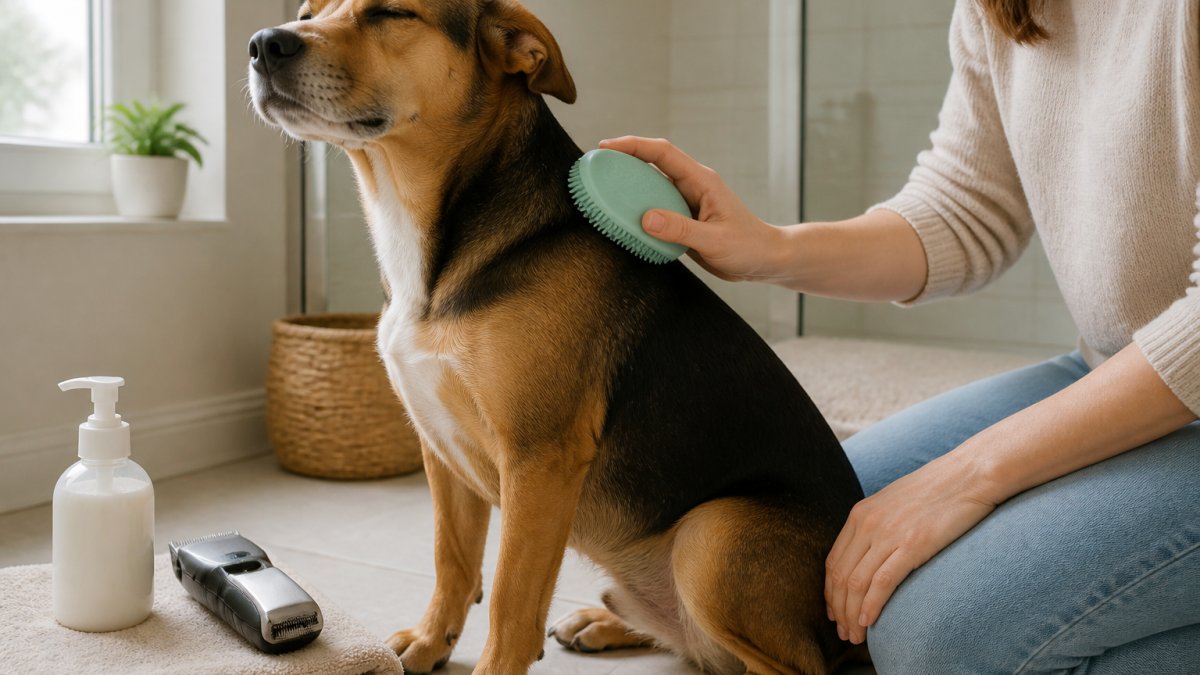
The right grooming tools for sensitive skin do the same job as standard tools with less pulling, noise, and stress. Tool choice matters as much as product choice, and the tool that suits one coat can be wrong for another.
Dog Itch Relief Supplement for Skin Health and Comfort →
Match the Tool to the Coat, Not the Breed
Coat texture, not breed name, decides which brush belongs in your hand.
- Short, smooth coats do best with a soft silicone brush or a rubber curry. Bristle brushes can scratch reactive skin.
- Double coats need an undercoat rake in short passes, plus a slicker for the topcoat. Skip the rake during a flare-up.
- Curly and textured coats need a slicker brush plus a stainless steel comb to check underneath. A comb that catches means you missed a mat.
How Often to Use Each Tool
Frequency matters as much as the tool. Over-brushing irritates skin; under-brushing lets mats form that must then be pulled out.
| Tool | Best For | How Often |
|---|---|---|
| Soft silicone brush | Short, fine, or hairless coats | Every 2-3 days, 5 minutes |
| Slicker brush | Curly and textured coats | Every other day, 5-10 minutes |
| Undercoat rake | Double coats | Once a week, in short passes |
| Stainless steel comb | Checking for hidden mats | After every slicker session |
| Low-noise trimmer | Face, paws, sanitary areas | Every 4-6 weeks |
| Low-noise dryer | After every bath | As needed, warm setting only |
Work in five-to-ten-minute sessions and stop before your dog gets restless. A calm, short session beats a long one that ends in a struggle.
Tools We Reach For First
Our 3-in-1 Gentle Steam Brush combines steam, brushing, and detangling in one pass, softening the coat so brushing is pain-free and safe for fine fur and sensitive skin.
For trimming, the Low-Noise Pet Grooming Trimmer is built for anxious pets.
Drying is where many sensitive-skin routines fall apart. The CalmFlow Pet Dryer uses a low-noise motor and adjustable temperature settings, so you can dry on gentle warmth instead of heat.
For dogs whose itching is driven by allergies or dryness from the inside, the Dog Itch Relief Supplement supports the skin moisture barrier and helps calm irritated, red, or flaky skin over time.

| Tool | Price | Best For | Key Feature |
|---|---|---|---|
| 3-in-1 Gentle Steam Brush | $18.99 | All coat types, fine fur | Steam softens coat for pain-free brushing |
| Low-Noise Pet Grooming Trimmer | $24.99 | Anxious pets, face and paw trims | Quiet motor, rounded blade tips |
| CalmFlow Pet Dryer | $64.99 | Long-haired and anxious pets | Low-noise motor, adjustable temperature |
| Dog Itch Relief Supplement | $47.47 | Allergies, dry and flaky skin | Supports skin barrier from within |
Brushing, Trimming, and Drying Without the Stress
Introduce one new tool at a time. Let your dog sniff it while off, run it along the back for a few seconds, then end the session. Repeat for several days before a full groom.
When Sensitive Skin Needs a Vet: Symptoms You Should Not Ignore
Some symptoms are medical, not cosmetic, and no shampoo will fix them. Knowing the line saves your dog weeks of discomfort.
Call your vet if you notice:
- Open sores, scabs, or bleeding from scratching
- Hair loss in patches
- A bad odor or a greasy, thickened coat
These can point to infections, allergies, parasites, or thyroid issues needing diagnosis and treatment. Grooming products manage symptoms; they do not treat disease.
Conclusion: Building a Complete Sensitive Skin Grooming Kit
A complete kit for sensitive skin is smaller than most people expect: a fragrance-free oatmeal shampoo, a moisturizing conditioner, a soft brush, a quiet trimmer, a low-noise dryer, and a daily supplement if itching is driven by allergies.
If your dog's skin is reactive, start with one product at a time and give each a full week before adding the next.
Frequently Asked Questions
What grooming products are best for pets with sensitive skin?
Look for fragrance-free, paraben-free formulas with soothing ingredients like colloidal oatmeal, aloe vera, and chamomile. A gentle steam brush or slicker brush with soft bristles helps remove loose fur without scratching. For dogs that scratch constantly, a daily itch relief supplement that targets allergies and dryness from the inside can complement your grooming routine. Avoid anything with synthetic dyes or strong perfumes, and patch-test new products on a small area first.
Are natural grooming products better for sensitive skin?
Natural and naturally derived ingredients tend to be gentler because they skip harsh sulfates and synthetic fragrances that strip the skin barrier. Oatmeal, aloe vera, and calendula calm irritation, while coconut oil and mango butter moisturize. That said, natural does not automatically mean safe. Essential oils can still trigger reactions in some pets, so check labels carefully and introduce one new product at a time to identify what works for your dog or cat.
What ingredients should I avoid in pet shampoo?
Skip shampoos containing parabens, synthetic fragrances, artificial dyes, and harsh sulfates like sodium lauryl sulfate. These can strip natural oils and worsen itching, dryness, and redness. Also avoid essential oils such as tea tree or citrus unless a vet approves them, since some are toxic to pets. Look for short ingredient lists with recognizable moisturizers like colloidal oatmeal, aloe vera, and coconut oil instead.
How often should I bathe a dog with sensitive skin?
Most dogs with sensitive skin do well with a bath every 4 to 6 weeks using a gentle, fragrance-free shampoo. Bathing too often strips the skin barrier and increases dryness, while waiting too long lets allergens and dander build up. Between baths, use pet wipes or a deodorizing spray to freshen the coat. If your dog has a flare-up, ask your vet whether a medicated or oatmeal bath schedule is needed.
How can I tell if my pet is reacting to a grooming product?
Watch for increased scratching, licking, paw chewing, redness, hives, or flaky patches within 24 to 48 hours of using a new product. Some pets also develop ear infections or watery eyes. If you suspect a reaction, stop using the product immediately and rinse the coat with plain water. Contact your vet if symptoms are severe or do not improve within a day. Patch-testing on a small area before a full bath helps catch sensitivities early.
Sensitive skin does not have to mean a stressful bath every few weeks. At Furbabies4less, we curate vet-informed grooming supplies chosen for reactive coats, including the gentle steam brush, the low-noise trimmer, and the CalmFlow dryer, all at prices that make a full kit realistic. Every purchase also helps support animal rescues, so your dog's comfort does some good for another pet still waiting. Shop the grooming collection and build a routine your dog can actually relax into.
