

How to Groom Sensitive Dogs: A Calm, Step-by-Step Guide
Table of Contents
- What You'll Need Before You Start Grooming a Sensitive Dog
- How to Read Your Dog's Stress Signals Before Grooming
- How to Desensitize a Dog to Grooming: A Step-by-Step Approach
- The Best Grooming Tools for Sensitive Dogs
- Safe Brushing and Handling Techniques for Sensitive Skin
- Grooming Tips for Dogs With Skin Allergies
- Breed-Specific Sensitivity Profiles and Emergency Stop Protocols
- Post-Grooming Recovery and Positive Reinforcement
- Frequently Asked Questions
Last Updated: October 1, 2026
What You'll Need Before You Start Grooming a Sensitive Dog
To groom sensitive dogs, start with the space: a quiet room, a non-slip surface, and the right tools matter more than technique.
Here's your prep checklist:
- Pick a quiet room away from traffic and noise
- Lay down a non-slip mat so paws feel steady
- Gather everything first: brush, clippers, nail trimmers, treats
- Set clippers and dryers to their lowest settings
- Keep sessions short, under ten minutes at first
How to Read Your Dog's Stress Signals Before Grooming
Stress signals show up before the growl does, letting you stop while your dog is still calm.
Watch for these signs:
- Lip licking or yawning when nothing else explains it
- Whale eye, where the whites of the eyes show
- Tucked tail or a stiff, frozen body
- Turning the head away or trying to leave
- Raised hackles or a sudden shake-off
How to Desensitize a Dog to Grooming: A Step-by-Step Approach
Desensitization pairs grooming tools and touch with treats until your dog stops seeing them as threats. It takes days or weeks, so never rush a step.
Step 1: Introduce the Tools Without Using Them
Leave the brush, clippers, and nail trimmers near your dog's bed. Let your dog sniff them and toss a treat nearby until the tools are boring.
Step 2: Pair Touch and Sound With Treats
Turn the clippers on across the room, feed treats, turn them off, and repeat until the sound means snacks. Then touch your dog's paws and ears for one second, treat, and stop.
Step 3: Build Up to Short Grooming Sessions
ASPCA's pet care guidance on handling nervous animals recommends keeping early sessions brief and ending while your dog is still relaxed.
The Best Grooming Tools for Sensitive Dogs
The best tools for sensitive dogs are quiet, have rounded or guarded edges, and never tug. Loud motors and sharp points undo weeks of desensitization.
Here's what to look for:
| Tool | What Matters | Best For | Typical Price |
|---|---|---|---|
| Low-noise trimmer | Quiet motor, rounded blade tips | Face, paws, touch-ups | $24.99 |
| CalmFlow pet dryer | Low-noise motor, adjustable heat | Anxious dogs, long coats | $64.99 |
| Gentle steam brush | Softens coat, no pulling | Matted fur, daily brushing | $18.99 |
| LED nail clippers | Light shows the quick, safety guard | Dark nails, first-timers | $27.99 |
Why Sound and Vibration Are Separate Triggers
A clipper motor produces two stressors: airborne sound and mechanical vibration through skin and bone. A tool can be quiet but still vibrate enough to trigger a flinch.

Matching the Tool to the Coat, Not the Breed
Coat type determines which tool does the work, and the wrong one causes the pulling sensitive dogs remember:
- Slicker brushes have fine wire pins that grab loose undercoat. They work well on medium and long coats but can scratch thin or irritated skin, so use light pressure and never press the pins into the body.
- Bristle brushes are soft and best for short coats and finishing passes. They won't detangle, but they won't irritate either.
- Undercoat rakes remove dense shedding coat on double-coated dogs. They have sharp teeth and should never touch skin, stop the moment you feel resistance.
- Metal combs are your inspection tool. After brushing, run a comb through the coat. If it catches, you missed a tangle and need to work it loose before moving on.
What to Skip
Some popular tools work against you. High-velocity dryers scare nervous pets and can push water into the ear canal. Tools with exposed sharp teeth near the skin belong in a professional's hands.
Safe Brushing and Handling Techniques for Sensitive Skin
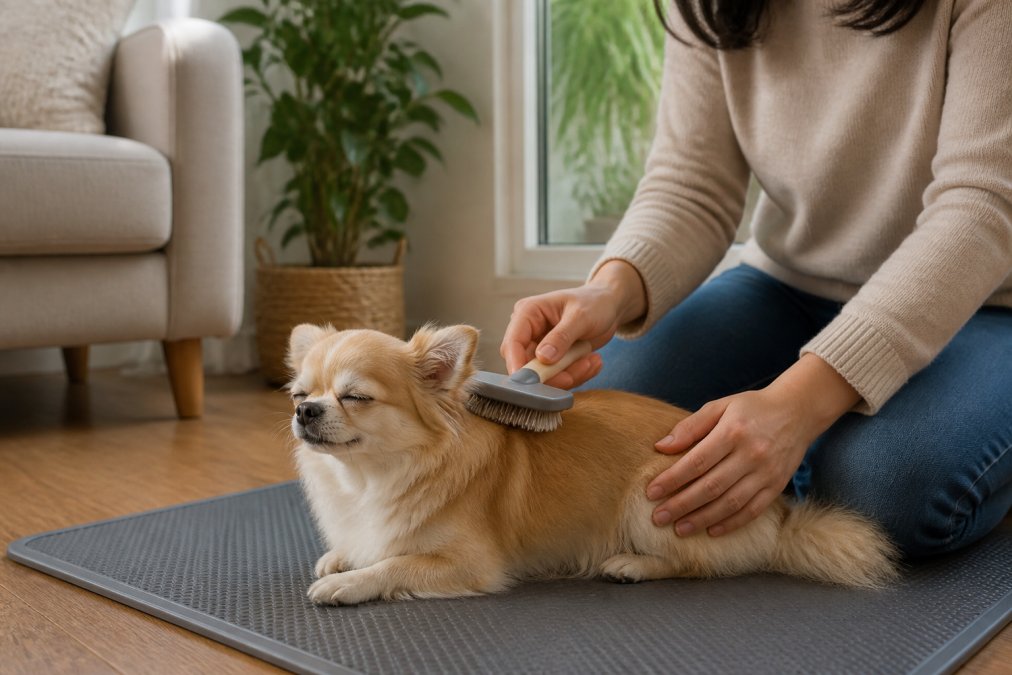
Short strokes with a soft brush protect sensitive skin; long, dragging strokes pull at the roots and irritate thin areas.
Follow these habits:
3-in-1 Gentle Steam Brush for Pet →
- Brush in the direction the coat grows
- Use short strokes, one small section at a time
- Support the skin with your free hand as you brush
- Skip mats by working them loose with your fingers first
- Check armpits, belly, and behind the ears for redness
Grooming Tips for Dogs With Skin Allergies
Dogs with skin allergies need gentler tools, shorter sessions, and care with what touches their coat. Irritated skin reacts to heat, friction, and harsh products.
Keep these tips in mind:
- Use lukewarm water, never hot
- Choose fragrance-free, pet-safe shampoos
- Pat dry instead of rubbing
- Brush less often but more gently
- Rinse thoroughly, since leftover soap causes itching
Breed-Specific Sensitivity Profiles and Emergency Stop Protocols
Sensitivity isn't one-size-fits-all: breed and coat type change what your dog tolerates. A nervous rescue needs a different plan than a dog with atopic dermatitis, and both differ from a double-coated breed that hates the dryer.
Breed and Coat Profiles
Use these profiles as starting points, then adjust based on your individual dog:
- Double coats (Huskies, Goldens, Shetland Sheepdogs): Tolerate brushing well but often panic at forced-air dryers. The undercoat holds water, so drying takes longer and the noise exposure is longer. Use a low-heat, low-velocity dryer and work in sections with breaks.
- Curly coats (Poodles, doodles, Bichons): Need frequent trimming and are prone to tight mats close to the skin. Mats pull with every movement, so these dogs may flinch before you even touch them. Keep the coat short between professional visits and detangle daily with a spray and comb.
- Short coats (Beagles, Boxers, Boston Terriers): Often have sensitive skin and need minimal brushing. Over-brushing causes friction irritation. A rubber curry or soft bristle brush once or twice a week is usually enough.
- Fine hair (Yorkies, Shih Tzus, Maltese): Tangle easily and have thin skin that nicks fast. Use a detangling spray, a metal comb, and blunt-tipped scissors only. Never pull through a tangle.
- Brachycephalic breeds (Pugs, Frenchies, Bulldogs): Stress fast because their airways are already working harder. Panting escalates quickly and can become a medical issue. Keep sessions under five minutes and watch for noisy breathing that doesn't settle when you stop.
Nervous Rescue vs. Physical Skin Condition
These profiles look similar, both dogs flinch, pull away, and resist handling, but the fix differs.
Emergency Stop Protocols
Every owner needs an emergency stop protocol: agree on the line you won't cross before you start.
Stop immediately if you see:
- A snap or air bite
- Freezing and refusing to move
- Panting with no heat or exercise
- Trying to climb over you to escape
- A sudden yelp or cry during handling
- Gums that look pale or gray
How to End a Session Safely Mid-Groom
Stopping abruptly can stress an already aroused dog. A short, calm exit works better:
- Put the tool down where the dog can see you set it down.
- Say nothing in a loud or soothing voice, neutral tone is best.
- Offer a treat on the floor, not from your hand, so the dog can choose to take it.
- Open the door or step back so the dog can leave the space on its own.
- Wait at least an hour before trying again, and start at an easier step than where you stopped.
When to Hand It Off
Some dogs need a professional, and that's not a failure. If your dog has drawn blood, injured itself escaping, or shown escalating aggression, a fear-free certified groomer or a vet clinic offering grooming under mild sedation is safer. Ask your vet for a referral, the wrong groomer can set a sensitive dog back months.
Post-Grooming Recovery and Positive Reinforcement
Then reward, generously:
- Treats right after the last tool goes away
- Praise in a calm, happy voice
- A short play session if your dog is up for it
- A rest on a favorite bed
If your dog needs a full reset, our Furbabies4less recovery and enrichment collection has calm-time toys and gentle tools chosen for anxious pets. A portion of every sale supports animal rescues, so your dog's calm routine helps another dog find one too.
Frequently Asked Questions
What calms a dog down during grooming?
A quiet room, a non-slip surface, and slow movements do most of the work. Pair each step with treats, keep sessions under 10 minutes at first, and use low-noise tools like a quiet trimmer or a gentle steam brush. If your dog still trembles or pulls away, stop and try again tomorrow. Calm comes from repetition, not force.
How do you groom a dog with sensitive skin?
Use tools with rounded or blunt-ended tips, brush in short strokes in the direction of the coat, and skip any product with harsh fragrances. For dogs with allergies, wipe paws after outdoor time and bathe only as often as your vet recommends. A steam brush can loosen tangles without tugging, which reduces irritation on already-sensitive skin.
What are the best tools for grooming anxious dogs?
Low-vibration clippers, a quiet dryer, blunt-ended shears, and a soft slicker brush cover most needs. The CalmFlow Pet Dryer ($64.99) runs quieter than standard dryers, and the Low-Noise Pet Grooming Trimmer ($24.99) has rounded blade tips for face and paw work. The 3-in-1 Gentle Steam Brush ($18.99) softens coats so brushing pulls less.
How long does it take to desensitize a dog to grooming?
Most dogs need 4 to 8 weeks of short, repeated sessions before they stop flinching at the sight of a brush or clipper. Start with 2 to 3 minute sessions several times a week, always ending on a calm note with a reward. Progress is not linear, so a bad day does not mean you are back at the start.
