

Natural Calming Supplements vs Prescription Drugs for Cats
Table of Contents
- Understanding Feline Anxiety and When Calming Supplements for Cats Matter
- Do Calming Supplements for Cats Work? What the Evidence Shows
- Over-the-Counter Calming Aids for Cats: Types and Considerations
- How Long Do Cat Calming Supplements Take to Work?
- Cat Anxiety Medication: When Prescription Options May Be Necessary
- Comparing Natural Supplements and Prescription Drugs: Key Differences
- Making the Right Choice: A Decision Pathway by Anxiety Severity
- Common Mistakes and What Not to Do
- Frequently Asked Questions
Last Updated: October 10, 2026
Understanding Feline Anxiety and When Calming Supplements for Cats Matter
Feline anxiety is more common than many cat owners realize, and recognizing the signs early can make a real difference in your cat's quality of life. At Furbabies4less, we understand how challenging it can be to watch your pet struggle.
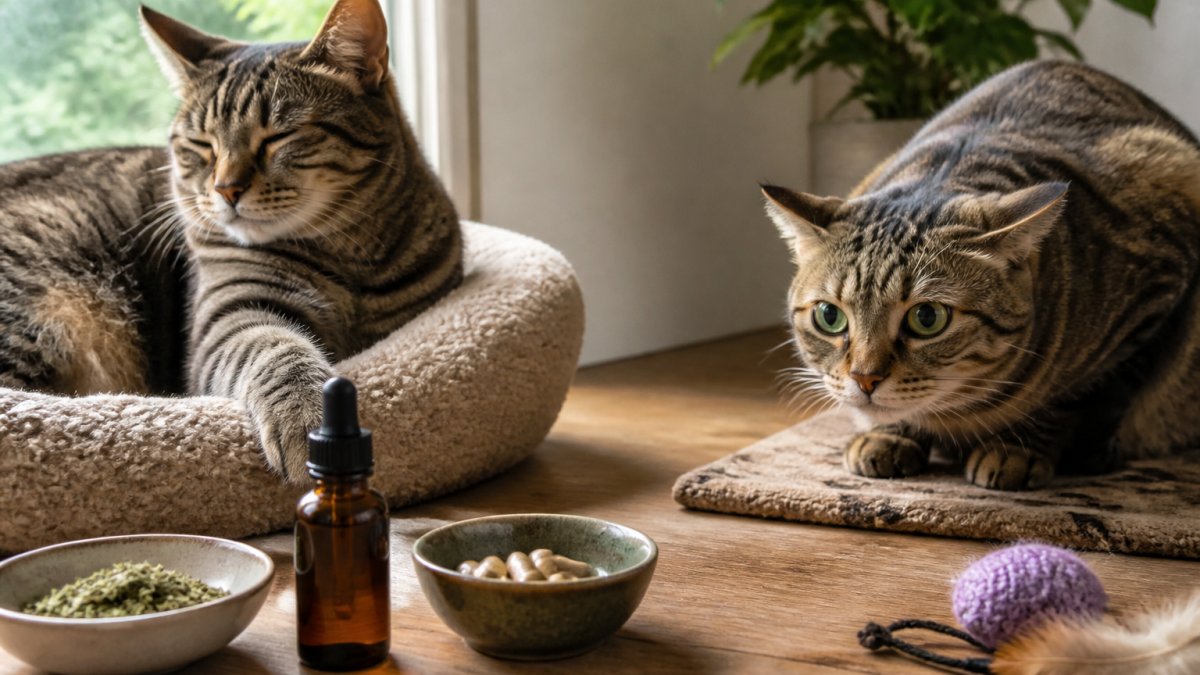
The first step is identifying whether your cat actually has anxiety. Behavioral changes like excessive vocalization, destructive behavior, or withdrawal often signal stress. Some cats hide for days after a vet visit or new person enters the home. Others become aggressive or stop eating.
Signs and behavioral changes to watch for
Anxiety in cats shows up differently than in humans. Your cat might pace constantly, over-groom until their coat thins, or develop litter box issues despite being housetrained. Some cats become clingy and demand constant attention.
The key is noticing changes from your cat's normal behavior. A cat that's usually social but suddenly isolates is sending a signal. A typically calm cat that startles at every sound is stressed.
Common stress triggers in cats
Travel tops the list. Moving to a new home, car rides, or even a trip to the vet can trigger weeks of anxiety. New people in the household, roommates, partners, children, often stress cats who prefer predictable environments. Adding another pet is another major trigger.
Understanding your cat's specific trigger helps you choose the right intervention. A cat anxious only during vet visits needs something different than a cat with persistent, ongoing anxiety.
Do Calming Supplements for Cats Work? What the Evidence Shows
The honest answer: some do, some don't, and the evidence is mixed. Natural calming supplements vs prescription drugs for cats differ significantly in how well they're studied and regulated. Supplements have less rigorous oversight, which means quality varies widely between brands.
Natural ingredients and how they may help
L-tryptophan is an amino acid that supports serotonin production, potentially helping with mood regulation. Alpha-casozepine comes from milk proteins and may promote relaxation. GABA and B vitamins support nervous system function. Herbal options like chamomile and valerian root have been used for centuries, though modern evidence for cats specifically is limited.
Synthetic pheromones like Feliway mimic natural calming scents cats produce. These don't sedate, they signal safety to your cat's brain. Many cat owners report noticing calmer behavior within days of using pheromone diffusers.
What research tells us about effectiveness
Research on cat calming supplements is sparse compared to human studies. Some small studies suggest L-tryptophan and alpha-casozepine reduce anxiety symptoms in some cats. Pheromone products have stronger evidence supporting their use for situational stress.
The quality of supplements matters enormously. Products vary in ingredient concentration, purity, and actual potency. A supplement from a reputable manufacturer may work while an identical-sounding product from another brand does nothing, or worse, contains contaminants.
Over-the-Counter Calming Aids for Cats: Types and Considerations
Over-the-counter options give you flexibility and don't require a vet prescription, but they also mean you're responsible for choosing correctly. This category includes supplements, pheromone products, and herbal preparations.
L-tryptophan, alpha-casozepine, and other natural compounds
L-tryptophan supplements come as powders, capsules, or treats. Dosing varies by product, so follow label instructions carefully. Alpha-casozepine products (like Zylkene) are milk-derived and generally well-tolerated. These options typically take 5-7 days to show effects, sometimes longer.
GABA supplements are less common for cats but available. B vitamins support nervous system health and can be part of a broader wellness approach. Magnesium has calming properties, though evidence specifically in cats is limited.
Synthetic pheromones and herbal options
Feliway and similar pheromone products come as diffusers, sprays, or collars. They work best for situational anxiety, the car ride to the vet, a move, introducing a new pet. Many cats show noticeable calm within hours of exposure.
Herbal supplements like chamomile, valerian, and passionflower have traditional use but limited scientific validation for cats. Some contain ingredients that may interact with medications or cause side effects in sensitive cats.
How Long Do Cat Calming Supplements Take to Work?
Timing matters when choosing between natural supplements and prescription options. Natural calming supplements vs prescription drugs for cats differ significantly in onset time.
Most over-the-counter supplements take 5-14 days to show noticeable effects. Some cats respond faster; others need three weeks or more. Pheromone products often work within hours to days, making them better for immediate, predictable stressors.
This timing difference is crucial. If your cat has a vet appointment tomorrow and you're starting a supplement today, you won't see results in time.
Cat Anxiety Medication: When Prescription Options May Be Necessary
Prescription anti-anxiety medications are stronger, faster-acting, and more thoroughly studied than supplements. They're also more regulated and come with clear dosing, side effect profiles, and veterinary monitoring.
Prescription anti-anxiety medications and how they differ
Fluoxetine (Prozac) is a selective serotonin reuptake inhibitor commonly prescribed for cats with ongoing anxiety. It takes 4-6 weeks to reach full effectiveness, so it's for chronic anxiety, not acute situations. Alprazolam (Xanax) works quickly for immediate anxiety but carries risk of dependence with long-term use.
Each medication works differently and suits different situations. Your veterinarian will recommend based on your cat's specific anxiety pattern, health history, and how quickly you need results.
Safety, side effects, and veterinary monitoring
Prescription medications come with documented side effects. Fluoxetine can cause appetite changes or behavioral shifts. Alprazolam may cause drowsiness or coordination issues. Trazodone commonly causes sedation. Your vet will discuss these before prescribing and monitor your cat for adverse reactions.
Prescription medications require baseline bloodwork in many cases and periodic check-ins. This veterinary oversight is actually a safety feature, your vet is actively managing your cat's response and adjusting as needed. Over-the-counter supplements have no such oversight.
Comparing Natural Supplements and Prescription Drugs: Key Differences
Understanding how these approaches differ helps you make an informed choice for your specific cat.
| Factor | Natural Supplements | Prescription Medications |
|---|---|---|
| Onset Time | 5-14 days (pheromones: hours) | 1-2 hours to 4-6 weeks |
| Regulation | Limited FDA oversight | Strict pharmaceutical standards |
| Side Effects | Generally mild, varies by product | Documented, monitored by vet |
| Cost | Lower upfront | Higher, may require vet visits |
| Veterinary Involvement | Optional | Required |
| Evidence Quality | Mixed, limited studies | Strong clinical evidence |
| Long-term Use | Generally considered safe | Requires monitoring |
Onset time and duration of effect
This is where the biggest practical difference emerges. If your cat needs calm for a one-time event, prescription medication or pheromones work better than supplements. If your cat has chronic anxiety and you're planning long-term management, supplements offer a gentler entry point with fewer side effects to monitor.
Regulation, quality standards, and product safety
Prescription medications are manufactured under strict FDA oversight. Every dose contains exactly what the label states. Supplements are regulated less stringently, quality varies between brands and even between batches of the same product.
This doesn't mean supplements are dangerous, but it means you're taking more responsibility for choosing a reputable brand. Look for third-party testing certifications on supplement labels. Veterinary-formulated products tend to have better quality control than generic options.
Cost, accessibility, and practical considerations
Supplements are generally cheaper upfront and don't require a vet prescription. You can order them online and start immediately. Prescription medications require a vet appointment, a prescription, and usually higher per-dose costs. However, if a supplement doesn't work after two weeks of trying, you've spent money on something ineffective. Prescription medication, while more expensive, has a higher likelihood of producing measurable results.
Making the Right Choice: A Decision Pathway by Anxiety Severity
Your cat's anxiety severity and timeline determine which approach makes sense.
Mild, situational stress: starting with natural approaches
A cat that's anxious only during vet visits or when new people visit has mild, situational stress. Start here: pheromone diffusers or sprays (Feliway), environmental enrichment like hiding spots and vertical space, and behavioral changes like keeping the cat in a quiet room during stressful events.
If these don't help after 2-3 weeks, try a supplement like L-tryptophan or alpha-casozepine. Give it at least two weeks to work. Many cats improve with this approach alone.
Persistent or severe anxiety: when to involve your veterinarian
A cat that hides constantly, refuses to eat, or shows aggression needs veterinary evaluation. Your vet rules out medical causes, hyperthyroidism, pain, or illness can mimic anxiety. Once medical issues are excluded, your vet can recommend prescription medication if needed.
Severe anxiety rarely resolves with supplements alone. Your cat needs faster, more reliable intervention. Prescription medication combined with environmental changes (enrichment, routine, safe spaces) works better than either approach alone.
Combination approaches and supplement-medication interactions
Many cats benefit from combining approaches. Pheromone diffusers plus a supplement works for some. Prescription medication plus environmental enrichment works for others. Some cats need medication temporarily while you work on behavioral changes and enrichment.
Discuss interactions with your vet before combining supplements and medications. Some combinations are safe; others aren't. Your veterinarian knows your cat's health history and can advise specifically.
Common Mistakes and What Not to Do
Many cat owners make understandable mistakes when managing feline anxiety. Knowing what to avoid saves time and money.
Don't assume a supplement will work because it worked for someone else's cat. Individual response varies dramatically.
Don't judge yourself for choosing medication over supplements or vice versa. Both are legitimate approaches. Your cat's wellbeing matters more than following someone else's preference.
Managing feline anxiety is about finding what works for your specific cat. Our vet-informed product selection includes enrichment toys, safe spaces, and grooming tools that support anxious pets alongside whatever calming approach you choose. The American Veterinary Medical Association recommends working with your vet to develop a comprehensive anxiety management plan.
Frequently Asked Questions
Do calming supplements for cats actually work?
Natural calming supplements can help reduce mild to moderate anxiety in some cats, particularly for situational stress like travel or vet visits. Ingredients like L-tryptophan, alpha-casozepine, and herbal compounds such as chamomile may promote relaxation. However, effectiveness varies by individual cat and product quality. Research supports their use for situational anxiety, but they are generally less potent than prescription medications. Always consult your veterinarian to rule out underlying medical causes and determine if supplements are appropriate for your cat's specific situation.
How long do cat calming supplements take to work?
Most natural calming supplements require consistent daily use for 7-14 days to reach full effectiveness, especially for ongoing anxiety. Your veterinarian can recommend the best timeline and dosing schedule for your cat's needs.
What over-the-counter calming options are safe for cats?
Safe over-the-counter options include products containing L-tryptophan, alpha-casozepine (derived from milk protein), synthetic pheromones like Feliway, and certain herbal supplements such as chamomile and valerian. However, not all supplements are created equal. Look for products that specify they are formulated for cats and have been tested for safety and purity. Avoid human supplements or those containing ingredients toxic to cats, such as xylitol. Always read labels carefully and discuss any new supplement with your veterinarian before starting, especially if your cat is on other medications.
When should my cat see a vet instead of just trying supplements?
Schedule a veterinary visit if your cat shows persistent anxiety lasting more than a few weeks, severe behavioral changes, signs of self-injury, or if anxiety significantly impacts eating, sleep, or litter box habits. Your vet can rule out medical conditions that mimic anxiety, such as hyperthyroidism or pain, and determine whether prescription medication is necessary. Prescription options like SSRIs or benzodiazepines may be more effective for chronic or severe anxiety. A veterinary assessment ensures your cat receives the most appropriate treatment for their specific situation.
