

Best Cat Enrichment Toys for Indoors
Table of Contents
- Why Cat Enrichment Toys Matter for Indoor Cats
- Quick Comparison: Top Cat Enrichment Toys
- Interactive Lick Ball for Dogs & Cats - Slow Feeder & Enrichment Toy
- Smart Slow Puzzle Feeder Bowl for Dogs & Cats
- DIY Cat Enrichment Ideas You Can Make at Home
- How to Keep Indoor Cats Entertained: Rotation & Strategy
- Beyond Toys: Water Fountains and Environmental Enrichment
- Conclusion: Building Your Cat's Enrichment Routine
- Frequently Asked Questions
Last Updated: September 21, 2026
Why Cat Enrichment Toys Matter for Indoor Cats
Indoor cats lack outlets for hunting, stalking, and problem-solving instincts. Without mental stimulation and physical activity, they develop behavioral problems, gain weight, and experience anxiety. Cat enrichment toys address this critical need.
Cat enrichment toys trigger prey drive, engage cognition, and reduce destructive behaviors like furniture scratching. They demand interaction, challenge the brain, and exhaust energy in healthy ways.
Cats need mental stimulation as much as physical exercise. Puzzle feeders and interactive toys tap into feline psychology, releasing endorphins and creating the calm, satisfied feeling that keeps indoor cats healthy.
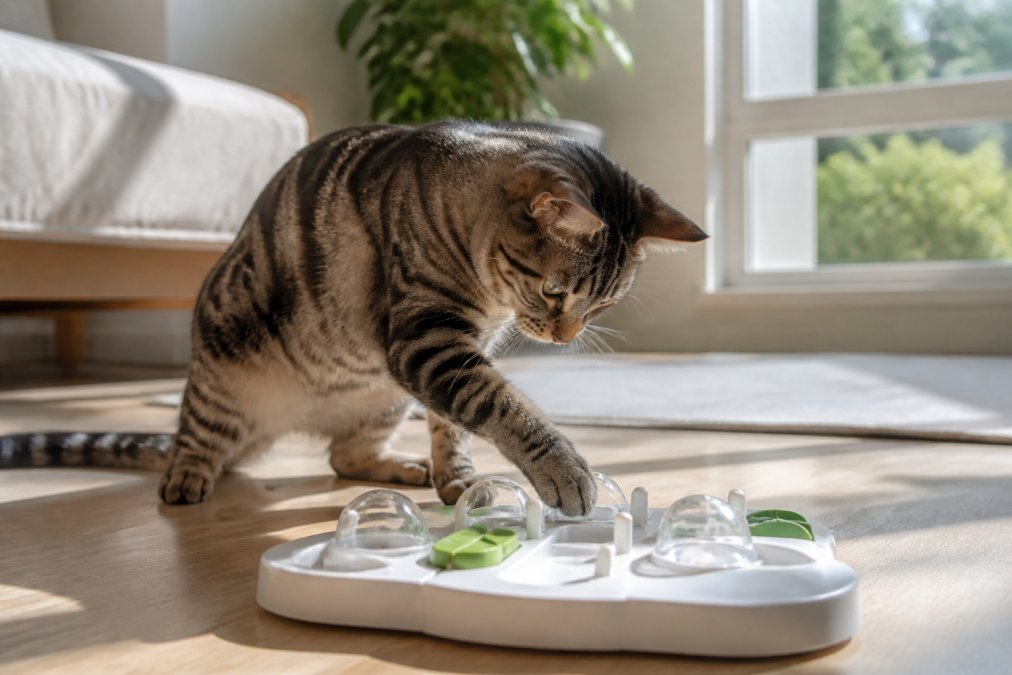
At Furbabies4less, the right enrichment tools can help transform anxious or destructive cats into calm, engaged, and happy companions.
Quick Comparison: Top Cat Enrichment Toys
| Product | Type | Price | Best For | Key Feature |
|---|---|---|---|---|
| Interactive Lick Ball | Slow Feeder & Enrichment | $3.74 | Multi-pet homes, anxious cats | 3D design for extended engagement |
| Smart Slow Puzzle Feeder Bowl | Puzzle Feeder | $25.99 | Fast eaters, mental stimulation | Maze design slows eating by up to 10x |
| PureFlow Pet Water Fountain | Environmental Enrichment | $27.00 | Hydration-focused cats, multi-pet homes | Continuous flow encourages drinking |
Interactive Lick Ball for Dogs & Cats - Slow Feeder & Enrichment Toy
The Interactive Lick Ball delivers hours of engagement through its 3D design, forcing cats to rotate, nose, and paw it to reach treats. Unlike flat lick mats, every interaction differs, keeping brains fully engaged.

The ball shape forces cats to approach from multiple angles, preventing repetitive patterns. The textured surface supports oral health by cleaning teeth and massaging gums.
The licking action releases calming endorphins, making it ideal for anxious cats during alone time or crate training. It works for both cats and dogs in multi-pet households.
Pros: Affordable at $3.74, dishwasher safe, works for multiple pets, doubles as anxiety relief, supports oral health
Cons: Requires preparation (filling with treats), may need multiple balls for multi-cat households
Smart Slow Puzzle Feeder Bowl for Dogs & Cats
Fast eating causes bloating and digestive issues while missing mental stimulation. The Smart Slow Puzzle Feeder Bowl transforms meals into cognitive challenges.

The maze design slows eating by up to 10 times, improving digestion and nutrient absorption while turning mealtime into mental enrichment.
The non-slip base keeps it firmly in place even for enthusiastic eaters. Dishwasher-safe design means cleanup takes seconds. At $25.99, it's an investment that pays dividends in digestive health and behavioral improvement.
Pros: Slows eating significantly, prevents bloating, adds mental stimulation at every meal, non-slip base, dishwasher safe
Cons: Higher price point than basic feeders, requires wider space in feeding area, not ideal for very young kittens
DIY Cat Enrichment Ideas You Can Make at Home
DIY enrichment using household items costs almost nothing. Safety and material quality are essential.
Safe Materials and What to Avoid
Safe materials: Plain cardboard boxes, paper bags (handles removed), and newspaper; 100% cotton rope, jute twine, and sisal; untreated wood; dried grass, hay, catnip, and silvervine; ping pong balls and plastic balls (1.5+ inches diameter). Avoid glossy cardboard, synthetic dyes, treated lumber, and small swallowable items.
Materials to avoid: Synthetic string and yarn (choking/blockage risk); rubber bands and elastic; thin plastic bags; toxic plants (lilies, sago palm); treated wood and adhesives; small detachable parts (buttons, beads, unsecured bells).
Proven DIY Enrichment Projects
Cardboard box hunting tunnels: Cut 2-3 holes in box sides, fill with crumpled paper for sensory stimulation. Cats spend hours hunting through it; the enclosed space calms anxious cats. Replace every 2-3 weeks.
Ping pong ball bath toy: Place 5-10 ping pong balls in a bathtub. The enclosed space keeps them from rolling away, engaging stalking and pouncing instincts. Supervise to prevent choking.
Feather wand from household items: Tie 3-5 natural feathers to untreated jute twine or cotton rope attached to a wooden dowel. Move erratically to simulate injured prey. Requires supervision and secure storage.
Treat-filled toilet paper rolls: Fold ends and fill with treats or catnip. Cats must unroll it to access contents. Wrap in newspaper for durability. Completely biodegradable and free.
Scent-enriched paper bags: Fill with crumpled newspaper and catnip or silvervine. The texture, scent, and opening challenge provide multi-sensory enrichment. Replace weekly.
Puzzle feeder from a muffin tin: Place treats in alternating cups and cover with ping pong balls or cardboard. Cats remove covers to access treats. Works for all ages, requires no construction skills.
Sustainability and Long-Term Enrichment Strategy
DIY enrichment is sustainable because cardboard, paper, and natural materials are recyclable or compostable. Rotate toys regularly to maintain novelty, a box that thrilled your cat two weeks ago becomes boring if left in place. Track which DIY toys your cat engages with most and focus efforts on what works for your cat.
How to Keep Indoor Cats Entertained: Rotation & Strategy
Strategic rotation maintains engagement. Divide toys into groups and rotate weekly. When toys reappear after being hidden, they feel new again, re-engaging your cat's interest.
Age-Specific Enrichment Strategies
Kittens (8 weeks to 1 year): Benefit from fast-paced interactive toys like wand toys with feathers. Avoid small detachable parts. Climbing structures are essential. Rotate toys every 3-4 days to maintain engagement.
Adult cats (1 to 10 years): Handle complex puzzle feeders, motion-activated toys, and interactive games. Rotate toys weekly. Environmental enrichment like window perches and climbing trees supports observation and stalking. Pair interactive play with natural activity peaks (dawn and dusk).
Senior cats (10+ years): Focus on low-impact enrichment: slow-moving toys, easy-access puzzle feeders, and scent-based toys.
Personality-Based Enrichment Selection
Hunters and stalkers light up around wand toys, laser pointers, and motion-activated toys. Foragers and problem-solvers prefer puzzle feeders and treat-dispensing toys. Anxious or noise-sensitive cats need quiet enrichment like cardboard boxes and silent puzzle feeders; avoid electronic toys with beeps or chirps. Social cats thrive on scheduled interactive play sessions.
Timing and Environmental Context
Timing enrichment with your cat's natural activity patterns amplifies effectiveness. Cats are naturally active at dawn and dusk (crepuscular hunters). Schedule interactive play sessions during these windows, 15 to 20 minutes in early morning and early evening. Use puzzle feeders at meal times to combine feeding with mental work. Before you leave for work, engage your cat with an interactive toy so they're calm and satisfied while you're gone.
Beyond Toys: Water Fountains and Environmental Enrichment
Enrichment isn't limited to toys. Your cat's entire environment can be designed to support mental stimulation and physical wellness. Water fountains represent one of the most underrated enrichment tools because they address a critical health issue while providing engagement.
Conclusion: Building Your Cat's Enrichment Routine
Indoor cats thrive when their environment supports their natural instincts. Enrichment isn't a luxury, it's essential for physical health, mental wellness, and behavioral balance. The combination of interactive toys, puzzle feeders, environmental features, and strategic rotation creates a life where your cat stays engaged, calm, and genuinely happy.
Frequently Asked Questions
What are the most stimulating toys for indoor cats?
The most stimulating cat enrichment toys combine mental and physical challenges. Puzzle feeders like the Smart Slow Puzzle Feeder Bowl ($25.99) engage problem-solving skills, while interactive lick balls ($3.74) provide extended engagement through texture and treat-dispensing. Motion-activated toys and wand toys that mimic prey movements also rank highly because they tap into hunting instincts. Rotating toys every few days keeps novelty high and prevents habituation.
Are puzzle feeders good for indoor cats?
Yes. Puzzle feeders deliver significant cat puzzle feeder benefits beyond just feeding. They slow eating by up to 10x, reducing bloating and digestive issues while providing mental stimulation that combats boredom and anxiety. The Smart Slow Puzzle Feeder Bowl turns mealtime into a brain-engaging activity, making it especially valuable for indoor cats that lack the natural foraging challenges outdoor cats experience. Cats must work around ridges and channels to reach food, creating cognitive engagement with every meal.
How often should I rotate my cat's toys?
Rotate toys every 3-7 days to maintain interest and prevent boredom. A cat's novelty response fades quickly once a toy becomes routine. By cycling through a selection of 4-6 toys, you keep the environment fresh without buying constantly. This strategy works especially well with puzzle feeders and interactive toys, reintroducing a toy after a week away feels brand new to your cat, reigniting engagement and mental stimulation.
What are some ways to enrich my cat indoors?
Effective enrichment combines toys, feeding strategies, and environmental design. Use puzzle feeders to make meals engaging, provide vertical climbing spaces, and rotate interactive toys regularly. The Interactive Lick Ball ($3.74) offers extended engagement through licking, which releases calming endorphins. Add water fountains like the PureFlow ($27.00) to encourage hydration while providing sensory stimulation. DIY enrichment, cardboard boxes, paper bags, crinkled paper, costs nothing and often captivates cats more than expensive toys.
Building a rich environment for your indoor cat doesn't require expensive solutions. It requires consistency, observation, and the right tools. At Furbabies4less, we've designed our enrichment products to be affordable, effective, and built to last. Every purchase supports animal rescues while giving your cat the stimulation they need to thrive indoors. Shop our cat enrichment collection and discover how simple additions transform your cat's daily life.
