

Is Hemp Oil Safe for Anxious Pets? A Vet-Informed Guide
Table of Contents
- Is Hemp Oil Safe for Anxious Pets? Start Here
- Hemp Oil Side Effects in Dogs and Cats to Watch For
- CBD Oil Dosage for Dogs: Why There Is No Universal Number
- How to Choose Hemp Oil for Pets: A Label-by-Label Checklist
- Natural Ways to Calm an Anxious Dog Alongside Hemp Oil
- Medication Interactions and Pets Who Need Extra Caution
- When Anxiety Needs a Diagnosis, Not a Supplement
- Frequently Asked Questions
Last Updated: October 20, 2026
Is Hemp Oil Safe for Anxious Pets? Start Here
Hemp oil safe use is generally well tolerated by most dogs and cats when it comes from a reputable source and is given at a sensible amount.
We talk to rescue owners every week who are trying to calm an anxious pet without sedating them.
The short version: hemp seed oil is not the same as CBD oil, and only one of them is used for anxiety.
Hemp Seed Oil vs. CBD Oil: The Difference That Matters
Hemp seed oil is a cooking oil pressed from hemp seeds. CBD oil is an extract made from hemp flowers and leaves that contains cannabidiol. They share a name and almost nothing else.
Here is the practical split:
- Hemp seed oil: no meaningful cannabinoids, no THC, sold as a nutritional oil. It will not calm a nervous dog.
- CBD oil: contains cannabidiol, may contain small amounts of THC, and is the product people actually use for anxiety.
- Full-spectrum hemp oil: an extract that keeps other cannabinoids and trace THC. This is the type most often linked to calming effects.
Many "hemp oil for pets" bottles on shelves are seed oil with a calming-sounding label. Check the back panel before you buy.
What the Evidence Actually Shows
Honest answer: the evidence is thin. Most of what we know comes from small studies in dogs, plus a large body of human research. There is no approved veterinary drug for anxiety built from CBD.
What the research suggests:
- CBD may reduce signs of stress in some dogs, based on small trials.
- Results vary widely between animals.
- Many products tested did not contain the amount of CBD printed on the label.
That last point matters most. A 2023 analysis of CBD pet products found a large share were mislabeled. You cannot dose what you cannot measure.
Hemp Oil Side Effects in Dogs and Cats to Watch For
Hemp oil side effects in dogs are usually mild, but they are real. The most common one is drowsiness, followed by loose stools and a drop in appetite.
Watch for these signs in the first few hours after a dose:
- Sleepiness or wobbliness
- Vomiting or soft stool
- Reduced appetite
- Excessive licking or restlessness
- In rare cases, sensitivity to THC causes tremors or disorientation
Cats tend to be more sensitive to THC than dogs.
Most mild effects fade within a few hours. Anything involving tremors, collapse, or trouble breathing needs a call to your vet or an emergency clinic right away.
CBD Oil Dosage for Dogs: Why There Is No Universal Number
There is no official CBD oil dosage for dogs. No regulatory body has approved a dose, and the studies that exist used different products, different strengths, and different measures of "calm."
That leaves you with a careful trial, not a formula. A common approach is:
- Start low. Begin at the smallest amount on the label for your pet's weight.
- Give it once daily for three to five days and note behavior.
- Increase slowly only if you see no change and no side effects.
- Log everything. Time, amount, and what you observed.
- Stop if anything looks off and call your vet.
Some researchers measure CBD in milligrams per kilogram of body weight. That only helps if your bottle states the actual CBD content in milligrams. If it doesn't, the number on the front is marketing.
How to Choose Hemp Oil for Pets: A Label-by-Label Checklist
How to choose hemp oil for pets comes down to one habit: read the back, not the front. The front panel sells the product. The back panel tells you what it is.
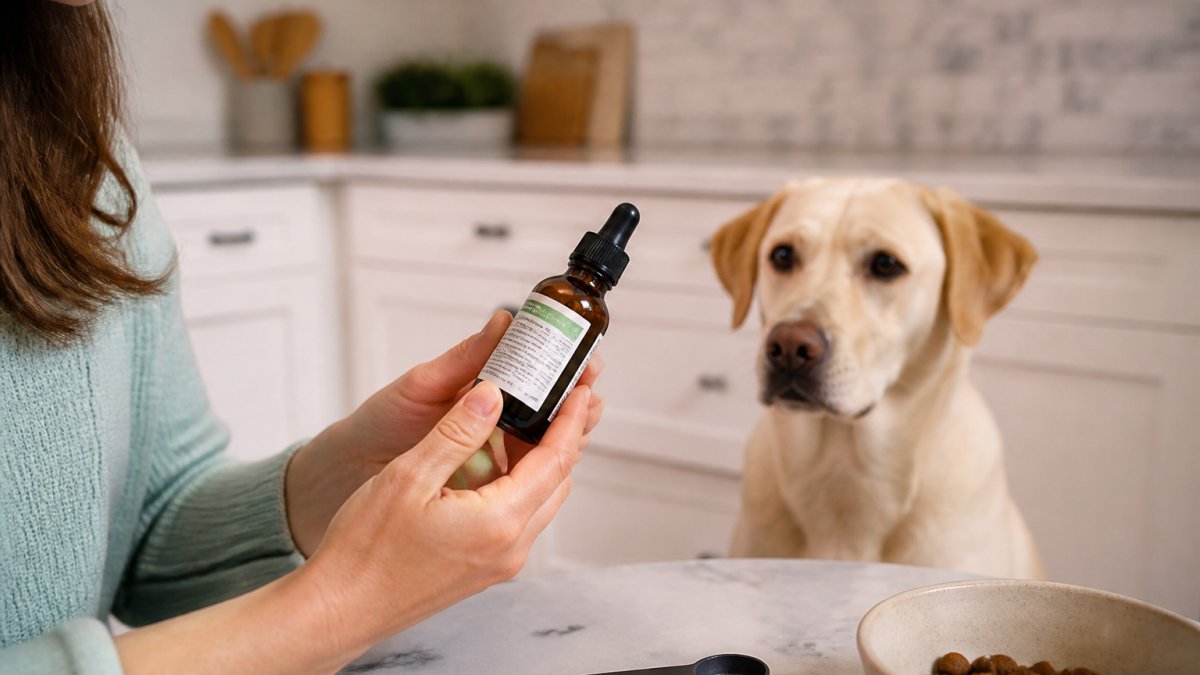
Run every bottle through this list:
- Does it say "CBD" or "cannabidiol" with a milligram amount per bottle or per serving?
- Is there a certificate of analysis from a third-party lab?
- Does the COA match the batch number on the bottle?
- Is the THC level stated, and is it low (ideally at or below 0.3% on a dry-weight basis, the common hemp threshold)?
- Is the carrier oil listed (hemp seed, coconut/MCT, olive)?
- Are there added flavors or sweeteners that could upset a stomach?
- Does it name a species (dog, cat, or both)?
- Is there a phone number or contact for questions?
Two or more blanks means walk away.
Reading a Certificate of Analysis Like a Pro
A certificate of analysis (COA) is a lab report showing what is actually in the bottle. Most reputable brands post them on their website, often searchable by batch number. Here is what to look at, in order:
- Batch match. The batch or lot number on the COA must match the bottle in your hand. A COA for a different batch proves nothing about your product.
- Date tested. A COA older than the batch itself is a red flag. Freshness matters because cannabinoids can degrade over time.
- Cannabinoid panel. Look for the CBD amount in milligrams per milliliter or per bottle, plus any THC, CBG, or CBN. Compare the CBD number to what the label claims, a large discrepancy is a warning.
- Contaminant panel. A complete COA screens for heavy metals (lead, arsenic, cadmium, mercury), pesticides, residual solvents, and microbials like mold and bacteria. A COA that only reports cannabinoids is incomplete.
- Pass/fail lines. Most labs state pass or fail per category. You want passes across the board, not just on cannabinoids.
If a brand will not share a COA, or shares one that does not match your batch, treat that as a no. The cost of a lab test is small; the cost of an untested product in a sick pet is not.
Interpreting the Numbers on the Label
Two numbers confuse shoppers most: total CBD and THC content.
- Total CBD is usually expressed in milligrams per bottle or per milliliter. A 30 mL bottle labeled "300 mg CBD" contains roughly 10 mg per milliliter. That math matters when you are starting low.
- THC content is often listed as a percentage or in milligrams. For pets, lower is safer, and "ND" (not detected) is the clearest signal. A product that does not disclose THC at all is a gamble, especially for cats.
Ingredients Beyond the Cannabinoids
The carrier oil matters more than most people think. MCT or coconut oil is common and generally well tolerated, but can cause loose stools in sensitive pets. Hemp seed oil as a carrier is fine nutritionally but adds no calming effect. Avoid products with xylitol (toxic to dogs), added sugars, or artificial sweeteners. A short ingredient list you can pronounce is usually the safer bet.
Natural Ways to Calm an Anxious Dog Alongside Hemp Oil
Natural ways to calm an anxious dog work best as a stack, not a single fix. Hemp oil can take the edge off, but it won't teach a dog that the vacuum isn't a threat.
What we recommend alongside it:
- Weighted or snug pressure wraps for thunder and travel anxiety
- Long sniff walks, which tire the brain faster than a run
- Puzzle feeders and enrichment toys to redirect nervous energy
- A predictable routine, since surprises spike anxiety
- A quiet safe space with a bed the dog chooses
Behavior training does the long-term work. Supplements buy you a calmer window to train in.
Medication Interactions and Pets Who Need Extra Caution
Hemp oil can interact with other medications, and this is the part most guides skip. CBD is processed by the same liver enzymes as many common drugs, so it can change how fast those drugs clear the body.
Talk to your vet first if your pet takes:
- Seizure medication
- Heart medication
- Blood thinners
- Thyroid medication
- Any drug with a narrow safety margin
Extra caution applies to pets with liver or kidney disease, pregnant or nursing animals, and very young or senior pets. None of these are automatic no's. They are reasons to get a vet's input before the first dose.
What to Do If Your Pet Eats Too Much
Call your vet or a pet poison hotline immediately. Do not wait for symptoms.
Bring the bottle with you or have a photo of the label ready. Tell them the product name, the strength, and your best guess at how much was eaten. Signs of too much include vomiting, tremors, wobbliness, and lethargy. Most pets recover with supportive care, but a vet needs to make that call.
When Anxiety Needs a Diagnosis, Not a Supplement
Sometimes anxiety is a symptom, not the problem. Pain, thyroid issues, hearing loss, and cognitive decline can all look like anxiety in an older pet.
Book a vet visit if you see:
- Sudden anxiety in a pet that was previously calm
- Anxiety paired with weight loss, thirst, or appetite changes
- Self-harm, destructive behavior, or attempts to escape
- Anxiety that stops your pet eating or sleeping
A supplement is not a diagnosis. If the behavior is new, severe, or getting worse, the first step is a vet exam, not a bottle.
At Furbabies4less, we built our catalog around the everyday tools that support calmer pets: enrichment toys, puzzle feeders, and gentle grooming essentials.
Frequently Asked Questions
Can hemp oil interact with my pet's medications?
Yes, it can. Cannabinoids are processed by the same liver enzymes that break down many common pet medications, including some seizure drugs, pain relievers, and steroids. That means hemp oil can change how much of a drug stays in your pet's system. If your dog or cat takes any prescription medication, or has liver or kidney disease, talk to your veterinarian before starting hemp oil. Bring the actual product label so your vet can see the cannabinoid content and confirm whether hemp oil is safe alongside the current treatment plan.
What side effects can hemp or CBD oil cause in pets?
The most commonly reported effects are drowsiness, lethargy, and dry mouth. Some pets get the opposite reaction and become restless. Larger amounts can cause vomiting, diarrhea, wobbliness, or disorientation. Products with higher THC content carry a greater risk of intoxication, which shows up as tremors, dilated pupils, or unsteadiness. Start with a small amount, watch your pet for the first few hours, and stop if you see any of these signs. Contact your veterinarian or a pet poison hotline if symptoms are severe.
How do I choose a hemp product for my anxious pet?
Look for a certificate of analysis from a third-party lab, listed on the label or the brand's website. Check that it shows cannabinoid content in milligrams and confirms THC levels. Choose a product made for pets, not a human tincture, and avoid added xylitol, which is toxic to dogs. Look for clear dosing instructions by weight and a carrier oil like coconut or olive oil. When learning how to choose hemp oil for pets, the label transparency matters more than the marketing claims.
Is hemp oil safe for cats with anxiety?
Cats can be more sensitive to cannabinoids than dogs, and there is far less research on feline use. Hemp seed oil, which contains little to no cannabinoids, is generally well tolerated in small amounts. CBD-rich hemp extract is riskier for cats because their liver processes it differently. Never give a cat a product dosed for a dog. Talk to your veterinarian first, start with a very small amount if they approve, and monitor for drowsiness, vomiting, or changes in behavior.
Anxious pets need a plan, not a single product. Start with a vet conversation, choose a tested product if you go that route, and build the calm environment around it. Furbabies4less can help with the enrichment toys, feeders, and gentle grooming tools that make that routine easier, all at prices that work for rescue families. Shop today and give your pet a calmer, more comfortable life.
