

Best Dog Enrichment Tools for Anxiety: 2026 Picks
Table of Contents
- Quick Comparison: Best Dog Enrichment Tools for Anxiety
- What Are Dog Enrichment Tools and Why They Matter
- Calming Dog Bed: Deep Comfort for Anxious Sleepers
- Lick Mats and Licking Plates: Natural Anxiety Relief Through Licking
- Best Puzzle Toys for Separation Anxiety and Independent Play
- Mental Stimulation for Anxious Dogs: Why It Works
- How to Stop Dog Furniture Chewing with Enrichment Tools
- How to Choose the Right Enrichment Tool for Your Anxious Dog
- Frequently Asked Questions
Last Updated: September 14, 2026
Quick Comparison: Best Dog Enrichment Tools for Anxiety
The best dog enrichment tools for anxiety work with a dog's natural calming biology. At Furbabies4less, we've seen how rescue dogs respond when the right tool matches the right behavior. This guide breaks down effective dog enrichment tools for anxiety, from lick mats that trigger endorphin release to puzzle toys that redirect destructive energy.
A dog that paces, whines, or chews furniture isn't stubborn, it's under-stimulated and stressed. The right tool gives that energy somewhere to go.
Below, we'll show which tools work for which anxiety triggers, how to introduce them without overwhelming an anxious dog, and what most guides skip: durability, cleaning, and budget options.
American Veterinary Medical Association guidance on canine anxiety
What Are Dog Enrichment Tools and Why They Matter
Dog enrichment tools satisfy a dog's natural instincts, foraging, licking, chewing, problem-solving, in a controlled, calming way. For anxious dogs, they lower stress hormones by giving the nervous system a job to do.
Mental stimulation for anxious dogs redirects frantic energy into focused activity. A dog solving a puzzle or working a lick mat isn't scanning the room for threats.

Pet enrichment has moved toward behavioral solutions. Lick mats, snuffle-style feeders, and treat-dispensing toys are key components of many anxiety-management routines.
Calming Dog Bed: Deep Comfort for Anxious Sleepers
Anxious dogs often can't settle because their resting environment doesn't feel secure. The Calming Dog Bed's deep-cushion, donut-shaped design mimics the warmth and security of curling up with their pack.

Its raised rim gives dogs something to lean into and rest their head on, supporting their instinctive curled sleeping position.
It's machine washable, has a non-slip bottom, and comes in multiple sizes, suiting anxious dogs that struggle to settle and dogs with separation anxiety.
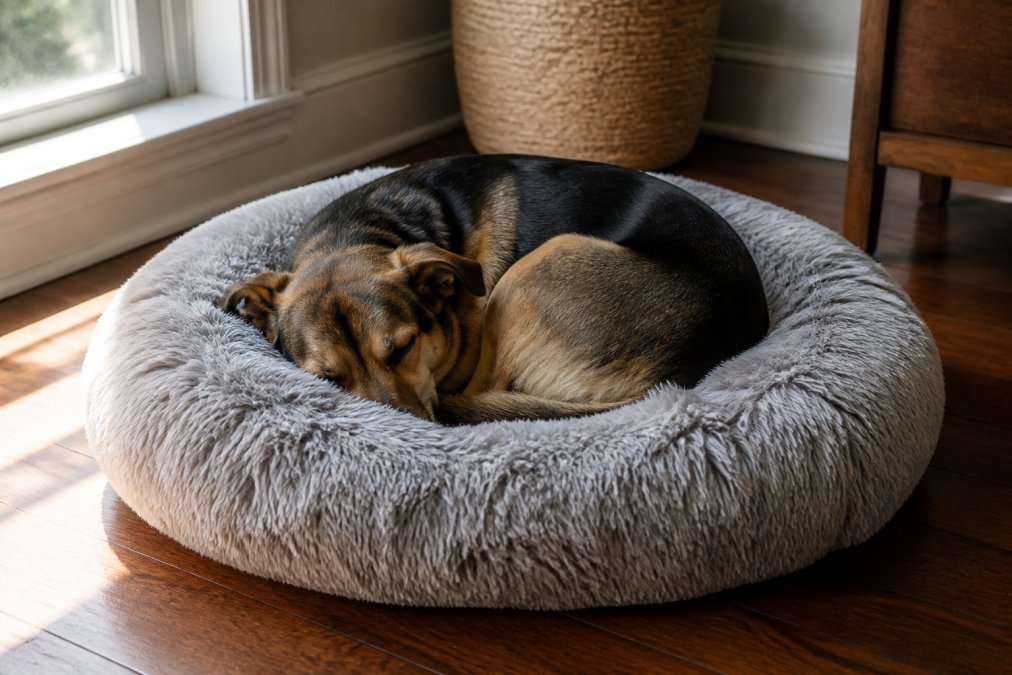
Where it falls short: intense chewers can damage plush materials if left unsupervised during a panic episode. Pair the bed with a durable chew or lick tool.
Lick Mats and Licking Plates: Natural Anxiety Relief Through Licking
Licking is one of the most reliable calming techniques available. Repetitive licking triggers endorphin and serotonin release and activates the parasympathetic nervous system, lowering heart rate and cortisol (avma.org).
The Anxiety Relief Lick Mat ($21.70) works during thunderstorms, fireworks, separation, grooming, and vet visits. Its suction base sticks to walls, floors, and tubs, and it's dishwasher-safe, non-toxic, pet-safe silicone.
The Suction Lick Bowl ($19.75) solves sliding mats: its heavy-duty suction base locks to tub walls and tile floors, making it the better pick for bath time and grooming. For dogs bored by flat mats, the Enrichment Licking Plate ($21.28) adds textured grooves that require focus and mimic natural foraging.

Best Puzzle Toys for Separation Anxiety and Independent Play
The best puzzle toys for separation anxiety are treat-dispensing toys that keep working after you leave the room, the toy has to hold attention without you.
The Interactive Lick Ball ($3.74) is the standout value pick. Its 3D rotating design forces pets to nose, paw, and roll it to reach the treat, creating deeper mental stimulation than a flat mat. It works for dogs and cats and is dishwasher safe.
For higher-energy dogs, the Interactive Dog Ball Toy ($24.99) rolls and changes direction on its own, mimicking prey movement and triggering the chase instinct. It's USB rechargeable for indoor use on hardwood, tile, and low-pile carpet.
| Tool | Price | Best For | Key Feature |
|---|---|---|---|
| Interactive Lick Ball | $3.74 | Multi-pet homes, fast eaters | 3D rotating design |
| Interactive Dog Ball Toy | $24.99 | High-energy, separation anxiety | Self-moving, USB rechargeable |
| Anxiety Relief Lick Mat | $21.70 | Trigger events, grooming | Suction base, dishwasher safe |
| Enrichment Licking Plate | $21.28 | Boredom, destructive chewing | Textured grooves, slow feeder |
A common mistake is buying one puzzle toy and expecting it to work forever. Rotate two or three so novelty keeps the problem-solving drive engaged.
Mental Stimulation for Anxious Dogs: Why It Works
Mental stimulation for anxious dogs competes directly with anxiety for the same cognitive resources. A dog working a foraging challenge can't simultaneously rehearse the panic loop that drives pacing and whining.
Canine behavior research suggests that dogs are problem-solvers by nature, and when they lack problems to solve, they may create their own, sometimes involving furniture (pubmed.ncbi.nlm.nih.gov).
What some guides may not emphasize is dosage: focused enrichment can be highly effective.
For dogs left alone during the day, a frozen lick plate or stuffed lick ball set out right before you leave bridges the first anxious hour.
How to Stop Dog Furniture Chewing with Enrichment Tools
Stopping furniture chewing starts with understanding what the chewing does for the dog. Destructive behavior is usually boredom relief, stress discharge, or both. Punishment removes neither cause and adds a second stressor for an anxious dog.
The fix is substitution, not suppression. When your dog targets a chair leg, redirect to a durable chew or a lick tool loaded with something high-value, so stress has an outlet more rewarding than furniture.
Match the tool to chew strength, not breed size
The factor many buyers underestimate is chew intensity. Anxiety can influence how a dog chews: a mildly anxious dog might mouth and nibble, while a severely anxious dog might bite down hard and fast during a panic episode. Breed size is not the only indicator, a smaller terrier in a thunderstorm can sometimes out-chew a larger, calmer dog.
A practical way to sort tools is by two axes: chew strength and mental engagement.
| Chew strength | Typical behavior | Best tool category | What to avoid |
|---|---|---|---|
| Light | Nibbles, mouths, loses interest fast | Lick mats, licking plates, snuffle-style feeders | Hard rubber chews the dog ignores |
| Moderate | Sustained chewing, shreds fabric toys | Food-grade silicone chews, treat-stuffed rubber | Thin plush, rope toys that fray |
| Heavy | Destroys "indestructible" toys, chews furniture | Dense rubber chews rated for power chewers, frozen stuffed toys | Anything fabric, anything with a squeaker |
Mental engagement is the second axis: a heavy chewer with low engagement needs a tool that resists teeth; a light chewer with high engagement needs one that resists boredom. Pair one tool from each column, a durable chew for the panic window, a puzzle or lick tool for the wind-down window.
The escalation ladder
Don't jump straight to the toughest chew on the shelf. Work up:
- Start with a lick tool. Licking is low-effort and calming, so it works even for dogs that won't engage with a puzzle.
- Add a stuffed, frozen chew. Freezing slows the reward and extends the session, which is what you want during a trigger event.
- Move to a puzzle feeder once the dog reliably works the first two. This is where independent play starts to replace your presence.
- Introduce a durable chew only after you've watched the dog's chewing style for a week. You'll know whether you need moderate or heavy.
If your dog destroys a tool in the first session, that is information, not failure. Step back one rung and supervise more closely.
Introduction protocols that prevent setbacks
Introduction protocols reduce failure rates, especially for anxious dogs. Don't hand an anxious dog a brand-new tool during a stressful moment, introduce it during a calm period so it becomes familiar before it becomes a coping mechanism.
- Introduce the tool during a calm, low-stress moment
- Supervise the first three sessions fully
- Match material to chew intensity, not breed size
- Rotate tools every few days to prevent habituation
- Clean after every use to prevent bacterial buildup
How to Choose the Right Enrichment Tool for Your Anxious Dog
Choosing the right tool comes down to three factors: your dog's anxiety trigger, chewing intensity, and whether the tool must work while you're present or absent.
If your dog panics when left alone, prioritize independent-play tools like the Interactive Lick Ball or self-moving Interactive Dog Ball Toy. If it struggles during handling, grooming, or storms, prioritize suction-based lick tools. If anxiety shows up as pacing and whining rather than destruction, a problem-solving puzzle feeder does more than a chew.
Temperature matters too. Anxious dogs that overheat during stress episodes benefit from the CoolRest Comfort Mat ($30.99), whose pressure-activated cooling gel dissipates body heat. A hot, stressed dog settles less easily than a cool one.
Durability against anxiety intensity is the most underestimated factor. Severe anxiety produces harder chewing and more frantic licking than mild anxiety. If your dog has destroyed everything, start with the most durable food-grade silicone options and supervise closely.
| If Your Dog... | Choose | Why |
|---|---|---|
| Panics when alone | Interactive Lick Ball | Works without you present |
| Struggles during grooming | Suction Lick Bowl | Locks to tub and tile |
| Chews furniture | Enrichment Licking Plate | Redirects chewing to licking |
| Needs to settle at night | Calming Dog Bed | Supports natural curl position |
| Overheats when stressed | CoolRest Comfort Mat | Pressure-activated cooling |
Cleaning and hygiene: the part most guides skip
Food-based enrichment tools are used daily, and food residue on silicone or rubber grows bacteria fast. A dog with a sensitive stomach will pay for a dirty mat, and an allergic dog can develop skin irritation around the mouth. Treat cleaning as a daily routine, not a weekly one.
A workable protocol:
- Rinse immediately after every use. Warm water, no soap, before residue dries in the grooves.
- Wash thoroughly every one to three days. Dishwasher-safe silicone goes on the top rack; hand-wash anything with a suction base to protect the seal.
- Deep-clean weekly. A soak in warm water with a pet-safe enzymatic cleaner breaks down the biofilm that plain rinsing leaves behind.
- Inspect for damage. Cracks and chewed edges harbor bacteria and can break off as a choking hazard. Retire the tool at the first sign of either.
- Never leave wet food sitting out. A stuffed toy left in a crate all day is a bacterial culture, not an enrichment tool. Freeze it instead.
If your dog eats from a lick mat or puzzle feeder daily, buy two and rotate them so one is always clean and dry.
Introducing a new tool to a highly anxious dog
Introducing new tools requires care. A highly anxious dog can perceive a new object as a threat, and a food-stuffed toy can trigger resource guarding if presented incorrectly. It can be helpful to make the tool familiar before making it valuable.
- Leave it on the floor, empty, for a day or two. Let the dog investigate on its own schedule. No coaxing.
- Add a tiny smear of something familiar. A dab of the dog's regular food or a treat they already know, not a novel high-value item that raises arousal.
- Feed one meal from it in a calm room. No other pets, no triggers, no audience. If the dog walks away, pick it up and try again later.
- Increase the challenge gradually. Add texture, freeze it, or move to a puzzle only after the dog is reliably working the simpler version.
- Pair it with a trigger only after it's familiar. The first time you use it during a storm or before you leave, the dog should already associate the tool with calm.
Furbabies4less selects every product with vet-informed criteria, and a portion of each sale supports animal rescue organizations, the same standard that helped our rescue dog, Oz, recover from severe anxiety.
Frequently Asked Questions
What is the 3-3-3 rule for dogs with anxiety?
The 3-3-3 rule describes a common adjustment timeline for rescue dogs: three days to decompress, three weeks to settle into a routine, and three months to feel fully at home. During each phase, anxiety can show up as hiding, pacing, or destructive chewing. Dog enrichment tools help at every stage by giving your dog a predictable, calming activity. Lick mats and puzzle feeders work especially well in the first three days when your dog is overwhelmed by a new environment.
What are some good enrichment toys for anxious dogs?
The best dog enrichment tools for anxiety combine licking, chewing, or problem-solving with a calming effect. Lick mats, suction lick bowls, and enrichment licking plates trigger endorphin release through repetitive licking. Puzzle toys and treat-dispensing balls provide mental stimulation that tires an anxious brain. A calming dog bed supports rest, while interactive balls redirect restless energy. Rotating two or three of these tools prevents boredom and keeps your dog engaged throughout the day.
How does mental stimulation help reduce dog anxiety?
Mental stimulation for anxious dogs works by giving their brain a job to do. When a dog focuses on a puzzle feeder or a lick mat, their attention shifts away from the anxiety trigger, whether that's a thunderstorm, a closed door, or being left alone. The repetitive motion of licking also activates the parasympathetic nervous system, which lowers heart rate and cortisol. Focused enrichment can contribute to a calmer dog.
What are safe, durable enrichment tools for heavy chewers?
For heavy chewers, look for tools made from non-toxic, food-grade silicone or durable rubber. Lick mats and licking plates from Furbabies4less are dishwasher safe and designed to withstand aggressive licking without tearing. Suction lick bowls with heavy-duty bases stay put even for large breeds. Always supervise your dog during play, inspect toys for cracks or tears after each session, and replace anything that shows wear. Durability matters most when anxiety-driven chewing is intense.
How long should a dog spend on enrichment activities daily?
Most dogs benefit from 15 to 30 minutes of focused enrichment per day, split into two or three short sessions. Anxious dogs often do better with more frequent, shorter activities because their attention span is shorter under stress. A morning lick mat session, an afternoon puzzle toy, and an evening chew or interactive ball can total around 30 minutes without overwhelming your dog. Adjust based on your dog's energy level and how quickly they settle after each activity.
Anxious dogs don't need more toys. They need the right tools matched to their specific triggers, chewing intensity, and daily routine. Furbabies4less offers vet-informed enrichment essentials, including lick mats, puzzle feeders, and calming beds, each chosen for real-world durability and easy cleaning. Every purchase also helps support animal rescues. Get started with Furbabies4less and give your dog a calmer, more settled daily routine.
