

Calming Grooming Tools for Anxious Pets: 7 Best Options
Table of Contents
- Why Calming Grooming Tools Matter for Anxious Pets
- Low-Noise Pet Clippers: The Foundation of Stress-Free Grooming
- Essential Calming Grooming Tools: Product Guide
- How to Groom a Nervous Dog at Home: Step-by-Step
- Creating a Sensory-Friendly Grooming Environment
- Managing Anxiety Triggers During Grooming Sessions
- Post-Grooming Recovery and Comfort
- Frequently Asked Questions
Last Updated: September 24, 2026
Why Calming Grooming Tools Matter for Anxious Pets
Grooming an anxious pet can feel like a battle. Your dog trembles at the sight of clippers. Your cat hides under the bed when the dryer comes out. The stress isn't just emotional, it's physical. Anxious pets have elevated cortisol levels during grooming, their heart rates spike, and they can develop lasting fear associations with the entire process.
Calming grooming tools for anxious pets address the actual triggers causing distress by working WITH your pet's nervous system, not against it.
Dogs and cats have hearing far more sensitive than humans.
Low-Noise Pet Clippers: The Foundation of Stress-Free Grooming
Most standard pet clippers operate at 80-90 decibels, equivalent to a lawnmower running next to your pet's ears. That's not just loud; it's terrifying for noise-sensitive animals. Low-noise clippers change everything because they address the primary anxiety trigger before training even begins.
How vibration and sound trigger anxiety
Vibration travels through the clipper into their skin and bones, creating a physical sensation of threat. For anxious dogs, this combination of sound and vibration activates their fight-or-flight response immediately, causing muscle tension and rapid breathing.
Choosing the right trimmer for home use
The [Low-Noise Pet(/products/low-noise-pet-grooming-trimmer) Grooming Trimmer from Furbabies4less | furbabies4less.com] ($24.99) delivers professional results without the noise trauma. It features an ultra-quiet motor that won't startle anxious or noise-sensitive pets, USB rechargeable cordless operation for easy maneuvering, and precision blades for clean cuts around the face, paws, ears, and body.
Essential Calming Grooming Tools: Product Guide
Building a complete grooming setup for anxious pets means selecting tools that work together. Each tool addresses a different part of the grooming process and a different anxiety trigger.
| Tool | Price | Primary Benefit | Best For |
|---|---|---|---|
| Low-Noise Pet Grooming Trimmer | $24.99 | Quiet motor reduces sound/vibration | Hair trimming, paw pads, facial hair |
| CalmFlow Pet Dryer | $64.99 | Low-noise, adjustable temperature | Post-bath drying without panic |
| SafeGlow Nail Clippers | $27.99 | LED light prevents overcutting | Safe nail trimming for dark nails |
| LED Pet Nail Clippers | $23.22 | Blood line visibility | Confident trimming without mistakes |
| 3-in-1 Gentle Steam Brush | $18.99 | Softens coat, reduces pulling | Gentle brushing and detangling |
| Anxiety Relief Lick Mat | $21.70 | Natural calming through licking | Grooming distraction and anxiety relief |
| Calming Dog Bed | $70.00 | Nest-like security | Post-grooming recovery and rest |
1. Low-Noise Pet Grooming Trimmer ($24.99)
The foundation of home grooming. This trimmer's ultra-quiet motor is the single most important feature for anxious pets. Professional grooming results without the salon appointment. USB rechargeable, works for dogs and cats, and includes safe rounded blade tips.

2. CalmFlow Pet Dryer ($64.99)
Standard pet dryers are loud and hot, terrifying for most anxious pets. The CalmFlow changes this with a low-noise motor dramatically quieter than standard dryers, adjustable temperature settings for sensitive skin or thick coats, and powerful airflow that dries fast without overheating.
3. SafeGlow Nail Clippers ($27.99)
Nail trimming creates unique anxiety because pets associate it with pain, the fear of cutting the quick is real. SafeGlow addresses this with an LED light that illuminates the quick so you see exactly where to cut, precision sharp blades for clean cuts that don't crush or split nails, and a safety guard that prevents overcutting.
4. LED Pet Nail Clippers ($23.22)
A more compact option with the same blood-line visibility feature. Built-in LED light reveals the quick through the nail, eliminating guesswork. Sharp metal blade cuts cleanly in one motion, no crushing or splitting. Lightweight at just 89 grams, easy to maneuver even on wiggly pets.
5. 3-in-1 Gentle Steam Brush ($18.99)
Brushing anxious pets often triggers resistance because standard brushes pull on mats and tangles. The 3-in-1 gentle steam brush softens the coat first, making brushing pain-free. Steam, brush, and shine in one tool. Reduces shedding by loosening and removing dead fur effectively.
6. Anxiety Relief Lick Mat ($21.70)
This is your grooming distraction secret weapon. Stick it to the wall or tub, load it with peanut butter or yogurt, and your dog becomes completely calm while you work. Repetitive licking triggers natural endorphin release, the same calming chemicals activated during exercise or play.
7. Calming Dog Bed ($70.00)
Post-grooming recovery matters. After a stressful grooming session, anxious pets need a space that signals safety. The donut-shaped design mimics the security of sleeping curled with their pack. Raised rim bolster gives them something to rest their head on, triggering natural calming responses.
Anxiety Relief Lick Mat for Dogs – Calm →
How to Groom a Nervous Dog at Home: Step-by-Step
Home grooming an anxious dog requires patience, the right tools, and a structured approach. This process works because it addresses behavioral conditioning alongside tool selection.
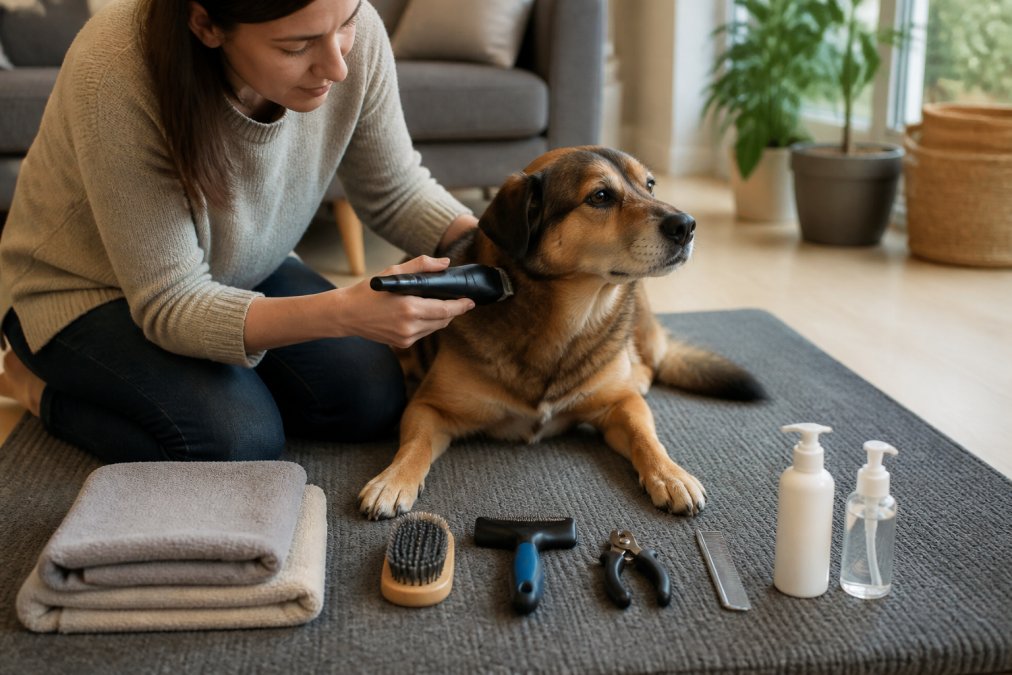
Step 1: Build a calm grooming environment
Create a quiet room with good lighting away from loud pipes and traffic noise. Soft lighting reduces visual stress; soft background music or white noise masks triggering sounds. Keep the room warm to prevent shivering, which increases anxiety. Use a non-slip grooming mat so your dog feels secure.
Step 2: Introduce tools slowly with positive reinforcement
Spend 3-5 days introducing tools without using them. Turn clippers on for a few seconds near their bed, rewarding with treats and praise. Gradually hold clippers closer while treating. This counter-conditioning step rewires their brain's association with tools from "threat" to "good things happen."
Step 3: Use desensitization and counter-conditioning
Desensitization means gradual exposure to the anxiety trigger at low intensity; counter-conditioning pairs the trigger with something positive. Start with clippers off, touching their paw gently and treating immediately. Next session, turn clippers on for one second near their paw and treat. Gradually increase duration and proximity over multiple sessions, this takes weeks for anxious dogs.
Step 4: Start with tactile stimulation and handling
Before using any grooming tool, your dog needs to accept touch. Gently handle their paws, ears, and face during calm moments and reward this handling. Many anxious dogs have tactile sensitivity and panic when touched in certain areas. Use a grooming glove initially, it feels less threatening than bare hands, then gradually transition to direct touch as tolerance builds.
Step 5: Execute the grooming session with breaks
When you're ready for actual grooming, keep sessions short, 5-10 minutes maximum for anxious dogs. Use the [Anxiety Relief Lick Mat(/products/calm-lick-mat) from Furbabies4less | furbabies4less.com] to keep them occupied and calm. Work on one area at a time. Trim paws, then take a break. Trim ears, then break.
Creating a Sensory-Friendly Grooming Environment
Sensory overload is the root cause of grooming anxiety. Use soft, diffused lighting instead of harsh overhead lights. Close windows to block traffic noise and turn off fans and appliances. Groom during quiet hours if your dog is extremely noise-sensitive. Use a warm, non-slip mat to prevent stress from cold or slipping.
Managing Anxiety Triggers During Grooming Sessions
Anxiety triggers are specific to each pet. Some dogs panic at the sound of clippers. Others fear nail trimming specifically. Identifying your pet's particular triggers lets you address them directly.
Post-Grooming Recovery and Comfort
What happens after grooming shapes your pet's willingness to be groomed next time. Recovery protocols matter.
Frequently Asked Questions
What features should I look for in quiet pet clippers?
The most important feature is a low-noise motor that minimizes both sound and vibration. Standard clippers operate at 80-90 decibels, which can terrify anxious pets. Look for models with ultra-quiet motors, precision blades that cut cleanly without crushing, and ergonomic handles for comfortable control. USB rechargeable options offer cordless freedom, and rounded blade tips protect sensitive skin. The Low-Noise Pet Grooming Trimmer ($24.99) combines all these features for home grooming without the stress.
How can I naturally calm my anxious dog during grooming?
Licking is nature's anxiety remedy, it triggers endorphin and serotonin release in dogs, lowering heart rate and cortisol levels. Use a lick mat like the Anxiety Relief Lick Mat ($21.70) loaded with peanut butter or yogurt during grooming sessions to redirect anxious energy. Combine this with desensitization techniques: introduce tools gradually, use positive reinforcement with treats and praise, and create a calm environment with soft lighting and minimal noise. Start with short sessions and build tolerance over time.
Can grooming tools help reduce pet stress?
Yes, the right tools make a significant difference. Low-noise clippers, dryers with adjustable temperature settings, and nail clippers with LED lights to prevent mistakes all reduce anxiety triggers. The CalmFlow Pet Dryer ($64.99) uses a low-noise motor to eliminate the stress of standard loud dryers. SafeGlow Nail Clippers ($27.99) with LED illumination prevent painful mistakes that increase fear. Combined with calming enrichment tools like lick mats, these products create a stress-free grooming experience.
What is the 3-3-3 rule for dogs with anxiety?
The 3-3-3 rule helps anxious dogs adjust to new situations: 3 days to decompress, 3 weeks to learn routine, and 3 months to feel truly at home. For grooming anxiety, apply this principle by spacing desensitization sessions over weeks rather than rushing. Introduce one tool at a time, let your dog inspect it without pressure, then practice handling in short bursts. This gradual approach, paired with positive reinforcement and comfort items like the Calming Dog Bed ($70.00), builds confidence and reduces stress signals over time.
