

5 Harness Mistakes Keeping Your Rescue Dog Anxious
Last Updated: October 25, 2026
Quick Summary
A harness for nervous dogs distributes pressure evenly across the chest and shoulders while avoiding the neck entirely, reducing the choking sensation that triggers anxiety. The best harness for nervous rescue dogs combines a front-clip attachment point for gentle control, adjustable straps for custom fit, and soft padded material for comfort.
- Check harness fit by slipping two fingers under the chest strap where it crosses the ribs for proper security.
- Front-clip harnesses gently redirect a dog's momentum toward you instead of allowing them to lunge forward.
- Introduce a harness gradually over three weeks indoors before moving to outdoor walks to build positive associations.
- Measure your dog's girth at the widest point behind the front legs before buying any harness.
- Check harness fit every two weeks during the first three months, then monthly after that as your dog's body changes.
Table of Contents
- Why the Right Harness Matters for Nervous Rescue Dogs
- Escape-Proof Dog Harness Fit: The Critical Check Most Owners Miss
- Harness vs. Collar for Nervous Dogs: Why One Wins
- Dog Harness Fitting Guide: Sizing, Adjustability, and Comfort
- How to Introduce a Harness to a Fearful Dog: A Gradual Plan
- Common Harness Mistakes That Increase Anxiety
- Finding Your Rescue Dog's Right Harness
- Frequently Asked Questions
Why the Right Harness Matters for Nervous Rescue Dogs
A harness for nervous dogs isn't just about control during walks, it's about reducing the physical and emotional stress your rescue experiences every time you clip the leash. When a dog feels trapped or pressured, anxiety spikes. The wrong harness for nervous dogs can actually trigger fear responses, making walks harder instead of easier.
Nervous rescue dogs often carry trauma from their past. Understanding signs of anxiety in rescue dogs helps you recognize what your dog is experiencing and why harness choice matters so much. They're hyperaware of anything touching their body, and a poorly fitted collar or harness can feel like a threat rather than a tool.
Harness choice directly impacts how quickly a rescue dog's anxiety improves. Dogs that start with a comfortable, properly fitted harness can show improvements in their willingness to walk, explore, and engage with their environment. It's one of the most overlooked factors in rescue dog recovery.
The best harness for nervous rescue dogs combines three things: comfort through even pressure distribution, security through proper fit, and ease of use so you're not fumbling with complicated buckles during stressful moments. We'll walk you through exactly what to look for and the mistakes that keep dogs anxious longer than necessary.
Escape-Proof Dog Harness Fit: The Critical Check Most Owners Miss
An escape-proof fit isn't about paranoia, it's about safety. Nervous dogs bolt. A harness that slips even slightly can turn a manageable moment into a crisis.
Here's what most owners get wrong: they measure their dog once, buy a harness, and assume it fits forever. Dogs' bodies change with seasons, weight fluctuations, and muscle development.
The critical check happens after you've put the harness on. Slip two fingers (not your whole hand) under the chest strap where it crosses your dog's ribs. You should feel gentle resistance, your fingers fit, but barely.
Next, check the girth measurement. This is the circumference around your dog's chest at the widest point, just behind the front legs. Measure with a soft measuring tape while your dog stands naturally.
For a nervous dog, a slightly snug fit (but not tight) is actually preferable. It provides what's called "deep pressure stimulation", similar to the calming effect of a weighted blanket. This can actually reduce anxiety during walks.
Watch out: A harness that's too loose won't just fail to control pulling, it can slip off entirely if your dog panics and thrashes. A nervous dog in an escape-proof harness has fewer reasons to panic in the first place.
Harness vs. Collar for Nervous Dogs: Why One Wins
The collar-versus-harness debate ends quickly when you understand what nervous dogs experience. A collar applies pressure directly to the neck, an area packed with sensitive nerves and the trachea. For an anxious dog, this feels like a constant threat.
A harness distributes that same pressure across a much larger surface area: the chest and shoulders. This is biomechanically gentler and psychologically less threatening. A nervous dog in a harness can breathe fully and move without the sensation of being choked, which removes one major source of walk-related anxiety.
Collars also give owners less control when a dog pulls or panics. If your nervous rescue suddenly bolts at the sight of another dog, a collar offers only neck use. A harness, especially one with a front-clip attachment point, redirects the dog's momentum toward you rather than away from you.
Front-clip harnesses are particularly effective for nervous dogs. The leash attachment sits on the dog's chest rather than the back. When your dog pulls, the harness gently turns them back toward you instead of allowing them to lunge forward.
The only scenario where a collar might work is if your dog is already calm and walks perfectly loose-leash. For a nervous rescue dog, that's rarely the case during the first months of adjustment.
Dog Harness Fitting Guide: Sizing, Adjustability, and Comfort
Getting the sizing right is the foundation of everything else. Most harnesses come in four to five sizes: extra-small, small, medium, large, and extra-large. Size charts vary wildly between manufacturers, which is why measuring your dog's girth is non-negotiable.
Start with girth measurement. Have your dog stand naturally (not stretched out, not hunched). Measure around the chest at the widest point behind the front legs. Write this number down.
Next, check weight ranges on the harness you're considering. Weight alone is unreliable, a muscular 40-pound dog needs a different harness than a lean 40-pound dog, but it gives you a starting range.
Adjustability is where comfort decisions happen. A harness with multiple adjustment points lets you fine-tune the fit for your specific dog's body shape. Nervous dogs often have unusual body proportions, some are barrel-chested, others are narrow through the ribs.
Look for adjustable chest straps, girth straps, and neck openings. Quick-release buckles matter too. When your nervous dog is already anxious, fumbling with complicated closures adds stress to both of you.
Padding and material choice affects comfort significantly. Soft, breathable fabric prevents rubbing and chafing, which is especially important for rescue dogs with sensitive skin or prior injuries. Fleece-lined or padded chest straps distribute pressure more evenly than bare webbing.
| Fitting Element | What to Check | Why It Matters |
|---|---|---|
| Girth measurement | Two fingers fit snugly under chest strap | Prevents escape and ensures comfort |
| Neck opening | Harness sits behind shoulders, not on neck | Reduces choking sensation and anxiety |
| Strap adjustability | Multiple points to tighten/loosen | Accommodates individual body shapes |
| Material | Soft, padded fabric | Prevents rubbing and increases comfort |
| Buckles | Quick-release or simple clips | Reduces stress during on/off process |
How to Introduce a Harness to a Fearful Dog: A Gradual Plan
Introducing a harness to a fearful dog too quickly can backfire. The dog associates the harness with force or discomfort, and anxiety around walks worsens.
Vest-Style Dog Harness – Comfort, Control & Safety →
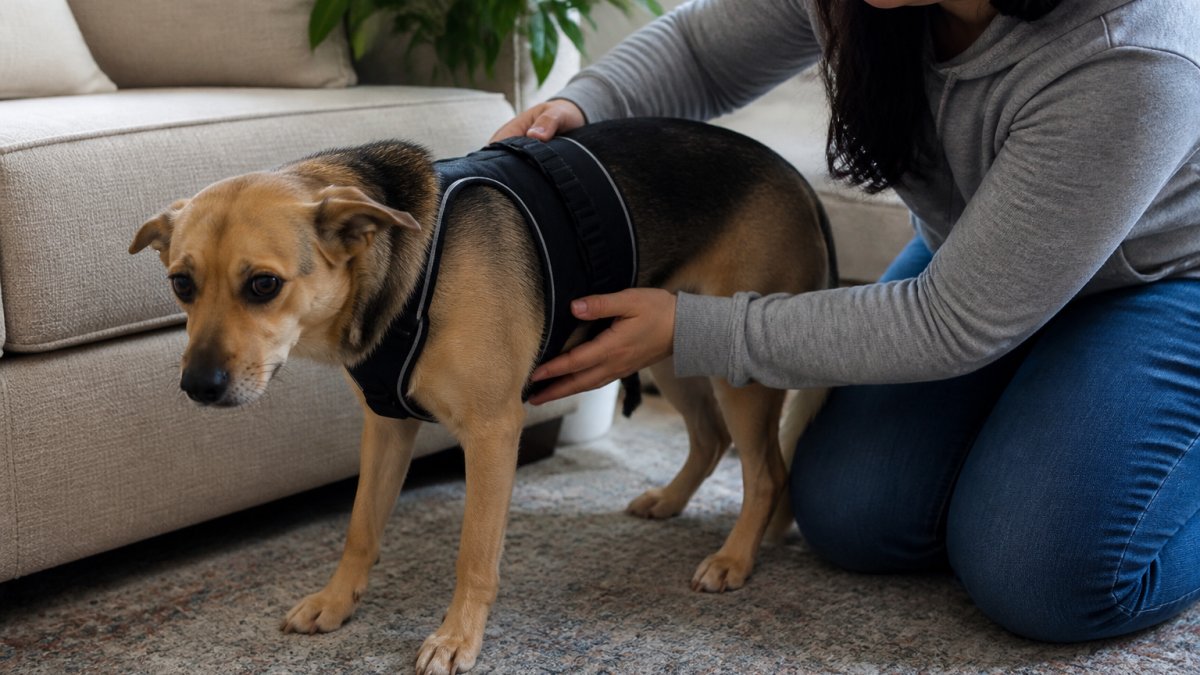
Start indoors, away from walk-related pressure. Let your dog sniff the harness while you hold it. Offer treats. The goal is neutral association, the harness predicts good things, not scary things.
Day one and two: Place the harness on the floor. Reward your dog for approaching it, sniffing it, stepping over it. No fastening yet. Keep sessions under five minutes. Nervous dogs overwhelm quickly.
Day three and four: Hold the harness open and let your dog step into it voluntarily. Fasten it loosely for just 30 seconds while offering high-value treats (cheese, chicken, whatever your dog loves). Remove it immediately. Repeat this three times, then stop.
Days five through seven: Gradually increase the time the harness stays on. Start at one minute, then two, then five. Your dog should be moving around freely indoors while wearing it. This teaches them that the harness doesn't restrict movement, it's just something on their body.
Week two: Take your dog on a very short walk indoors (hallway, basement, anywhere confined). Keep it under two minutes. The goal is proving that the harness works during movement without pressure or fear.
Week three: Move to a quiet outdoor space. A backyard or empty parking lot is ideal. Keep the walk short and low-stress. Let your dog set the pace.
Only after your dog moves confidently in the harness during low-stress situations should you introduce it to busier environments or longer walks.
Watch out: Skipping any of these steps teaches your dog that fear gets them out of the harness. Learn how to calm rescue dog anxiety with broader strategies that support the harness introduction process.
Common Harness Mistakes That Increase Anxiety
Mistake one: buying a harness without measuring. Most owners grab a size based on their dog's weight and hope it fits. Nervous dogs sense when something isn't quite right, and an ill-fitting harness triggers anxiety.
Mistake two: using a back-clip harness for a dog that pulls. Back-clip attachment points are designed for dogs that walk calmly on a loose leash.
Mistake three: leaving the harness on for too long during early introduction. A nervous dog wearing a harness for hours during the first week associates it with discomfort and restriction.
Mistake four: switching harnesses frequently. Nervous dogs do better with consistency. Once you've found a harness that fits well and your dog tolerates it, stick with it during the critical adjustment period.
Mistake five: not checking the fit regularly. As your dog's body changes or seasons shift, the fit changes too. A harness that was perfect in summer might be loose by fall.
Mistake six: ignoring signs of discomfort.
The difference between a dog that dreads walks and one that looks forward to them often comes down to harness choice and introduction method.
Finding Your Rescue Dog's Right Harness
The best harness for nervous rescue dogs combines three non-negotiable features: a front-clip attachment point for gentle control, adjustable straps for a custom fit, and soft, padded material for comfort. Beyond that, your choice depends on your dog's specific body shape and sensitivity level.
Our vest-style dog harness checks all three boxes. It's designed specifically for dogs that need extra security and comfort, with a no-pull design, adjustable straps, and soft breathable fabric. The quick-release buckles mean you can get your dog in and out without wrestling with complicated closures. For nervous rescue dogs, this simplicity matters.

When you're evaluating any harness, measure your dog first, then check the fit using the two-finger rule. Watch your dog's body language during the first few wears. If they move freely and show no signs of stress, you've found the right fit. If they seem restricted or uncomfortable, adjust the straps or size up.
The harness is the tool. Your patience during introduction is what actually changes your dog's anxiety. A great harness combined with a gradual, consent-based introduction plan gives your nervous rescue the best chance to feel safe, secure, and ready for walks again.
Frequently Asked Questions
Is a harness better than a collar for a nervous rescue dog?
Yes. A harness for nervous dogs distributes leash pressure across the chest and shoulders instead of concentrating it on the neck, reducing choking, strain, and panic. This is especially important for rescue dogs with fear or reactivity. A no-pull harness also gives you better control during walks without causing discomfort, which helps anxious dogs feel safer and more secure.
How do I stop my rescue dog from backing out of a harness?
An escape-proof fit requires that all adjustable straps must be fastened securely. If your dog still backs out, the harness size may be wrong, not the fit.
What type of harness is best for a fearful or anxious dog?
A vest-style harness with a front-clip attachment is ideal for fearful dogs. The front-clip design redirects pulling toward your body rather than allowing forward momentum, which reduces panic. Soft, breathable materials and adjustable straps allow a customized fit. Quick-release buckles make putting on and taking off easier, which is critical because nervous dogs often resist handling.
How long does it take to introduce a harness to a fearful rescue dog?
Gradual introduction typically takes 1-2 weeks, but depends on your dog's fear level. Start by letting your dog smell and investigate the harness off-body for 2-3 days. Then place it on for 10 seconds while offering treats, gradually increasing time indoors. Once your dog tolerates wearing it at home, take short walks of 5-10 minutes. Never force the harness on or rush the process; patience builds trust and reduces anxiety during walks.
Helping your nervous rescue dog feel confident on walks starts with the right harness, one that prioritizes comfort and security without restriction. When you combine proper fit with a gradual introduction plan, you're not just solving a walking problem. You're building trust and reducing the anxiety that keeps many rescue dogs stuck. Shop our vest-style harness and discover how the right fit can change your dog's entire relationship with walks.

