

Are Calming Chews Worth It for Puppies? A 2026 Review
Table of Contents
- The Short Answer: When Calming Chews Help Puppies
- Are Calming Treats Safe for Puppies?
- Puppy Calming Chews Age: When It's Appropriate to Start
- How Long Do Calming Chews Take to Work?
- Best Calming Chews for Puppies: What to Look For
- Training Versus Supplements: A Fair Comparison
- Non-Supplement Calming Tools Worth Trying
- Verdict: Are Calming Chews Worth It for Puppies?
- Frequently Asked Questions
Last Updated: October 17, 2026
The Short Answer: When Calming Chews Help Puppies
Calming chews help puppies in narrow, situational cases, and they are not a fix for ongoing anxiety. We treat them as a support tool for predictable stress events, not a daily habit. If your puppy panics during storms, fireworks, car rides, or nail trims, a chew may take the edge off.
The honest answer most product pages skip: calming chews are worth it when you pair them with training and enrichment, and close to useless when you use them alone.
Are Calming Treats Safe for Puppies?
Most calming treats are safe for healthy puppies when the label directions are followed, but "safe" depends on age, weight, and ingredients. Puppies metabolize supplements differently than adult dogs because their liver enzymes and blood-brain barrier are still maturing, and their bodies are growing fast.
The FDA Center for Veterinary Medicine guidance on pet supplements is worth reading before you buy anything. Pet supplements are not reviewed for safety and effectiveness the way drugs are, so the label and the manufacturer carry most of the responsibility.
Puppy-Specific Risks and Ingredient Cautions
Puppies face risks adult dogs do not. Watch for these:
- Weight-based dosing errors. Cutting an adult chew in half does not reliably halve the dose. A 25-pound puppy given half of a 50-pound chew may still get more active ingredient than intended if the chew is not scored or if the ingredients are unevenly distributed. Look for products with explicit puppy weight ranges and a scored or breakable format.
- Calorie load. Treats count toward daily calories. A typical soft chew runs 10-30 calories, and several per day can upset a puppy's digestion or crowd out balanced food. Puppies need calorie-dense, complete diets; filling them with treats is a real trade-off.
- Choking and size. Small, hard chews are a hazard for toy breeds and young puppies still learning to chew. Soft chews are safer for puppies under six months, but check that the chew is not small enough to swallow whole.
- Ingredient sensitivities. Some puppies react to specific herbs or fillers with loose stool or vomiting. Common culprits include chamomile, valerian root, and certain protein binders. Introduce one new product at a time so you can identify the cause.
- Interactions. If your puppy is on any medication, including flea, tick, or heartworm preventives, ask your veterinarian before adding a supplement. Some herbal ingredients can interact with prescription drugs, and puppies are more vulnerable because their dosing margins are narrower.
- Accidental overconsumption. Puppies chew through packaging. Store calming chews out of reach, and if your puppy eats more than the label dose, call your veterinarian or a pet poison control line immediately. Signs to watch for include vomiting, lethargy, wobbliness, or unusual agitation.
A practical rule: for puppies under 12 weeks, skip supplements entirely and use enrichment and routine. For puppies 12-16 weeks, only use a chew under veterinary guidance. For puppies over 16 weeks, start with the lowest labeled puppy dose and observe for 60-90 minutes before committing to a full serving.
Puppy Calming Chews Age: When It's Appropriate to Start
The general rule is to wait until a puppy is at least 12 weeks old, and many veterinarians prefer 16 weeks or older before introducing any supplement.
Check the product label first. Reputable brands print a minimum age and a weight range, and those numbers exist for a reason.
For puppies under six months, we would start with behavior and enrichment tools before reaching for a chew. Training, enrichment, and a calm routine solve more puppy anxiety than any supplement.
How Long Do Calming Chews Take to Work?
Most calming chews take 30 to 60 minutes to take effect, and the response varies widely between individual puppies. Some puppies settle within half an hour; others show little change at all.
This timing is why chews work best for predictable events. If you know a thunderstorm is coming or a vet visit is scheduled, giving the chew an hour ahead gives it a chance to work.
Effectiveness is also not guaranteed. A chew that calms one puppy may do nothing for another. Treat the first few uses as a test, not a commitment.
Best Calming Chews for Puppies: What to Look For
The best calming chew for a puppy is one with a clear weight-based dose, a short ingredient list, a stated minimum age, and an evidence-backed active ingredient. Everything else is secondary. Here is our evaluation framework:
| What to Check | Why It Matters | Red Flag |
|---|---|---|
| Minimum age on label | Puppies develop at different rates | No age guidance at all |
| Weight-based dosing | Prevents under- or over-dosing | "One size fits all" |
| Ingredient list | Fewer ingredients, easier to spot sensitivities | Long list of unnamed "proprietary blend" |
| Active ingredient amounts | Lets you compare products fairly | Amounts hidden |
| Manufacturer transparency | Signals accountability | No contact info or sourcing details |
| Cost per dose at your puppy's weight | Prevents overpaying for a product that lasts days | Price per bag without dose math |
Puppy-Specific Dosing Math
Most labels give a dose range by weight, but puppies are not miniature adults. A 10-pound puppy at 16 weeks may need a different dose than a 10-pound adult because its metabolism and body composition differ. Use the label's puppy weight range as a starting point, then confirm with your veterinarian.
A simple check: divide the number of chews in the bag by the number your puppy needs per dose. That gives you doses per bag. Then divide the bag price by doses per bag to get cost per dose.
Ingredient Evidence Hierarchy
Not all calming ingredients are backed by the same level of evidence. A practical hierarchy:
- Stronger evidence in dogs: L-theanine, alpha-casozepine (a milk protein derivative), and L-tryptophan have the most consistent published support for reducing anxiety-related behaviors in dogs, though responses vary.
- Moderate or mixed evidence: Chamomile, valerian root, and melatonin are commonly used but have thinner or less consistent canine-specific evidence.
- Weak or marketing-driven: "Proprietary blends" that hide amounts, CBD products with unverified potency, and ingredients included at levels too low to matter.
This hierarchy is a starting point, not a guarantee. A product with a well-studied ingredient can still fail if the dose is too low or the puppy does not respond.
Anxiety Relief Lick Mat for Dogs – Calm Stress, Fear & Hyperactivity →
How to Assess Whether a Chew Is Actually Helping
Judge a chew by observable behavior, not by hope. Before you give it, note how your puppy behaves during the trigger: pacing, whining, panting, destructive chewing, hiding. After the chew, note the same behaviors at 30, 60, and 90 minutes. If the puppy settles faster or shows fewer stress behaviors, it is helping. If nothing changes after two or three tries at the correct dose, stop.
A fair comparison also weighs alternatives. A $21.70 lick mat or a $3.74 lick ball may deliver more calming benefit per dollar for a puppy than a $30 bag of chews that lasts a week. Compare cost per use across tools, not just across brands.

Training Versus Supplements: A Fair Comparison
Training beats supplements for lasting results, and supplements only buy you a calmer window to train in. That is the fair comparison.
The American Veterinary Medical Association guidance on behavior is clear that behavior problems are best addressed with a training plan, with medication or supplements as adjuncts when appropriate.
Use a chew to make the training session possible. Give it before the storm, then run your calm-exposure exercises while the puppy is settled. That combination is where chews earn their place.
Non-Supplement Calming Tools Worth Trying
Enrichment tools often outperform chews for puppies, and they carry no dosing risk. Repetitive licking is naturally calming for dogs, and it gives an anxious puppy a focused outlet instead of a racing mind.
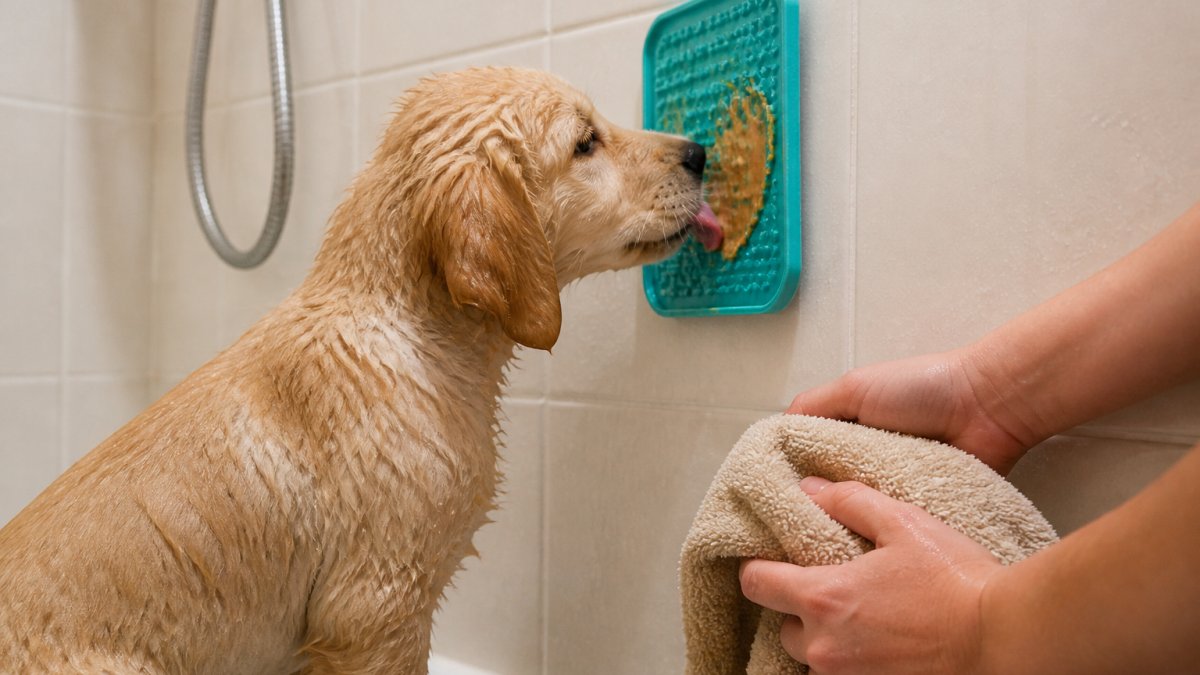
A great pick for puppies is the Anxiety Relief Lick Mat for Dogs at $21.70. We also like the Interactive Lick Ball for Dogs & Cats at $3.74, which adds a physical challenge that keeps a puppy engaged longer than a flat mat.

These tools do not replace training, but they are a low-risk first step before you try any supplement.
Verdict: Are Calming Chews Worth It for Puppies?
Are calming chews worth it for puppies? Sometimes, and only with clear limits. They are worth it for predictable stress events in puppies old enough and heavy enough for the label dose, and they are worth it when paired with training and enrichment.
Our advice: start with training and enrichment, confirm the puppy's age and weight against the label, and test one chew at the correct dose before buying more. If it helps, keep it as a situational tool. If it does not, spend the money on enrichment instead.
Frequently Asked Questions
Do calming chews work for puppies?
They can help some puppies, but results vary widely. Calming chews typically rely on ingredients like L-theanine, chamomile, or tryptophan, and their effect is mild to moderate at best. They work best as one part of a broader plan that includes training and enrichment, not as a standalone fix. Puppies with severe anxiety or fear-based behavior need veterinary guidance, and a chew won't replace that. Watch for a calmer disposition during specific triggers like thunderstorms or travel rather than expecting a permanently relaxed puppy.
At what age can puppies have calming treats?
Most commercial calming chews are labeled for puppies around 12 weeks and older, but puppy calming chews age guidance varies by product and ingredient. Always read the product label, since some ingredients are not recommended for very young puppies. A 7-week-old puppy should not get calming chews without veterinary guidance. For puppies under 12 weeks, focus on enrichment, routine, and gentle socialization instead. Ask your vet before starting any supplement, especially if your puppy is small or has health issues.
How long do calming chews take to work in dogs?
Most calming chews take effect within 30 to 60 minutes, depending on the ingredients and your puppy's metabolism. Some ingredients, like L-theanine, act faster, while others build up over days of consistent use. Give the chew before a known trigger, such as a thunderstorm or car ride, so it has time to kick in. If you see no change after a few tries, the product may not suit your puppy. Track behavior in a simple log to judge effectiveness fairly.
Can calming chews help puppies with separation anxiety?
They may take the edge off mild stress, but calming chews are not a treatment for true separation anxiety. Puppies with separation anxiety often need behavior training and, in serious cases, veterinary involvement. A chew given before you leave can support relaxation, but it won't teach your puppy that being alone is safe. Pair supplements with gradual alone-time training and enrichment tools like a lick mat to give your puppy a calming outlet while you're away.
What ingredients should I look for in puppy calming chews?
Look for vet-formulated products with clear dosing by weight and simple labels. Common ingredients include L-theanine, chamomile, valerian root, and tryptophan. Avoid products with unknown blends, excessive melatonin, or ingredients not studied in puppies. Check for a weight-based dosing chart on the label and a stated time to take effect. Natural ingredients are not automatically safer, so read the full label and ask your vet before starting anything new, especially for small breeds.
Puppy anxiety is hard to watch, and guessing at supplements makes it harder. At Furbabies4less, we stock vet-informed enrichment tools chosen to support calmer, happier puppies, including lick mats and slow feeders that give anxious puppies a natural outlet. Every purchase helps support animal rescue, and our selections are priced to keep quality care affordable. Start with a tool your puppy can use today, and build from there.
