

Vet Approved Cat Digestive Health Tips for Dogs & Cats
Table of Contents
- Why Digestive Health Matters for Dogs and Cats
- Signs of Digestive Issues in Pets Every Owner Should Know
- Vet Approved Cat Digestive Health Tips: Diet and Fiber Basics
- Best Probiotics for Dogs and Cats: Prebiotics, Enzymes, and Gut Flora
- Hydration and Managing Hairballs in Cats
- Pet Enrichment Toys for Stress Relief and Better Digestion
- Age-Specific Digestive Protocols and Environmental Stress Factors
- Conclusion: Building a Vet-Informed Digestive Care Routine
- Frequently Asked Questions
Last Updated: September 11, 2026
Why Digestive Health Matters for Dogs and Cats
Digestive health is the foundation of your pet's overall wellness, affecting everything from energy levels to coat condition. The right approach to cat digestive health and dog gut care can transform pets' daily lives.
When digestion works properly, nutrients get absorbed efficiently. When it doesn't, problems compound quickly. A dog with poor gut health may seem tired, lose interest in play, or develop skin issues that seem unrelated to their stomach.
The gastrointestinal tract houses a complex ecosystem of bacteria that influences immune function, mood, and even behavior. This is why digestive care is increasingly treated as preventative medicine rather than something to address only after problems appear.
Signs of Digestive Issues in Pets Every Owner Should Know
Recognizing digestive problems early prevents small issues from becoming serious conditions. Pay attention to changes in your pet's normal patterns.
Symptoms of Gastrointestinal Distress
The most obvious signs include vomiting, diarrhea, and constipation. But subtler symptoms matter too: reduced appetite, excessive gas, stomach gurgling, and changes in stool consistency.
Watch for these warning signs:
- Chronic vomiting (more than occasional hairballs in cats)
- Diarrhea lasting more than 24 hours
- Straining to defecate or bloody stool
- Refusing food for more than a day
- Visible discomfort when touched around the abdomen
When to See a Veterinarian
Seek immediate veterinary care for repeated vomiting, bloody diarrhea, or signs of a gastrointestinal blockage such as dry heaving without producing anything. These require professional evaluation, not home remedies.
For persistent but less severe symptoms, schedule a vet visit within a few days. Chronic digestive issues often signal underlying conditions like food sensitivity or pancreatitis that need proper diagnosis.
Vet Approved Cat Digestive Health Tips: Diet and Fiber Basics
Diet is the single biggest lever you have over your pet's digestion. Get it right and most minor issues resolve on their own. Get it wrong and even a healthy gut will struggle.
The Role of Fiber in Cat and Dog Digestion
Fiber comes in two forms, and both matter for different reasons.
Soluble fiber dissolves in water and forms a gel that feeds beneficial gut bacteria. It supports fecal consistency, slows glucose absorption, and helps firm up loose stool. Common sources include psyllium, oat bran, and pumpkin.
Insoluble fiber does not dissolve. It adds bulk to stool and helps food move through the digestive tract at the right pace. Common sources include cellulose and wheat bran.
Dogs generally tolerate a mix of both fiber types well. Cats, being obligate carnivores, need less fiber overall but still benefit from small amounts to manage hairballs and support gastrointestinal motility. A cat on a very high-fiber diet may actually experience worse digestion, not better.
Foods to Avoid
Some foods that are fine for humans are actively harmful to pets. Keep this list in mind:
- Chocolate, caffeine, and alcohol, toxic to both dogs and cats
- Grapes and raisins, can cause kidney failure in dogs
- Onions, garlic, chives, and leeks, damage red blood cells
- Xylitol, an artificial sweetener that is dangerous for dogs
- Macadamia nuts, toxic to dogs
- Raw dough containing yeast, expands in the stomach and produces alcohol
- High-fat table scraps, a leading cause of pancreatitis in dogs
- Dairy, most adult cats and many dogs are lactose intolerant and will develop diarrhea
- Bones that splinter, risk of perforation and blockage
If your pet eats any of the toxic items above, call your veterinarian or a pet poison hotline immediately. Do not wait for symptoms.
Dietary Changes and Food Transitions
Switch foods gradually over seven to ten days, mixing increasing amounts of the new food with the old. A common schedule is 25 percent new food for the first three days, 50 percent for the next three, then 75 percent, then 100 percent. This allows the feline microbiome or canine gut bacteria to adjust without triggering digestive upset.
If your pet has a food sensitivity, a hypoallergenic diet may help. Look for limited-ingredient formulas or novel protein sources such as venison, duck, or salmon. Your veterinarian can recommend specific options based on your pet's needs, and an eight- to twelve-week elimination trial is the standard way to confirm a sensitivity.
Portion Size and Meal Frequency
Overfeeding is one of the most overlooked causes of digestive upset. Measure your pet's food with an actual measuring cup rather than eyeballing it, and check the feeding guidelines on the bag against your pet's ideal weight, not their current weight. Split the daily amount into two meals for adults and three to four for puppies and kittens. Dogs that eat too fast swallow air, which causes bloating and gas, a slow feeder bowl is a simple fix.

Reading the Label: What Actually Matters
Ingredient sourcing matters more than most owners realize. For pets with sensitive stomachs, look for:
- A named protein as the first ingredient ("chicken" or "salmon," not "meat")
- A recognizable fiber source (pumpkin, beet pulp, psyllium)
- No artificial colors, flavors, or preservatives
- A nutritional adequacy statement from the Association of American Feed Control Officials (AAFCO) on the label
The FDA guidance on pet food safety and labeling is a useful reference for understanding which claims on packaging are regulated and which are marketing language. When in doubt, ask your veterinarian to review the label with you, it takes only a few minutes and can save months of trial and error.
Best Probiotics for Dogs and Cats: Prebiotics, Enzymes, and Gut Flora
Probiotics introduce beneficial bacteria directly, while prebiotics feed the bacteria already living in your pet's digestive tract. Together, they support bacterial balance and digestive enzymes that break down food efficiently.
When choosing probiotics for dogs and cats, look for products formulated specifically for pets, not human supplements. Veterinary formulations contain strains that survive stomach acid and colonize the gut effectively.
Signs a probiotic might help include:
- Recurring digestive upset after meals
- Recovery from antibiotic treatment
- Stress-related digestive changes
- Chronic loose stool without clear cause
Hydration and Managing Hairballs in Cats
Proper hydration keeps the digestive tract functioning smoothly. Many pets don't drink enough from stationary bowls, which can lead to constipation and concentrated urine.
The American Veterinary Medical Association's pet hydration guidance notes that adequate water intake supports kidney function and digestive health. For cats especially, encouraging drinking prevents urinary tract issues and helps hairballs pass through the system.
Hairball management combines hydration, fiber, and regular grooming. Cats that groom excessively may need help reducing the amount of hair they swallow. A water fountain that keeps water moving and fresh often encourages cats to drink more throughout the day.

Pet Enrichment Toys for Stress Relief and Better Digestion
Stress directly impacts digestion. Anxious pets often experience gastrointestinal motility changes, leading to diarrhea or constipation during stressful periods.
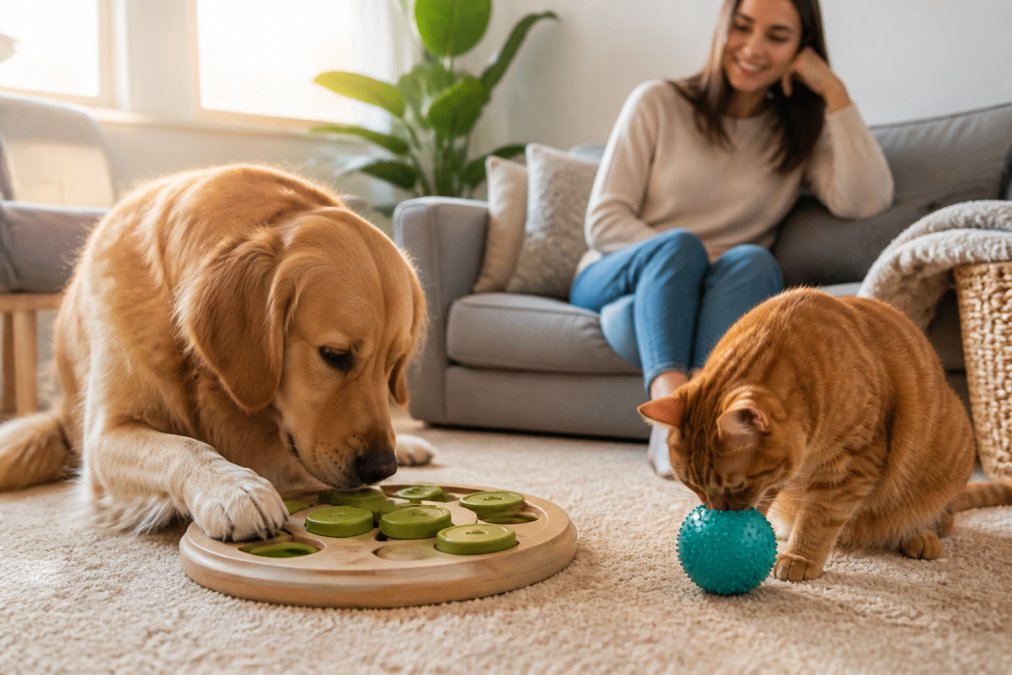
Slow feeders and puzzle toys address both stress and eating speed. Dogs that gulp their food swallow excess air, causing bloating and discomfort. A slow feeder bowl turns mealtime into a calming activity that promotes better digestion.

Lick balls and enrichment toys provide mental stimulation that reduces anxiety. When pets have healthy outlets for nervous energy, their digestive systems function more normally.
Furbabies4less carries enrichment options designed to hold up to determined chewers and anxious pets, such as our PureFlow Pet Water Fountain and Smart Slow Puzzle Feeder Bowl which address hydration and eating speed together.
Age-Specific Digestive Protocols and Environmental Stress Factors
Most digestive guides hand every pet the same advice. In practice, a kitten's gut and a senior cat's gut have almost nothing in common, and the same is true for puppies versus older dogs. Tailoring your routine to your pet's life stage is one of the most useful things you can do at home.
Puppies and Kittens (Under 12 Months)
Young animals have immature digestive systems and a microbiome that is still stabilizing. A few practical rules apply:
- Feed three to four small meals daily rather than one or two large ones. Small, frequent meals are easier on a developing gut and reduce the risk of gulping air.
- Keep the diet consistent. Rotating proteins every week is a common trigger for loose stool in puppies and kittens.
- Transition any new food over seven to ten days, even if the formula is similar.
- Watch for worms. Roundworms and giardia are common in young pets and cause intermittent diarrhea that owners often mistake for food sensitivity.
Adult Dogs and Cats (1 to 7 Years)
Adult pets generally do best on a stable maintenance diet with a consistent fiber level. This is the stage where most food sensitivities surface, often after months of eating the same food without issue. If your adult dog or cat develops chronic soft stool, gas, or itching alongside digestive symptoms, a limited-ingredient or novel-protein trial is a reasonable next step with your veterinarian's guidance.
Senior Pets (7 Years and Older)
Aging slows gastric motility and reduces the efficiency of nutrient absorption. Senior dogs and cats often benefit from:
- Highly digestible proteins rather than high-volume protein loads
- Added moisture, since seniors often drink less than they should
- Smaller, more frequent meals
- Regular weight checks, because unexplained weight loss is one of the earliest signs of an underlying digestive or metabolic issue
How Environmental Stress Shows Up in the Gut
Stress and digestion are physically linked through the gut-brain axis. When a pet is anxious, blood flow shifts away from the digestive tract and motility changes, which is why moving to a new home, adding a new pet, or even rearranging furniture can trigger diarrhea or constipation in a sensitive animal.
Common stress triggers to watch for:
- A move or renovation
- A new baby, pet, or frequent houseguests
- Boarding or a long car ride
- Changes in your work schedule
- Loud events such as thunderstorms or fireworks
During these periods, keep food and routine as stable as possible, offer a quiet space, and lean on enrichment that gives your pet a healthy outlet for nervous energy. Puzzle feeders, lick mats, and slow feeders do double duty here: they reduce stress and slow eating at the same time.
Diagnostic Testing: What Your Vet Is Actually Looking For
When symptoms persist beyond a few days, your veterinarian may recommend one or more of the following. Knowing what each test does can make the process far less stressful:
- Fecal exam, checks for parasites, giardia, and abnormal bacteria
- Blood work, screens for organ function, pancreatitis, and systemic illness
- X-rays or ultrasound, looks for blockages, masses, or thickening in the intestinal wall
- Food elimination trial, an eight- to twelve-week structured diet test to identify sensitivities
These tests exist to replace guesswork with answers. If your pet has recurring digestive issues, asking your vet which test is most appropriate for your pet's age and symptoms is a reasonable and useful conversation.
Sustainable Ingredient Sourcing and What Labels Really Mean
The FDA guidance on pet food safety and labeling explains what terms like "natural," "holistic," and "limited ingredient" legally do and do not mean on a pet food label. In short, some claims are regulated and some are marketing.
For pets with sensitivities, the sourcing details that matter most are:
- Single-source proteins, easier to isolate if a reaction occurs
- Named protein meals (for example, "chicken meal" rather than "poultry meal"), more transparent about what is actually in the bag
- Transparent supply chains, companies that disclose where ingredients come from tend to have tighter quality control
A higher-quality fiber or protein source does not automatically fix a sensitive gut, but it removes one common variable and makes elimination trials far easier to interpret.
Conclusion: Building a Vet-Informed Digestive Care Routine
Every pet's digestive needs differ, which is why working with your veterinarian to build a personalized routine delivers the best results. Start with quality nutrition, gradual transitions, and attention to hydration.
At Furbabies4less, we stock vet-informed products chosen to support digestive wellness, from slow feeders that prevent gulping to water fountains that encourage drinking. Our Digestive Health Slow Feeder Bowl and Interactive Lick Ball help pet parents address common digestive triggers at home.
Shop Furbabies4less for essentials that support your pet's gut health while contributing to animal rescue efforts with every purchase.
Frequently Asked Questions
What can I give my cat for digestive health?
Start with a vet-approved diet that includes both soluble and insoluble fiber to support gastrointestinal motility and stool quality. Probiotics and prebiotics can help restore bacterial balance in the feline microbiome. Always transition foods slowly over 7-10 days to avoid upset. If your cat has chronic vomiting, diarrhea, or constipation, consult your veterinarian before adding supplements. Hydration also matters, so consider a filtered pet water fountain to encourage drinking.
What are the signs of digestive issues in pets?
Watch for vomiting, diarrhea, constipation, reduced appetite, weight loss, gas, and abdominal discomfort. In cats, frequent hairballs or straining in the litter box can signal a problem. Dogs may show food sensitivity through itchy skin or loose stool. These clinical symptoms can point to issues ranging from food sensitivity to gastrointestinal blockage or pancreatitis. If signs last more than 24-48 hours or your pet seems painful, see a veterinarian promptly.
How do probiotics support pet gut health?
Probiotics introduce beneficial bacteria that support gut flora and bacterial balance, aiding nutrient absorption and digestive tract function. Prebiotics feed those bacteria, while digestive enzymes help break down food. Together they can ease diarrhea, reduce gas, and improve fecal consistency. Choose vet-approved products and introduce them gradually. Stress, diet changes, or antibiotics can disrupt the microbiome, so probiotics are often part of a broader wellness plan.
Can stress affect my pet's digestive system?
Yes. Environmental stress factors like loud noises, new pets, or changes in routine can trigger gastrointestinal distress in both dogs and cats. Stress slows gastrointestinal motility or speeds it up, leading to diarrhea or constipation. Pet enrichment toys for stress relief, such as puzzle feeders and lick balls, provide mental stimulation that calms pets and supports bowel health. Pair enrichment with a consistent feeding schedule and a quiet space.
