

Supplies for Dogs with Anxiety: 8 Calming Picks
Table of Contents
- Quick Comparison: Supplies for Dogs with Anxiety
- Signs of Stress in Dogs: What to Watch For
- Calming Dog Bed: The Foundation of a Calm Routine
- Enrichment Toys for Anxious Dogs: Lick Mats, Plates, and Balls
- Best Calming Treats for Dogs and How to Use Them
- Grooming and Comfort Gear for Anxious Dogs
- How to Choose the Right Supplies for Dogs with Anxiety
- Frequently Asked Questions
Last Updated: September 30, 2026
Quick Comparison: Supplies for Dogs with Anxiety
Anxious dogs need tools that work with their biology. This guide from Furbabies4less covers calming picks, from nighttime restlessness to grooming stress, starting under $4.
| Supply | Price | Best For | Key Feature |
|---|---|---|---|
| Calming Dog Bed | $70.00 | Nighttime settling | Donut shape mimics pack security |
| Anxiety Relief Lick Mat | $21.70 | Noise phobias, grooming | Suction base sticks anywhere |
| Suction Lick Bowl | $19.75 | Bath time, slow feeding | Heavy-duty suction holds large breeds |
| Enrichment Licking Plate | $21.28 | Boredom, destructive habits | Textured grooves extend mealtime |
| Interactive Lick Ball | $3.74 | Multi-pet homes | 3D rotation adds challenge |
| Interactive Dog Ball Toy | $24.99 | Separation anxiety | Self-moving, USB rechargeable |
| CoolRest Comfort Mat | $30.99 | Heat-related stress | Pressure-activated cooling gel |
| CalmFlow Pet Dryer | $64.99 | Grooming anxiety | Low-noise motor |
Signs of Stress in Dogs: What to Watch For
Recognizing stress signals early prevents small anxieties from becoming entrenched behaviors.

Calming Dog Bed: The Foundation of a Calm Routine
A calming dog bed can be a valuable purchase for an anxious dog: sleep quality directly affects daytime behavior, and tired dogs cope better with stress.
What makes it work for anxious dogs specifically:
- Deep cushioning reduces nighttime restlessness
- Raised rim supports head-resting and burrowing
- Ultra-soft plush material is gentle on joints
- Non-slip bottom stays put on hardwood and tile
- Machine washable for easy cleaning
Enrichment Toys for Anxious Dogs: Lick Mats, Plates, and Balls
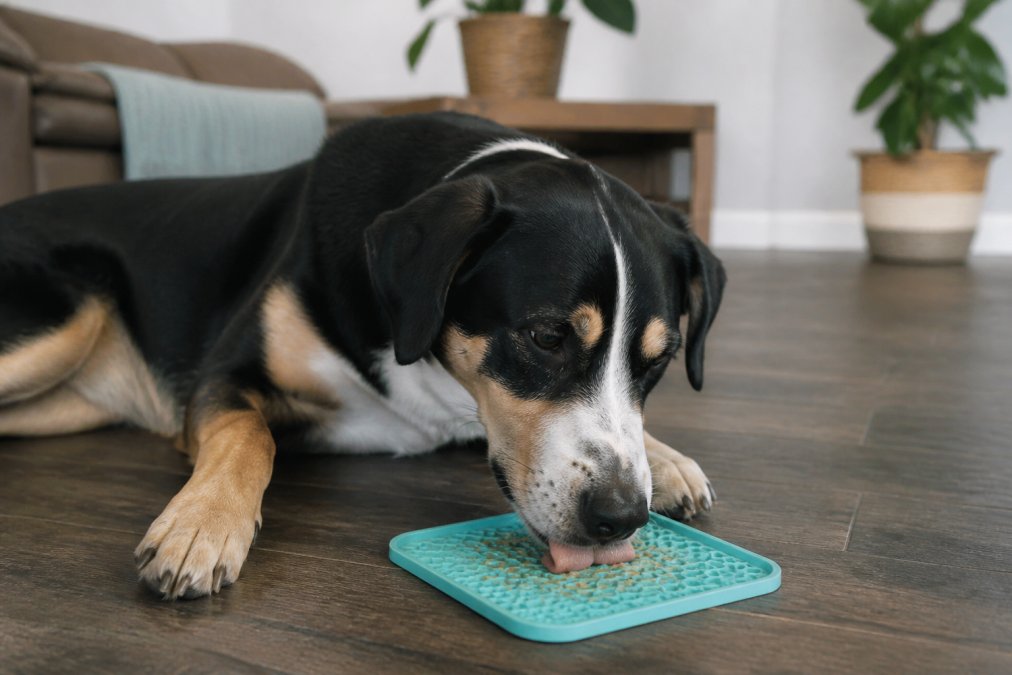
Licking is one of the most naturally calming behaviors for dogs: repetitive licking releases endorphins and serotonin while activating the parasympathetic nervous system, lowering heart rate and cortisol.
Best Calming Treats for Dogs and How to Use Them
Calming treats can work alongside enrichment tools. But "calming treat" is a loose marketing term, the label matters more than the packaging.
What's Actually in Them
Some over-the-counter calming chews may include ingredients like:
- L-theanine, an amino acid found in green tea. It raises levels of GABA, a neurotransmitter that dampens excitability, without sedating the dog.
- L-tryptophan, a precursor to serotonin, the mood-regulating chemical SSRIs also target, but far more gently.
- Chamomile and passionflower, mild sedatives acting on the central nervous system. Useful for situational stress, less so for chronic anxiety.
- Melatonin, a hormone that regulates sleep cycles. Best for nighttime restlessness and noise phobias that disrupt sleep.
- Casein hydrolysate, a milk protein derivative that mimics the calming effect of nursing. Common in puppy chews.
- CBD, popular, but the FDA has not approved CBD for animal use, dosing is unregulated, and potency varies widely between brands. Treat it as experimental, not proven.
Natural vs. Pharmaceutical
Natural calming treats may be suitable for mild, situational anxiety, such as during a thunderstorm, car ride, or grooming appointment. They are not a substitute for veterinary care in dogs with severe separation anxiety, generalized anxiety disorder, or compulsive behaviors.
Timing and Dosing
Timing can be important. Giving a calming treat before a known stressor like a vet visit or storm, and pairing it with a lick mat, may help.

A few practical rules:
- Introduce new treats during calm moments first, so the dog doesn't associate the treat itself with stress
- Keep portions small so they don't disrupt regular meals or add unwanted calories
- Watch for digestive changes, vomiting, loose stool, or appetite loss, when trying new ingredients
- Never use treats to reward anxious behavior like barking; reward the calm that follows
- Follow the label dose. More is not more effective, and some ingredients cause drowsiness or GI upset at higher amounts
Safety and Contraindications
Other cautions worth knowing:
- Liver or kidney disease, many supplements are metabolized by the liver. Dogs with organ disease need veterinary clearance before starting anything.
- Pregnancy and nursing, most calming ingredients have not been studied in pregnant or lactating dogs. Skip them unless a vet approves.
- Puppies under 12 weeks, their livers aren't fully developed. Avoid supplements and rely on routine, enrichment, and gentle exposure instead.
- Multi-pet homes, a chew formulated for a 70-pound dog can cause real problems for a 10-pound cat or small dog that steals it. Store them out of reach.
- Allergies, casein-based chews are a problem for dairy-sensitive dogs. Read the full ingredient panel, not just the front of the bag.
When Treats Aren't Enough
Some dogs respond to food-based calming; others need products, behavior modification, or medication. Owners often try three or four chews, see no change, and conclude nothing works, when the dog's anxiety is simply beyond what an over-the-counter chew can touch.
Grooming and Comfort Gear for Anxious Dogs
Grooming triggers some of the most intense anxiety in dogs: noise, restraint, and unfamiliar sensations combine into an overwhelming experience.
Calming Dog Bed – Anxiety Relief & Deep →
How to Choose the Right Supplies for Dogs with Anxiety
Matching the product to the trigger, rather than just the symptom, can be helpful. A dog that destroys furniture when alone may need different support than one that panics during thunderstorms, and understanding the root cause of anxiety can help determine if a product is beneficial.
Step 1: Identify the Root Cause
Before you buy anything, categorize the anxiety. The four most common patterns respond to different tools:
- Separation anxiety, distress only when left alone. Look for: destructive behavior at exits, howling, house soiling, pacing. Products help, but this pattern needs a desensitization protocol.
- Noise phobia, panic at thunder, fireworks, vacuum cleaners, or doorbells. Look for: trembling, hiding, bolting, refusal to eat during the event. Lick mats, frozen treats, and body wraps work well here because they give the dog a competing behavior.
- Situational anxiety, vet visits, car rides, grooming, nail trims. Look for: drooling, whale eye, tucked tail, freezing. Short-acting tools and pre-event prep work best.
- Generalized anxiety, anxious in most situations, most of the time. Look for: constant vigilance, inability to settle even at home, appetite changes. This pattern usually needs veterinary involvement, not just supplies.
Step 2: Layer Products by Function
One product rarely solves everything. Think in three layers:
- A base layer for daily regulation, a calming bed, a predictable routine, and a consistent resting spot. This is what the dog returns to when nothing is happening.
- An active layer for known triggers, lick mats, frozen enrichment, body wraps, or a low-noise dryer if grooming is the trigger. These give the dog a job during the stressful event.
- A recovery layer for after, quiet space, a comfort item, and time. Anxious dogs need to decompress, not be immediately re-engaged.
Budget matters too. You can build a calming setup by starting with a lick mat and lick ball, then adding a bed. The Interactive Dog Ball Toy at $24.99 can be a good addition for dogs with separation anxiety, since its self-moving action provides engagement while you're away.

Step 3: Pair Products With Training
This step can influence long-term effectiveness. A lick mat without a desensitization plan may serve as a distraction; a lick mat with one may be part of a treatment plan.
The framework is the same for almost every trigger:
- Identify the trigger at a low intensity. A thunder recording at low volume. A car ride down the driveway. A stranger at 50 feet.
- Pair the trigger with something good. Food, a lick mat, a favorite toy. The dog learns the trigger predicts good things, not bad ones.
- Keep the dog under threshold. If the dog is trembling, hiding, or refusing food, you've gone too far too fast. Back up.
- Repeat short sessions, frequently. Five minutes, twice a day, beats one long session per week.
- Increase intensity only when the dog stays relaxed. Volume up, distance closer, duration longer, one variable at a time.
Step 4: Know When to Call a Veterinarian
Supplies and training are the first line for mild to moderate anxiety, but not enough for every dog. Call your veterinarian if:
- The dog injures themselves during a panic episode, broken nails, cut paws, chewed-through doors
- Anxiety is affecting appetite, sleep, or weight
- The dog is a danger to themselves or others when left alone
- You've used products and training consistently for four to six weeks with no improvement
- The anxiety started suddenly in an adult dog with no clear trigger, this can signal pain, thyroid issues, or neurological problems
Step 5: Build Consistency, Not Intensity
Consistency can be beneficial. Using the same supplies in a consistent way can help build a predictable routine. A lick mat that appears only during storms may be a novelty; one that appears every evening at the same time can signal a winding down of the day.
Frequently Asked Questions
How to calm dog anxiety naturally?
Natural calming starts with routine and the right supplies. Licking mats and plates trigger endorphin release that lowers cortisol, while a donut-style calming bed gives dogs a secure place to settle. Pair these with predictable walks, meals, and quiet time. For noise triggers like thunderstorms, set up a safe space with a bed and a frozen lick mat before the event starts. If anxiety is severe or constant, talk to your vet about a full plan.
What is the 3-3-3 rule for dogs with anxiety?
The 3-3-3 rule describes a common adjustment timeline for rescue dogs: three days to decompress, three weeks to settle into routine, and three months to feel fully at home. Anxiety often peaks in the first few days, so keep things low-key. Provide a calming bed, use enrichment toys for anxious dogs to build positive associations, and avoid flooding your dog with new people or places. Progress is rarely linear, so track small wins.
What are the best items to help anxious dogs?
The most useful items target the body and the brain. A calming dog bed gives a secure sleep spot, and lick mats, lick bowls, or enrichment plates provide a licking outlet that releases calming endorphins. Interactive toys redirect restless energy, and a low-noise pet dryer reduces grooming stress. Start with one or two items that match your dog's main trigger, then add more as you learn what works. Consistency matters more than quantity.
What are the critical signs of stress in a dog?
Watch for pacing, whining, excessive panting, tucked tail, flattened ears, lip licking, yawning, and destructive chewing. Some dogs freeze or hide instead. These signs of stress in dogs often appear before a full anxiety episode, so catching them early lets you redirect with a lick mat or a quiet bed. Keep a simple log of triggers and reactions for two weeks; patterns usually become obvious and make vet conversations more productive.
How can enrichment toys help reduce canine stress?
Enrichment toys give anxious dogs a job. Repetitive licking on a mat, plate, or ball releases endorphins and serotonin while lowering heart rate and cortisol. Puzzle-style feeders also satisfy foraging instincts, which reduces boredom-driven destruction. For best results, offer enrichment before known triggers like fireworks or alone time, not during peak panic. Rotate two or three toys to keep novelty high and stress low.
