

Safe Dog Grooming Brushes for Sensitive Skin (2026)
Table of Contents
- Why Standard Brushes Cause Skin Irritation in Dogs
- 5 Signs of Grooming-Induced Skin Irritation to Watch For
- Key Features of Safe Grooming Brushes for Sensitive Skin
- Silicone vs. Pin Brushes: Which Material Is Gentler?
- How to Groom a Dog with Skin Allergies Step by Step
- Matching Brush Type to Your Dog's Coat and Skin
- Our Pick: 3-in-1 Gentle Steam Brush for Pain-Free Grooming
- Final Thoughts on Safe Brushing for Sensitive Skin
- Frequently Asked Questions
Last Updated: September 7, 2026
Why Standard Brushes Cause Skin Irritation in Dogs
A dog's skin is far more delicate than most owners realize, and the wrong brush can turn a simple grooming session into a source of redness, itching, and even micro-tears. Standard slicker brushes and stiff-bristle tools often feature harsh metal pins or dense plastic bristles that scrape across the skin barrier, especially with the firm pressure many of us default to during shedding season. This friction strips away protective oils and irritates hair follicles, leaving sensitive dogs with inflamed patches that worsen with every stroke.
The problem compounds when owners mistake vigorous brushing for thorough grooming. According to veterinary guidance on canine skin health from the American Kennel Club, the skin of a dog is thinner than human skin and more prone to irritation from abrasive tools. For dogs with allergies, dermatitis, or a naturally low tolerance for friction, even a "normal" brush can trigger a reaction that looks like a rash or hot spot. Safe grooming brushes for sensitive skin prioritize rounded tips, flexible materials, and gentle pressure over aggressive detangling, which is the first shift most owners need to make.
5 Signs of Grooming-Induced Skin Irritation to Watch For
Watch for these five warning signs after brushing sessions:
- Redness or pink patches on the belly, inner thighs, or armpits that fade within a few hours
- Excessive scratching or licking immediately following grooming
- Raised bumps or hives in areas where the brush made repeated passes
- Flaking or dandruff that appears shortly after brushing, indicating stripped skin oils
- Whining, flinching, or pulling away when you reach for the brush
If you notice any of these signs, stop using the current tool and give your dog's skin a few days to recover. Persistent symptoms warrant a conversation with your veterinarian, since they may point to an underlying condition like flea allergy dermatitis or food sensitivities rather than the brush alone.
Key Features of Safe Grooming Brushes for Sensitive Skin
The ideal sensitive skin brushes share several non-negotiable design features that minimize friction while still removing loose fur and debris, and these sensitive skin brushes prioritize comfort without sacrificing effectiveness. Rounded tips are the most critical element: ball-tipped pins or silicone fibers with smooth, rounded ends glide over the skin without digging in or scratching. Flexible, cushioned bases also help by conforming to your dog's contours, distributing gentle pressure across a wider surface rather than concentrating it on a few sharp points.
Bristle density matters just as much as bristle shape. Sparse, widely spaced bristles allow fur to pass through without tugging, while overly dense brushes can catch and pull at tangles. Look for ergonomic handles that give you control without requiring a death grip, and opt for hypoallergenic materials like vegan fibers or polycarbonate that won't harbor bacteria or trigger contact reactions. Many pet owners also prefer static-reducing properties, since static electricity can make fur frizzy and increase friction on the skin.
Beyond Softness: The Material Safety Checklist
Most grooming-brush guides stop at 'soft bristles,' but for a dog with dermatitis or contact allergies, the material itself can be the trigger. Run it against this safety checklist:
- BPA-free plastics: Many inexpensive brushes are molded from polycarbonate plastics that can contain BPA. While the risk of systemic exposure through grooming is low, BPA is a known endocrine disruptor, and repeated contact with inflamed or broken skin is an unnecessary risk. Look for explicit 'BPA-free' labeling on the handle and base.
- Latex-free rubber: Silicone brushes are often lumped in with rubber brushes, but they are not the same. Natural rubber latex is a common allergen in both humans and dogs, capable of causing contact dermatitis (acaai.org). True medical-grade or food-grade silicone is latex-free, non-porous, and does not support bacterial growth. If a product says 'rubber' without specifying 'silicone,' verify it is latex-free before use.
- Nickel-free metal pins: For pin brushes, the metal composition matters. Nickel is a frequent contact allergen. High-quality brushes use stainless steel pins that are either nickel-free or coated with a hypoallergenic finish. If your dog develops redness only under the pin brush and not the silicone brush, suspect a metal sensitivity.
- FDA-compliant materials: While the FDA does not regulate pet grooming tools as medical devices, materials used in products intended for animal contact should still comply with FDA food-contact substance regulations (21 CFR 175-179) (the FDA). This ensures the plastics and rubbers are free from harmful plasticizers like phthalates, which are sometimes used to soften PVC and can leach out with heat or friction.
The 'Patch Test' Protocol for Material Sensitivity
A common pattern in veterinary dermatology is that a dog's skin reacts not to the brushing action, but to a compound in the tool itself. This is why a brush that feels 'soft' to your hand can still cause hives. Prioritizing material certifications over marketing language like 'gentle' or 'soft' addresses a root cause that most generic guides miss.

Silicone vs. Pin Brushes: Which Material Is Gentler?
For dogs with truly reactive skin, silicone brushes are generally the gentler choice compared to traditional metal pin brushes. Silicone fibers are soft, flexible, and naturally non-irritating, making them ideal for massaging the skin, stimulating circulation, and removing loose fur without the risk of scratching. Metal pin brushes, even those with ball-tipped ends, can still feel sharp on a dog with thin skin or a sensitive belly.
That said, pin brushes serve a purpose that silicone cannot fully replace. For dogs with thick undercoats or moderate matting, a quality pin brush with rounded tips is more effective at reaching through the topcoat to remove dead undercoat fur. The table below summarizes the trade-offs:
| Feature | Silicone Brush | Pin Brush (Rounded Tips) |
|---|---|---|
| Gentleness on skin | High | Moderate |
| Best for | Short coats, sensitive skin, massage | Thick coats, undercoat removal |
| Risk of scratching | Very low | Low if used lightly |
| Shedding control | Good | Excellent |
| Ideal for puppies/seniors | Yes | With caution |
For most dogs with allergies or skin sensitivities, a silicone brush used with gentle pressure is the safest starting point. If your dog has a heavy double coat, a rounded-tip pin brush can be introduced slowly, but always prioritize a soft touch over thoroughness.
How to Groom a Dog with Skin Allergies Step by Step
Grooming a dog with skin allergies requires patience and a deliberate technique that avoids aggravating already inflamed areas. Start by letting your dog sniff the brush and rewarding calm behavior, which reduces anxiety and prevents sudden movements. Work in a quiet space with good lighting so you can inspect the skin as you go.
Follow this step-by-step approach:
- Brush in the direction of hair growth using slow, short strokes, never pulling against the grain
- Apply gentle pressure only, letting the brush's weight do the work rather than pressing down
- Check the skin every few strokes, lifting the fur to look for redness or irritation
- Avoid sensitive zones like the belly, armpits, and inner thighs unless using an ultra-soft tool
- Stop at the first sign of discomfort, and end the session with a treat and praise
- Clean the brush after each use to remove dander, oils, and allergens that could re-irritate the skin
Condition-Specific Adjustments
The generic 'gentle pressure' advice only goes so far. The underlying cause of your dog's skin sensitivity changes how you should approach brushing. Here is how to adapt your technique based on the specific condition:
Atopic Dermatitis (Environmental Allergies)
Dogs with atopic dermatitis often have a compromised skin barrier, meaning their skin loses moisture faster and absorbs irritants more readily. For these dogs, brushing should be a dry, friction-minimizing event. Do not brush inflamed, moist, or oozing areas at all. Instead, focus on unaffected areas to remove surface allergens like pollen and dust. A silicone brush used in slow, circular motions can help stimulate circulation without breaking the skin. If the skin is dry and flaky, consider a quick spritz of a veterinarian-approved, leave-in oatmeal spray before brushing.
Contact Allergies (Reaction to Topical Substances)
If your dog's irritation stems from contact with something like a new shampoo, lawn chemical, or fabric softener, the priority is removing the allergen from the coat without spreading it. Brush in a direction that pulls the allergen away from the skin, and clean the brush immediately after each pass. Do not use a steam brush on a dog with a suspected contact allergy, as heat and moisture can open pores and increase absorption of the irritant. A dry, static-reducing brush is the safer choice.
Post-Surgical or Healing Skin
For dogs recovering from surgery or a skin infection, grooming is about hygiene, not coat maintenance. Use a clean, damp, soft cloth to wipe around the incision area, and only brush the peripheral coat at least 2 inches away from the wound. Wait until your veterinarian clears the area for normal grooming. In the interim, a grooming glove used on the back and shoulders, far from the surgical site, can provide comfort without risking healing tissue.

The 5-Minute Rule for Flare-Ups
A dog with active skin inflammation has a lower pain threshold. During a flare-up, do not attempt a full grooming session. Instead, use the 5-Minute Rule: set a timer, brush for a maximum of five minutes, and stop regardless of how much fur remains. This prevents the 'one more stroke' mentality that leads to over-brushing and micro-trauma. You can repeat the session later in the day, but never exceed 10 total minutes of brushing when the skin is actively inflamed.
Matching Brush Type to Your Dog's Coat and Skin
A single brush rarely suits every dog, and understanding your dog's coat texture is essential to choosing how to groom a dog with skin allergies effectively. Short-coated breeds like Boxers and Dalmatians have fine, dense fur and thin skin, making a soft silicone brush or grooming glove the best option for removing loose hair without causing friction burns. Double-coated breeds like Huskies and Golden Retrievers require a brush that reaches the undercoat, so a rounded-tip pin brush or undercoat rake used sparingly is more appropriate, always with light pressure.
Dogs with fleece coats or curly hair, such as Poodles and Bichon Frises, need regular detangling to prevent matting, but their skin is often sensitive beneath the curls. For these breeds, a slicker brush with very fine, rounded pins used in short, gentle strokes works better than a stiff-bristle brush. Puppies and senior dogs, whose skin is thinner and more fragile, benefit most from the softest tools available, with shorter, more frequent sessions rather than long, stressful ones. A consistent grooming routine that respects coat type and skin condition is the single best defense against irritation.
Our Pick: 3-in-1 Gentle Steam Brush for Pain-Free Grooming
For owners seeking a tool that addresses both coat health and skin sensitivity in one pass, our top recommendation is the 3-in-1 Gentle Steam Brush for Pet Grooming & Cleaning from Furbabies4less, priced at $18.99. This brush combines steam, brushing, and detangling in a single device, and the gentle steam softens the coat and loosens tangles before the bristles ever touch the skin. That softening effect dramatically reduces the pulling and friction that cause irritation, making it an excellent choice for dogs with allergies or those who dread traditional dry brushing.
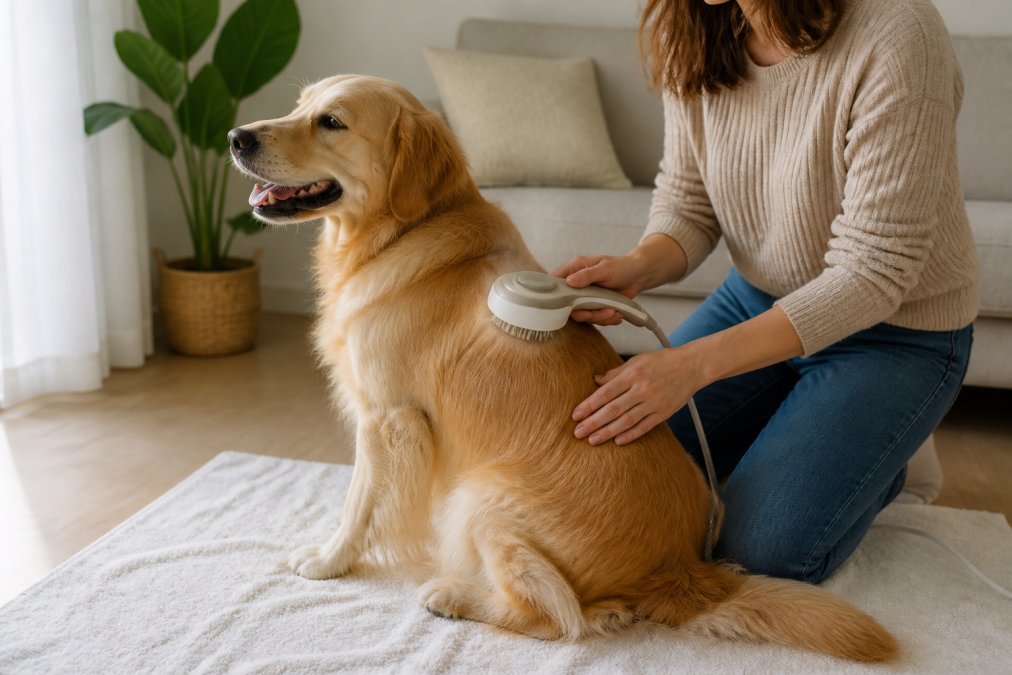
The steam also helps reduce shedding by loosening dead fur at the root without harsh scraping, and it leaves the coat cleaner and shinier between baths. Furbabies4less designed this tool with the same rescue-inspired care philosophy that guided the recovery of their own dog, Oz, meaning every feature is tested for comfort and safety. A portion of every sale supports animal rescues.
Final Thoughts on Safe Brushing for Sensitive Skin
Choosing safe grooming brushes for sensitive skin is about more than avoiding a yelp during grooming; it is about preserving your dog's skin barrier and building trust that makes future sessions stress-free. Start with the softest tool your dog's coat allows, use gentle pressure and short strokes, and always watch for signs of irritation. When in doubt, a steam brush like the one Furbabies4less offers provides the gentlest introduction to grooming for dogs who have had painful experiences with standard brushes.
Frequently Asked Questions
What dog brushes are best for sensitive skin?
Brushes with soft silicone bristles, rounded ball-tip pins, or gentle bristle density are safest for sensitive skin. These materials reduce friction and avoid scratching the skin barrier. Look for an ergonomic handle so you can maintain gentle pressure during grooming. The 3-in-1 Gentle Steam Brush is a strong option because the steam softens the coat first, which means less pulling on hair follicles and less irritation for dogs with delicate skin.
How do I know if my pet has sensitive skin?
Common signs include redness, flaking, excessive scratching after grooming, and patches of hair loss. Dogs with allergies often show these signs on their belly, armpits, and inner thighs. If your dog flinches or pulls away when you brush certain areas, that is a clear signal of discomfort. You should also watch for hives or hot spots, which indicate a reaction that may require a vet visit.
How often should I groom a pet with sensitive skin?
For most dogs with sensitive skin, brushing 2 to 3 times per week is ideal. Daily brushing can over-stimulate the skin, especially if you are using firm pressure. Short-coated breeds may only need once a week, while double-coated breeds need more frequent sessions to prevent matting. Keep sessions under 10 minutes and stop if you see any signs of grooming-induced skin irritation such as redness or scratching.
Can improper brushing cause skin irritation in pets?
Yes, improper technique is one of the leading causes of grooming-related skin irritation. Brushing too hard, using brushes with sharp metal pins, or pulling through mats can cause micro-tears in the skin. This damages the skin barrier and can trigger dermatitis or infections. Always brush in the direction of hair growth, use gentle pressure, and never yank through tangles. A steam brush helps soften mats so they release without force.
The challenge for most owners is unlearning the habit of aggressive brushing. Your dog's skin will thank you for a lighter touch and a smarter tool. Furbabies4less offers vet-informed, affordable grooming essentials designed with rescue dogs like Oz in mind, and every purchase helps support animal rescues. Shop the 3-in-1 Gentle Steam Brush today and make grooming a calming, pain-free ritual for your pet.
