

Is a Steam Grooming Brush Worth It for Cats? Honest Review
Last Updated: October 22, 2026
Quick Summary
A steam grooming brush is worth it for cats that tolerate brushing poorly, have static or flyaways, or need a gentler daily routine on fine coats. It softens the coat and loosens dead fur, but it will not remove tight mats or replace a rake for heavy shedding.
- Most devices sold as steam brushes for cats are really cool-mist brushes, not true heated steam.
- Test any warmed tool on your inner wrist and keep sessions short to protect sensitive skin.
- An undercoat rake removes far more undercoat in one session than a mist brush.
- Empty the reservoir, shake the head, and air-dry fully after every session to prevent mold.
- The 3-in-1 Gentle Steam Brush costs $18.99 and combines steaming, brushing, and detangling.
Table of Contents
- What a Steam Grooming Brush Actually Does (and Doesn't Do)
- Cat Steam Brush Safety: Heat, Moisture, and Sensitive Skin
- Steam Brush vs. Regular Cat Brush: A Side-by-Side Comparison
- The Best Brush for Shedding Cats: Matching the Tool to the Coat
- How to Brush a Cat That Hates Being Brushed
- Hygiene, Drying, and Long-Term Cost: What Owners Overlook
- Verdict: Who Should Buy a Steam Grooming Brush and Who Should Skip It
- Frequently Asked Questions
What a Steam Grooming Brush Actually Does (and Doesn't Do)
A steam grooming brush is a handheld tool that releases a light mist or warm vapor through or near the bristles while you brush, softening the coat so dead fur and light tangles release more easily.
What it does not do matters just as much. It will not remove a tight mat, dry a soaked coat, or replace a proper deshedding routine during heavy seasonal shedding.
Heated Steam vs. Cool Mist: Why the Difference Matters
Most devices sold as steam brushes for cats are really cool-mist brushes: a small reservoir feeds a fine spray, and the "steam" is room-temperature or slightly warmed vapor.
Before you buy, check which one you are getting. If the listing mentions a heating element or "warm steam," test it on your wrist first. If it is a mist brush with no heater, the main risks are dampness and hygiene, not temperature.
Cat Steam Brush Safety: Heat, Moisture, and Sensitive Skin
Cat steam brush safety comes down to temperature, moisture, and the cat's tolerance. Warm vapor near thin skin, belly, armpits, face, is the risk zone: test any warmed tool on your inner wrist, keep sessions short, and never hold the head in one spot.

Cats with allergies, dermatitis, or a history of over-grooming can react to added moisture or to fragrances some mist products include; plain water is the safer fill. If your cat has an active skin condition, ask your veterinarian first.
Steam Brush vs. Regular Cat Brush: A Side-by-Side Comparison
A steam brush wins on comfort and finish; a dry brush wins on speed, simplicity, and cost.
How the main dry categories work:
- Slicker brush: fine, angled wire pins on a padded head that catch loose topcoat and light tangles. Best on fine and medium coats; can scratch if pressed hard.
- Undercoat rake: staggered teeth that reach below the topcoat to pull dead undercoat. The highest-volume loose-fur remover for double-coated cats, but easy to overdo if used daily at full pressure.
- Rubber curry or grooming glove: soft nubs that gather loose hair and massage skin. Gentle for short coats and sensitive cats, but collects far less fur per pass than a rake.
A mist or steam brush sits closest to the slicker: a surface tool that lifts loose topcoat and smooths it. The moisture reduces static and lets pins glide through fine fur with less snagging, but it does not reach undercoat like a rake.
| Feature | Steam or Mist Brush | Slicker Brush | Undercoat Rake | Rubber Curry | Metal Comb |
|---|---|---|---|---|---|
| Primary job | Lift topcoat, reduce static, smooth finish | Lift loose topcoat and light tangles | Pull dead undercoat | Gather loose hair, massage skin | Detect and work mats |
| Loose-fur volume | Moderate | Moderate | High | Low to moderate | Low |
| Comfort on finicky cats | High; moisture reduces pull | Moderate; pins can scratch | Low to moderate; can tug | High | Low if used on mats |
| Setup and cleanup | Fill reservoir, dry head after use | Wipe pins, occasional wash | Pull fur from teeth | Rinse or wipe | Wipe |
| Hygiene routine | Needs full drying and periodic deep clean | Low risk | Low risk | Low risk | Low risk |
| Best for | Finicky cats, fine coats, finishing passes | Fine and medium coats, daily upkeep | Double coats in shedding season | Short coats, sensitive cats | Mat checks, long-haired upkeep |
| Cost | Higher; moving parts and reservoir | Low to moderate, one-time buy | Moderate, one-time buy | Low | Low |
Where a Dry Brush Still Wins
Heavy shedding season is a dry brush's territory. An undercoat rake pulls far more undercoat in one session than a mist brush, without adding moisture to a coat that needs to dry. A slicker is faster on a cooperative cat, no reservoir to fill, no head to dry, and dry tools win on hygiene. For a cat that tolerates brushing and simply sheds a lot, a rake plus a metal comb does the heavy work for less money and fuss.
Where the Steam or Mist Brush Earns Its Place
The mist brush's advantage is not raw fur removal, it is acceptance and finish. On a cat that flinches at wire pins, moisture lowers the friction that triggers most objections, so the session actually happens. On fine, silky coats, it settles static and flyaways a dry slicker leaves standing. A mist brush complements a dry toolkit rather than replacing it: rake for volume, comb for mat checks, mist brush for comfort and finish.
The Best Brush for Shedding Cats: Matching the Tool to the Coat
The best brush for shedding cats is matched to coat length, texture, and skin sensitivity, not features. Most owners shop by brand; the cats that tolerate grooming best belong to owners who shopped by coat. Here is how to sort your cat into the right tool set.
Start With Coat Length and Texture
Run a hand along the back. Fur that lifts in a cloud is undercoat, and that cat needs a deshedding tool first. Fur that lies flat and sheds short hairs onto furniture is a surface shedder, fine with a slicker or rubber curry.
- Short, flat coats: a rubber curry or grooming glove gathers loose hair gently and is hard to misuse; a fine-toothed deshedding blade used lightly handles heavier shedding. A mist brush is optional, static is rarely the complaint.
- Dense double coats: an undercoat rake does the volume work during shedding season, with a metal comb to check behind the ears and under the front legs. A mist brush is a finishing step, not the primary tool, because moisture does not reach undercoat.
- Long, silky coats: a slicker plus a metal comb is the core kit, and this is where a mist brush earns its keep, light moisture lets pins pass through longer fur with less tugging and settles static.
Factor In Skin Condition and Temperament
Coat type is half the decision; skin and tolerance are the other half. A cat with allergies, dermatitis, or a history of over-grooming should see a veterinarian before any new tool joins the routine. A cat that flinches at wire pins does better with a rubber curry or a mist brush than a rake, regardless of coat length, a tool the cat tolerates gets used.
3-in-1 Gentle Steam Brush for Pet Grooming & Cleaning →
Who Should Skip the Steam or Mist Brush
A mist brush is the wrong first purchase when:
- Existing mats: moisture can tighten some mats. Mats need a comb and, if tight or close to skin, professional help, not a surface tool.
- Active skin disease: wait until your veterinarian clears it; added moisture and any fragrance can aggravate irritated skin.
- Mobility limitations or grooming distress: a cat that cannot comfortably hold position, or panics rather than fusses, needs a low-stress handling plan, sometimes a groomer or veterinary team.
When Routine Grooming Becomes a Professional Problem
Brushing is routine maintenance; some coat problems are not. Seek a groomer or veterinarian if you find tight mats that will not comb out, skin that is red, scabbed, or broken, a sudden change in coat texture or shedding volume, or a cat that will not tolerate being touched in a particular area. Those are signals to investigate, not to brush harder.
How to Brush a Cat That Hates Being Brushed
Brushing a resistant cat is a training problem before it is a tool problem.
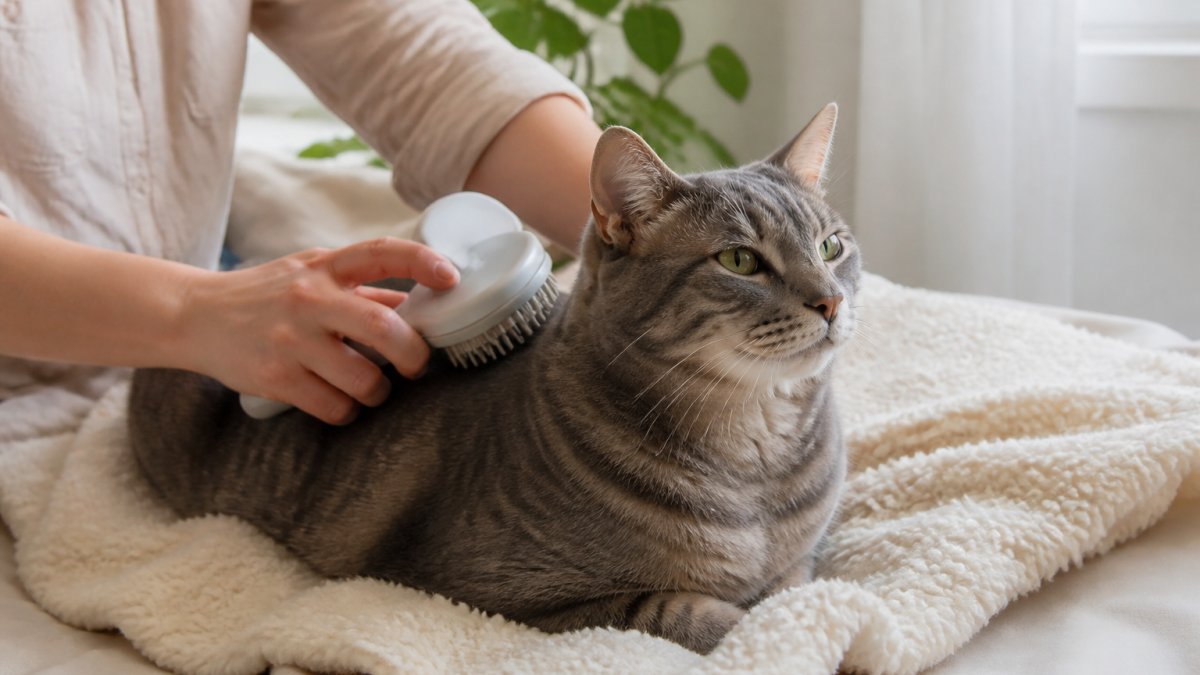
A steam or mist brush can help a resistant cat because moisture reduces the pull that triggers most objections.
Hygiene, Drying, and Long-Term Cost: What Owners Overlook
Hygiene is where mist brushes quietly fail their owners. Standing water, damp bristles, and a warm bathroom shelf breed mold and bacteria that you then brush into your cat's coat.
Long-term cost is the other blind spot. A mist brush has more parts than a plain brush, so it needs more care and may wear out sooner. Add up the purchase price, replacement heads, and your time filling and drying it.
Verdict: Who Should Buy a Steam Grooming Brush and Who Should Skip It
Buy a steam grooming brush if your cat tolerates brushing poorly, if static and flyaways are your main complaint, or if you want a gentler daily routine for a short-haired or fine-coated cat. Our pick is the 3-in-1 Gentle Steam Brush at $18.99: it steams, brushes, and detangles in one tool, softens the coat, and loosens dead fur without the pulling that sends most cats running.
Skip it if your cat is a heavy seasonal shedder needing serious undercoat removal, has an active skin condition your vet is still treating, or you will not keep up with the drying and cleaning routine, a dry deshedding tool plus a metal comb does more for less.
If your cat comes out of a bath or damp session and needs to dry properly, a low-noise dryer matters more than people expect, since most cats panic at standard dryer noise. Our BrushFlow 2-in-1 Pet Dryer Brush at $44.99 combines drying and grooming in one low-noise step, and the CalmFlow Pet Dryer at $64.99 adds adjustable temperature settings for anxious cats and thick coats.

Frequently Asked Questions
Are steam brushes safe for cats?
They can be, with caveats. The main risks are heat and moisture: a device that emits genuinely hot steam can scald sensitive skin, especially on the belly, ears, and paws. Look for tools marketed as gentle steam or cool mist, keep sessions short, and test the output on your own wrist first. Never hold the device against the skin in one spot. Cats with thin coats, senior cats, and cats with skin conditions should be cleared by a veterinarian before you try one.
Do steam brushes actually help remove loose cat hair?
They can loosen dead fur and reduce flyaways, largely because moisture helps control static and keeps hair from scattering. That said, the brush head and your technique do most of the work. A steam grooming brush is not a replacement for a proper deshedding routine during heavy shedding season. Expect it to help with surface loose fur and coat feel, not to eliminate shedding entirely.
Can a steam brush replace a regular cat brush?
For most cats, no. In a steam brush vs regular cat brush comparison, the dry brush remains the workhorse for daily loose-hair removal and mat prevention, while the steam tool adds moisture and shine. Many owners use both: a dry brush for routine sessions and a steam brush once or twice a week for coat condition. If your cat tolerates only one tool, pick the dry brush first.
Are steam brushes suitable for long-haired cats?
Long-haired cats benefit most from the moisture, since it softens the coat and makes tangles easier to work through. But long coats also demand real detangling tools and a consistent schedule. A steam brush can help with surface smoothness and static, yet it will not resolve established mats. Never try to brush out a hard mat with any brush; have a groomer or vet handle it to avoid pulling skin.
How do you use a steam brush on a cat without stressing it?
Start with the device off so your cat can sniff it. Turn it on away from the cat, let it run for a minute, then touch it to a neutral surface. Brush in the direction of the coat in short strokes, starting at the shoulders and avoiding the face, belly, and paws. Keep the first sessions under two minutes and end with a treat. If your cat flattens its ears or hisses, stop and try again another day.
Grooming a cat that fights every tool is frustrating, and buying the wrong brush makes it worse. At Furbabies4less, we stock vet-informed grooming tools chosen to make daily care calmer for anxious cats and their people, from the 3-in-1 Gentle Steam Brush to low-noise dryers built for cats that panic at loud motors. Every purchase also helps support animal rescues. Shop our grooming range and find the tool your cat will actually tolerate.
