

How to Manage Pet Weight Healthily: A Step-by-Step Guide
Table of Contents
- Understanding Pet Obesity and Why It Matters
- How to Measure Pet Food Portions Accurately
- The Importance of Portion Control and Caloric Intake
- Low-Calorie Dog Treat Alternatives That Satisfy
- Building a Pet Weight Loss Exercise Plan
- Monitoring Weight and Body Condition Score
- How to Manage Pet Weight in Multi-Pet Households
- Scheduling Veterinary Checkups and Professional Support
- Frequently Asked Questions
Last Updated: September 22, 2026
Understanding Pet Obesity and Why It Matters
Pet obesity is one of the most common health issues affecting dogs and cats today. Overweight pets face serious risks including diabetes, joint problems, heart disease, and reduced life expectancy. The good news? You can manage pet weight healthily with the right approach.
Weight management isn't about deprivation, it's about making smarter choices at every meal and activity level. Most pets gain weight gradually, so they can lose it gradually too.
Excess weight creates a cycle: heavier pets move less, leading to weaker muscles and slower metabolism. Breaking this cycle requires understanding your pet's ideal weight and why portion control is critical.
How to Measure Pet Food Portions Accurately
Getting portions right is the foundation of managing pet weight healthily. Most pet parents overfeed by eyeballing kibble without measuring, and calories add up fast.
Check your pet's food label for recommended daily portions based on weight. Note: those recommendations assume regular exercise. If your dog is mostly indoors, reduce portions by 10-15%.
Use a kitchen scale or measuring cup for accuracy: measure all kibble before serving, keep treats separate from daily portions, use the same cup every time, and track amounts.
The Smart Slow Puzzle Feeder Bowl from Furbabies4less ($25.99) slows eating and reduces bloating by forcing pets to work for each bite. The Digestive Health Slow Feeder Bowl ($19.99) uses ridged surfaces to slow eating by up to 10 times, preventing gulping and digestive upset.

The Importance of Portion Control and Caloric Intake
Portion control is where weight management happens. A 30-minute walk burns roughly 150 calories, but one extra treat adds 100 calories, you can't out-exercise a bad diet.
Managing pet weight through portion control creates a calorie deficit: your pet burns more energy than it consumes, forcing the body to use stored fat. This is the only safe, sustainable way to lose weight.
Calculate your pet's daily caloric needs: small dogs (under 20 lbs) need 250-400 calories; medium dogs (20-50 lbs) need 400-700; large dogs (over 50 lbs) need 700-1,200; cats need 150-250. Older or sedentary pets need fewer; active or young pets may need more.
Track everything: main meals, treats, training rewards, and table scraps all count. Many pets gain weight from treats alone. If your pet gets 10-15 treats daily at 10 calories each, that's 100-150 calories, roughly 25-40% of a small dog's daily allowance. Cutting treats in half can produce visible results.
Low-Calorie Dog Treat Alternatives That Satisfy
Treats don't have to disappear, they just need to be smarter choices. High-calorie treats sabotage weight loss: a dental chew is 100+ calories, a peanut butter biscuit is 50-80 calories.
Switch to low-calorie alternatives: carrots (5-10 cal), green beans (3-5 cal), apple slices (5-15 cal), plain cooked chicken (10-20 cal), or watermelon (5 cal). These whole foods satisfy the urge to chew without derailing progress and help clean teeth.
The Interactive Lick Ball from Furbabies4less ($3.74) extends treat time without adding calories, fill it with plain yogurt, pumpkin puree, or peanut butter mixed with water. For training, use tiny pieces of real chicken or cheese instead of full-size treats.

Building a Pet Weight Loss Exercise Plan
Exercise is the second pillar of managing pet weight healthily. Most pets won't exercise themselves, and most owners struggle with consistency. A plan fails if your pet resists, you can't maintain it, or your pet has mobility limitations.
Start Slowly, Joint Safety Matters
Extra weight stresses joints, ligaments, and the heart. Build exercise gradually over 4-6 weeks to avoid injury. Overweight pets have weakened muscles, joint inflammation, reduced cardiovascular fitness, and lower heat tolerance. Starting too hard causes injury, soreness, or discouragement that derails the plan.
The Progressive Exercise Framework
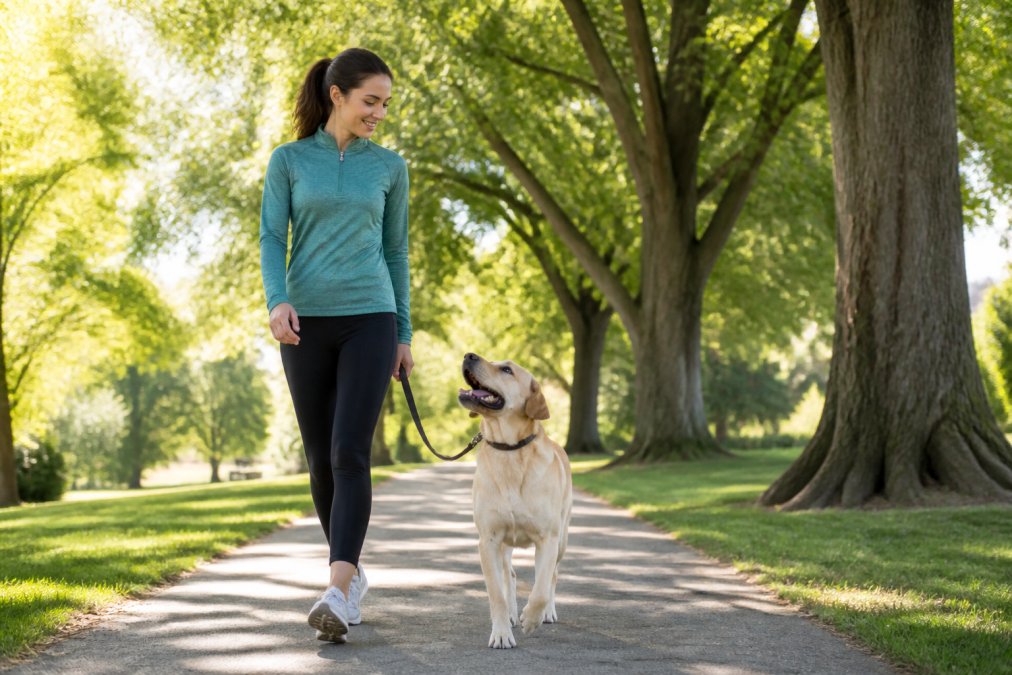
A safe weight loss exercise plan builds gradually:
- Week 1-2: Two 10-minute walks daily (morning and evening). Keep pace slow and steady. Your pet should not be panting heavily or lagging behind.
- Week 3-4: Two 15-minute walks daily. Introduce slight elevation changes (gentle hills) if available, but keep pace moderate.
- Week 5-6: One 20-minute walk plus one 10-minute walk daily. Add variety: change routes, include short play sessions in your yard.
- Week 7-8: Two 20-minute walks or one 30-minute walk daily. Introduce low-impact variety like swimming if your pet enjoys water.
- Week 9+: Maintain 40-60 minutes of activity daily, split into sessions. Add more challenging activities like fetch, stairs, or longer hikes.
The goal is consistency, not intensity. A daily 20-minute walk can contribute to weight loss. Walking is low-impact and safe for most pets.
Addressing Exercise Resistance
Digestive Health Slow Feeder Bowl for →
Many owners hit a wall: their pet refuses to walk, lags behind, or seems uncomfortable. This is common and fixable.
If your pet lags or seems tired: you're going too fast or too far, slow down. Overweight pets have less endurance; two 10-minute walks work better than one 20-minute walk initially. Check for pain (limping, reluctance, yelping); arthritis or joint issues may need treatment before increasing exercise.
If your pet refuses to walk: start in your yard to build confidence before exploring new routes. Use high-value motivation (treats or toys). Walk with another pet if available. Try different times of day, early morning or evening may be cooler and less stimulating.
If your pet overheats or pants excessively: reduce pace and duration immediately. Avoid peak heat hours (10 a.m.-4 p.m. in summer). Bring water and take breaks in shade. Watch for excessive panting, drooling, or lethargy, signs of heat stress. Stop and cool your pet down.
Variety prevents boredom and engages different muscle groups: change routes regularly, include 5-10 minute play sessions (fetch, chase, tug-of-war), try swimming if your pet enjoys water (excellent for joint support), use stairs to build leg and core muscle, play fetch or chase games (keep sessions short in heat), and incorporate sniff walks for mental enrichment.
Mental enrichment reduces boredom-eating and burns calories through cognitive work: use interactive toys and puzzle feeders, conduct 5-10 minute daily training sessions, play sniff games, and rotate toys. Mental enrichment is especially valuable on days when physical exercise is limited.
Senior pets (7+ years for dogs, 10+ for cats) need shorter, more frequent sessions; three 10-minute walks work better than one 30-minute walk. Warm up and cool down stiff joints. Use low-impact activities (swimming, soft surfaces). Discuss pain management with your vet if arthritis is present. Adjust expectations, even modest increases in movement help weight loss and mobility. Monitor closely for fatigue or discomfort.
Consistency matters more than intensity. Log walk duration and type daily, note energy level and discomfort, and track weather conditions. Review weekly to spot patterns. A daily 20-minute walk beats sporadic longer sessions. Build exercise into your routine like brushing teeth, non-negotiable and automatic.
After 6-8 weeks of consistent activity, increase intensity if your pet walks without panting or lagging, seems eager for activity, recovers quickly (breathing normal within 5 minutes), and shows improved mobility. Increase gradually: add 5 minutes to walks, introduce one new activity, or increase frequency. Don't jump from 20-minute walks to 45-minute hikes in one week.
Monitoring Weight and Body Condition Score
You can't manage what you don't measure. Tracking your pet's weight and body condition tells you whether your plan is working.
Weigh your pet every 2-3 weeks at your vet's office or a pet store with a scale. Record the number. Weight loss should be gradual: 1-2% of body weight per week is healthy and sustainable.
A 50-pound dog losing 1% per week loses about half a pound. That sounds slow, but over 12 weeks it's 6 pounds, a meaningful change that reduces stress on joints and improves movement.
Body condition score (BCS) matters more than the number on the scale.
When evaluating your pet's body condition:
- Feel the ribs: you should feel them easily without pressing hard
- Check the waist: there should be a visible tuck when viewed from above
- Look at the belly: it shouldn't sag or hang
- Watch movement: your pet should move freely without huffing or lagging
How to Manage Pet Weight in Multi-Pet Households
Managing pet weight becomes complicated when you have multiple pets with different dietary needs. One pet might need to lose weight while another needs to maintain or gain.
Separate feeding is the most reliable solution:
- Feed pets in different rooms
- Use closed doors to prevent access to other pets' food
- Feed them at different times if space is limited
- Store food in sealed containers away from curious pets
Scheduling Veterinary Checkups and Professional Support
Your vet is your partner in managing pet weight healthily. Don't skip this step. A vet can rule out underlying health issues that make weight loss harder, like thyroid problems or metabolic disorders.
- Check for health conditions affecting weight
- Assess body condition and set realistic goals
- Recommend appropriate caloric intake
- Suggest prescription diets if needed
- Monitor progress with regular weigh-ins
Frequently Asked Questions
How can I tell if my pet is at a healthy weight?
A healthy weight means your pet has a visible waist when viewed from above and you can feel their ribs without pressing hard. Your vet can assess your pet's body condition score, a standard 1-9 scale that determines if your pet is underweight, ideal, or overweight. Regular body condition assessments help you track progress as you manage pet weight and catch any changes early.
What role does portion control play in pet weight management?
Portion control is the foundation of any weight management plan. Most pets consume more calories than they need, leading to obesity. By measuring portions carefully and reducing caloric intake by 10-25%, you create a calorie deficit that supports safe weight loss. Slow feeders like the Furbabies4less Smart Slow Puzzle Feeder Bowl help reinforce portion awareness and reduce gulping, which improves digestion.
Can exercise alone help a pet lose weight?
Exercise is essential but works best paired with portion control. While physical activity burns calories and builds muscle tone, diet drives the majority of weight loss results. A pet weight loss exercise plan should include daily walks, play sessions, and behavioral enrichment, but without reducing caloric intake, exercise alone may not achieve significant weight reduction.
How often should I weigh my pet to track progress?
Weigh your pet every 2-4 weeks to monitor steady progress without obsessing over daily fluctuations. Most pets should lose 1-2% of their body weight per week under veterinary supervision. Consistent weight tracking helps you spot plateaus early and adjust your weight reduction plan if needed. Keep records to share with your vet at checkups.
