

Buy Calming Aids for Pets: 5 Vet-Informed Picks for 2026
Table of Contents
- How to Buy Calming Aids for Pets Without Wasting Money
- Comparison Table: 5 Calming Aids Ranked by Cost, Trigger Fit, and Evidence
- The Best Calming Aids for Dogs: Lick Mats, Bowls, and Beds That Earn Their Price
- Calming Supplements for Dogs: What the Evidence Actually Supports
- Calming Aids for Cats: What Works When the Product Is Built for Dogs
- Calming Products for Separation Anxiety: Match the Aid to the Trigger
- Safety, Side Effects, and When to Call Your Vet
- Frequently Asked Questions
Last Updated: October 18, 2026
How to Buy Calming Aids for Pets Without Wasting Money
Calming aids are products designed to reduce stress responses in pets through licking, chewing, pressure, scent, or ingestion. We have watched too many owners spend money on calming aids for pets that never matched the actual trigger, then conclude nothing works.
Here is the uncomfortable truth most product pages skip: a calming aid only performs as well as the match between its mechanism and your pet's stress trigger. A lick mat does nothing for a dog who panics the moment you leave the house.

Below, we break down five products by cost, trigger fit, and what each one realistically delivers. But first, here is what most guides get wrong: they rank calming aids by popularity instead of by the situation you are actually buying for.
Comparison Table: 5 Calming Aids Ranked by Cost, Trigger Fit, and Evidence
| Product | Price | Primary Trigger Fit | Mechanism | Best For |
|---|---|---|---|---|
| Anxiety Relief Lick Mat | $21.70 | Noise, grooming, vet visits | Licking endorphin release | Situational stress |
| Suction Lick Bowl | $19.75 | Bath time, grooming | Suction-held licking | Hands-free calming |
| Slow Feeder Lick Mat | $19.99 | Grooming, mealtime pacing | Licking plus slow feeding | Fast eaters who panic |
| Enrichment Licking Plate | $21.28 | Boredom, hyperactivity | Mental stimulation | High-energy dogs |
| Calming Dog Bed | $70.00 | Night restlessness, settling | Nest-like comfort | Chronic inability to settle |
The four lick-based aids cluster tightly between $19.75 and $21.70, which makes them a low-risk first purchase. The bed costs more than three times as much, so it earns its place only if your dog genuinely cannot settle.

The Best Calming Aids for Dogs: Lick Mats, Bowls, and Beds That Earn Their Price
Lick-based calming aids work because repetitive licking triggers endorphin release and engages the parasympathetic nervous system, which helps lower heart rate and cortisol. That is the mechanism behind every product in this section.
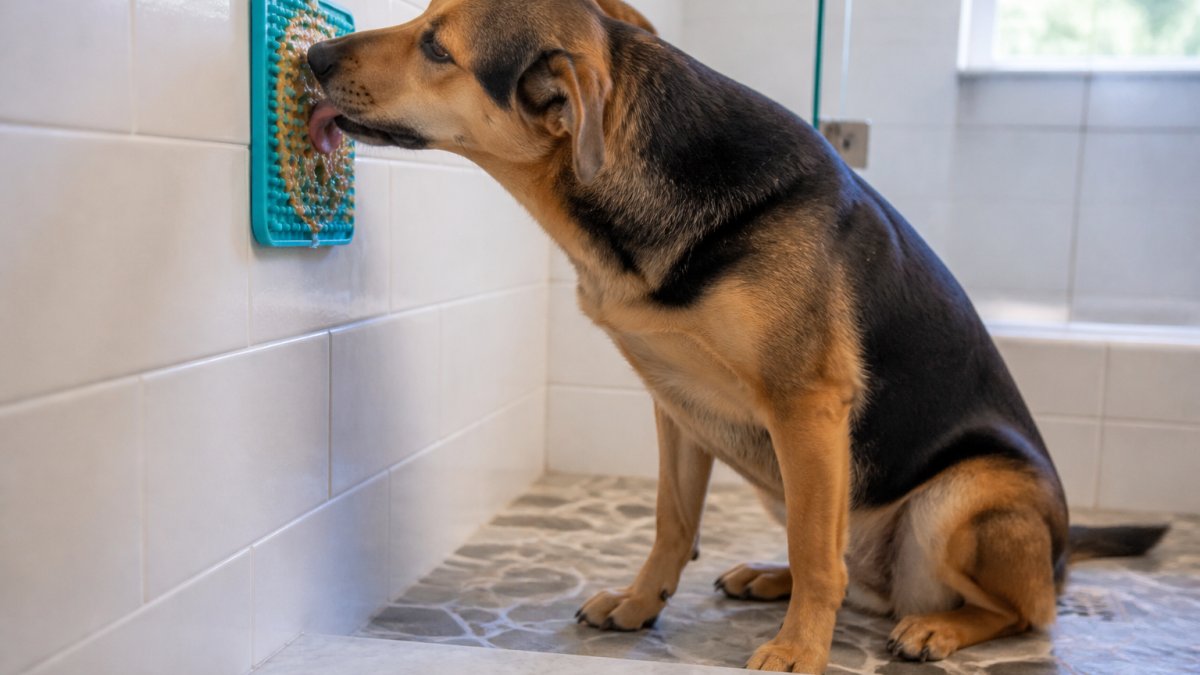
Anxiety Relief Lick Mat ($21.70)
Our top pick for situational stress. The Anxiety Relief Lick Mat sticks to walls, floors, and tub surfaces with a suction base, so it stays put during thunderstorms, fireworks, grooming, and vet-prep moments. It is non-toxic, pet-safe silicone and dishwasher safe.
Pros: Lowest-friction entry into calming aids, works within minutes, four color options. Cons: Only helps while the dog is actively licking. It is a distraction tool, not a cure for deep separation anxiety.
Suction Lick Bowl ($19.75) and Slow Feeder Lick Mat ($19.99)
The Suction Lick Bowl solves the one problem that kills most lick mats: sliding. Its heavy-duty suction base locks to tub walls and tile, which makes it the better pick for bath time and nail trims. The Slow Feeder Lick Mat does the same job while doubling as a mealtime slow feeder for dogs that gulp and bloat.
Pros: Hands-free, holds for large breeds, dishwasher safe. Cons: Suction only grips smooth surfaces. Textured or grouted tile weakens the hold.
Enrichment Licking Plate ($21.28)
For hyperactive dogs, boredom is the trigger. The Enrichment Licking Plate uses textured grooves that require focus and strategy to clean, which channels a dog's problem-solving drive into a calm outlet instead of your furniture.
Calming Dog Bed ($70.00)
The Calming Dog Bed is the only product here aimed at chronic settling problems. Its deep-cushion donut design and raised rim mimic the security of curling up with a pack, and the non-slip bottom keeps it steady on hardwood. Machine washable, multiple sizes.

Pros: Addresses nighttime restlessness, supports senior joints, helps crate training. Cons: Highest price on this list, and it will not stop a dog who is anxious the moment you leave the room.
Calming Supplements for Dogs: What the Evidence Actually Supports
Calming supplements for dogs typically combine ingredients such as melatonin, chamomile, valerian root, L-theanine, and L-tryptophan, usually in soft chews, powders, or a probiotic format.
That matters for how you buy. A supplement is a recurring cost, unlike a one-time lick mat, so the right question is not "does this work" but "does this work well enough, for this dog, at this cost per day." Here is a transparent comparison framework you can apply to any label.
| Criterion | What to Check | Why It Matters |
|---|---|---|
| Active ingredients and amounts | Named ingredients with milligrams per serving | Unlabeled blends are the most common wasted purchase |
| Evidence quality | Whether the ingredient has veterinary literature behind it, not just marketing | Distinguishes support from claims |
| Onset | Whether the label describes daily buildup or situational use | Most supplements are not fast-acting |
| Duration | How long a serving is expected to last | Affects cost per day |
| Format | Chew, powder, or liquid | Chews suit picky eaters; powders suit precise dosing |
| Cost per day | Package price divided by servings per package | The only fair value comparison |
| Suitability | Age, weight, health conditions, medication interactions | The safety gate before purchase |
A common pattern is that owners buy a supplement expecting a fast fix, then stop after a week because nothing changed.
Cost over time is where listings mislead.
We are deliberately cautious here. Talk to your veterinarian before starting any calming compound, especially if your dog already takes medication, is senior, is small-breed, or has a health condition.
Anxiety Relief Lick Mat for Dogs – Calm Stress, Fear & Hyperactivity →
Calming Aids for Cats: What Works When the Product Is Built for Dogs
Calming aids for cats are a separate category, and most dog products do not transfer.
Here is the cross-species comparison most guides skip. Use it to avoid buying one product and stretching it across both pets.
| Aid Type | Works for Dogs | Works for Cats | Cross-Species Notes |
|---|---|---|---|
| Lick mats and licking plates | Yes | Sometimes, if shallow and cat-specific | Dog mats are too deep; cat tongues need a shallow surface |
| Slow feeders | Yes | Yes, with a cat-sized maze | Dog slow feeders can be too large for a cat's reach |
| Calming beds | Yes | Yes, if low-sided and open | Cats often reject enclosed dog beds |
| Pheromone diffusers | Some evidence | Stronger fit for cats | Dog and cat pheromones are species-specific; never share a diffuser refill |
| Pheromone collars | Limited fit | Better fit for cats | Breakaway safety closure is essential for cats |
| Calming sprays | Situational | Situational | Check the label for species approval before use |
| Anxiety wraps and vests | Yes | Rarely tolerated | Skip unless the cat already wears a harness comfortably |
| Puzzle toys | Yes | Yes | Match puzzle difficulty to the species, not the pet's size |
For cats, puzzle toys and environmental enrichment serve cats well, especially in multi-cat homes where tension is territorial rather than situational.
For multi-pet homes, the practical rule is one aid per species. Do not assume a dog lick mat is safe for a cat just because the material is non-toxic.
If you are shopping cross-species, buy the species-specific version even when it costs slightly more. A shared product that fits neither pet is the most common wasted purchase in this category.
Calming Products for Separation Anxiety: Match the Aid to the Trigger
Calming products for separation anxiety need to work when you are not there, and that rules out most hands-on aids. A lick mat you load and hand over does little for a dog who panics ten minutes after the door closes.
What tends to help: a calming bed that gives the dog a consistent safe spot, plus environmental enrichment that keeps the brain occupied during the alone period. Puzzle toys and long-lasting chews belong in this conversation more than supplements do.
A common mistake is buying a distraction aid and expecting it to solve a departure problem.
| Trigger | Aid That Fits | Aid That Does Not |
|---|---|---|
| Thunderstorms, fireworks | Lick mat, licking plate | Calming bed alone |
| Bath and grooming | Suction lick bowl | Puzzle toys |
| Boredom and hyperactivity | Enrichment licking plate | Calming sprays |
| Night restlessness | Calming bed | Lick mat |
| Separation anxiety | Bed plus enrichment, with a behavior plan | Any single product |
Safety, Side Effects, and When to Call Your Vet
Product safety comes down to three checks: material, supervision, and dosage. All five products here are non-toxic and pet-safe, but no lick mat or bed replaces veterinary guidance for a pet with severe or worsening anxiety.
Watch for these signals that mean a vet call, not a product swap:
- Destructive behavior that escalates despite enrichment
- Loss of appetite or weight change alongside anxiety
- Pacing, drooling, or panting with no obvious trigger
- Any reaction after starting a supplement
Serving size and weight-based dosing should always follow the label, and for pets on medication, confirm interactions first.
Frequently Asked Questions
What is the most effective calming aid for dogs?
Effectiveness depends on the trigger. For situational stress like baths, nail trims, or fireworks, a lick mat or suction bowl works within minutes because repetitive licking releases endorphins and lowers cortisol. For nighttime restlessness or separation anxiety, a donut-style calming bed gives ongoing comfort. Match the aid to the trigger rather than looking for one universal product.
Are calming supplements safe for dogs and cats?
Most over-the-counter calming supplements for dogs contain ingredients like melatonin, chamomile, or valerian root, and safety depends on dose, pet weight, and existing medications. Cats are more sensitive to certain compounds, so never give a dog-labeled supplement to a cat without veterinary guidance. Check the label for a weight-based dosing chart, start at the low end, and watch for drowsiness, vomiting, or diarrhea. Stop and call your vet if side effects appear.
Do calming treats work for separation anxiety?
Calming products can take the edge off mild separation anxiety, but they do not teach a dog to cope with being alone. They work best alongside behavior work such as gradual departures and enrichment that keeps the dog busy. For moderate to severe cases, pair a calming product for separation anxiety with a vet or certified behaviorist plan. Expect support, not a cure, and track results over two to four weeks before deciding whether to continue.
How do I choose a calming aid for my pet?
Start with the trigger and the timing. For grooming, baths, or vet visits, pick a suction lick mat or bowl you can fill and stick to a smooth surface. For noise phobias and fireworks, a lick mat plus a quiet, enclosed bed covers both the moment and the recovery. For daily restlessness, a calming bed is the lowest-effort option. Set a budget, check the price per use, and give each product a fair trial before adding another.
When should I ask a veterinarian about my pet's anxiety?
Call your vet if anxiety causes self-injury, destroys doors or flooring, stops your pet from eating, or lasts for hours after the trigger passes. Also ask before combining supplements with prescription medication, and before using any product on a pet with a medical condition. A vet can rule out pain or thyroid issues that look like anxiety and recommend a behavior plan. For severe cases, medication plus behavior work is often more effective than either alone.
Buying calming aids for pets gets expensive fast when the product does not match the trigger. At Furbabies4less, we built our selection around vet-informed picks that support real wellness, from enrichment feeders to calming beds, with a portion of every sale helping rescue animals. Every item here is chosen for safe, tested use and priced to stay accessible. Shop our calming and enrichment range and give your pet a calmer routine without the guesswork.
