

Alternatives to Prescription Anxiety Medication for Dogs
Table of Contents
- Why Dog Parents Look for Alternatives to Prescription Anxiety Medication
- Over-the-Counter Calming Aids for Dogs: What Works and What Doesn't
- Behavior Modification for Dog Anxiety: The Foundation of Any Treatment Plan
- Thunderstorm Anxiety in Dogs: Nonprescription Strategies That Help
- Separation Anxiety Remedies for Dogs: Building Comfort Without Medication
- Comparing Costs and Evidence: OTC Aids vs Prescription Anxiety Medication for Dogs
- When to Call Your Veterinarian About Your Dog's Anxiety
- Frequently Asked Questions
Last Updated: October 5, 2026
Why Dog Parents Look for Alternatives to Prescription Anxiety Medication
Dog anxiety is one of the most common behavioral concerns veterinarians hear about, and one of the most misunderstood, which is why so many owners look for alternatives to prescription anxiety medication for dogs.
The appeal is easy to understand: prescription anxiety medication for dogs often brings sedation, appetite changes, and regular bloodwork, so many owners want to exhaust gentler tools first.
What most guides get wrong is treating this as either-or. The strongest plans combine behavior work, environmental changes, and sometimes medication.
Over-the-Counter Calming Aids for Dogs: What Works and What Doesn't
No over-the-counter product matches a prescription drug's strength, and nonprescription does not mean risk-free. Some aids have real evidence when matched to the right trigger; others are popular but poorly studied. Here is what each option can realistically do, where it falls short, and what to raise with your veterinarian before you buy.
Head-to-Head Comparison of Nonprescription Options
| Option | Best For | Evidence Strength | Realistic Expectation | Key Limitations | Safety Notes |
|---|---|---|---|---|---|
| Behavior modification (desensitization + counterconditioning) | All anxiety types, especially separation and noise | Strong | Meaningful, lasting change over weeks to months | Requires daily consistency and owner time | No ingredient risk; the foundation everything else layers onto |
| Pheromone products (collar, diffuser, spray) | Situational stress: travel, vet visits, mild noise | Moderate | Modest calming for some dogs; not a stand-alone fix for severe cases | Results vary; diffusers need adequate room coverage | Generally well tolerated; follow label species and size guidance |
| Prescription calming diets | Ongoing mild to moderate anxiety | Growing | Gradual improvement when fed consistently for several weeks | Full diet change required; not a quick fix | Requires veterinary guidance because it changes overall nutrition |
| Calming supplements (L-tryptophan, casein-derived peptides, alpha-casozepine) | Mild daily anxiety | Mixed | Some dogs respond; others show no measurable change | Effect size is small; product quality varies | Check for interactions with other meds; confirm dose with your vet |
| Melatonin | Short-term noise and travel anxiety | Limited | May take the edge off situational events | Timing matters; not for ongoing anxiety | Can interact with other medications and affect blood sugar; vet approval first |
| CBD products | Situational anxiety | Limited | Anecdotal reports of calm; controlled canine evidence is thin | No standardized dosing; potency varies between products | Not approved for animal use; check state rules and product testing |
| Herbal remedies (valerian root, chamomile) | Mild stress | Limited | Unpredictable; some dogs seem calmer | Little canine-specific research; inconsistent quality control | Some herbs interact with sedatives; confirm with your vet |
What the Evidence Actually Supports
Behavior modification sits at the top because it is the only approach that changes how your dog feels about the trigger rather than temporarily suppressing the reaction.
A common pattern: owners stack three or four low-evidence products at once, see no change, and conclude nothing works. Better to change one variable at a time, give it two to four weeks, and track whether reactions shrink.
Safety Guidance for Supplements and Human Medications
The most important safety point: never give your dog a human anxiety medication without veterinary approval. Routine human drugs, certain antidepressants, benzodiazepines, sleep aids, can cause serious toxicity in dogs at doses that seem trivial by human standards. Some are used in dogs, but only under a veterinarian's direction at a species-appropriate dose.
For supplements, keep these checks in mind:
- Ingredient interactions. Melatonin, valerian, and other sedating ingredients can compound the effects of prescription sedatives or anesthesia. Tell your vet about everything your dog takes before any procedure.
- Label accuracy. Supplements are not held to the same manufacturing standards as drugs, so actual ingredient content can differ from the label. Look for products with third-party testing.
- CBD specifics. The FDA guidance on CBD products notes that many CBD products are not approved for animal use, and dosing is not standardized. State rules vary, and product quality ranges widely.
Matching the Aid to the Anxiety Type
Use this as a starting framework, then adjust with your vet:
- Separation anxiety: Behavior modification first, with enrichment and departure practice. Nonprescription aids support; severe cases often need veterinary involvement.
- Noise and thunderstorm anxiety: Pheromones, melatonin (with vet approval), sound therapy, and a safe space, layered. Short-term prescription medication is sometimes right for severe cases.
- Travel anxiety: Pheromone sprays or wipes, a familiar crate, and gradual car or carrier practice. Melatonin may help some dogs.
If your dog's anxiety is mild and situational, nonprescription tools plus training are a reasonable first step. If it is severe, ongoing, or causing self-injury, bring your veterinarian in early rather than exhausting every over-the-counter option first.
Behavior Modification for Dog Anxiety: The Foundation of Any Treatment Plan
Behavior modification for dog anxiety is the single most reliable non-drug approach, and it works best started early. It changes how your dog feels about the thing that scares them rather than masking the reaction.
Desensitization and Counterconditioning in Practice
Desensitization means exposing your dog to a trigger at a level so low it does not cause fear, then slowly increasing intensity over days or weeks. Counterconditioning pairs that trigger with something your dog loves, like treats, so the trigger starts to predict good things. A common mistake is moving too fast: if your dog reacts, you have pushed past their threshold.
Thunderstorm Anxiety in Dogs: Nonprescription Strategies That Help
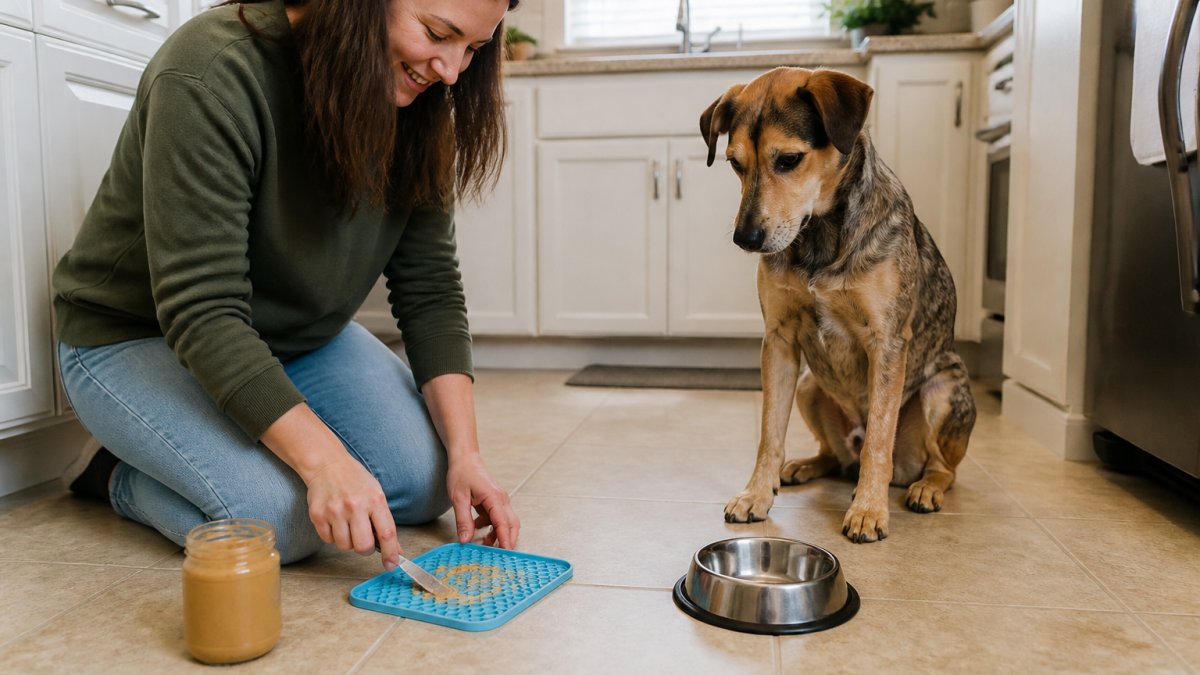
Thunderstorm anxiety in dogs responds well to a layered approach; no single fix works for every dog. Start with a safe space, a crate, covered corner, or quiet interior room, to reduce noise and flashing light. During a storm, distraction is your best tool, a food-stuffed toy or lick mat gives your dog something to focus on besides the noise.

- Close curtains and play white noise or calming music
- Stay calm yourself; dogs pick up on owner anxiety
- Offer a high-value chew or lick mat during the peak
Separation Anxiety Remedies for Dogs: Building Comfort Without Medication
Separation anxiety remedies for dogs work best when you address the underlying panic, not just the behavior. True separation anxiety differs from boredom or a lack of training. Start with short absences: leave for a few seconds and return before your dog panics, then gradually extend the time. Leave behind something comforting, a calming dog bed with a raised rim gives anxious dogs a secure place to curl up, and the donut shape mimics sleeping curled against their pack.

- Practice departures and returns many times per day
- Avoid emotional goodbyes
- Provide enrichment that lasts longer than your absence
Comparing Costs and Evidence: OTC Aids vs Prescription Anxiety Medication for Dogs
Cost and evidence rarely point in the same direction. Prescription anxiety medication for dogs requires an exam, ongoing refills, and sometimes bloodwork, so the total adds up. Nonprescription options are cheaper upfront, but evidence is weaker and results vary. Behavior modification costs nothing but time and has the strongest long-term evidence.
What Each Path Actually Costs and Requires
Exact prices vary by clinic, region, and dog size, so treat the ranges below as directional. The point is the shape of the cost, not a precise figure.
Anxiety Relief Lick Mat for Dogs – Calm Stress, Fear & Hyperactivity →
| Approach | Upfront Cost | Ongoing Cost | Access | Veterinary Assessment Needed? | Evidence |
|---|---|---|---|---|---|
| Behavior modification | Low (time and treats) | Time only | Free; books, trainers, or a veterinary behaviorist for complex cases | No, but a behaviorist helps for severe cases | Strong |
| Calming supplements | Low | Monthly | Over the counter, online, or pet stores | Recommended before starting | Mixed |
| Pheromone products | Low | Monthly (refills, diffusers) | Over the counter | Recommended | Moderate |
| Prescription calming diets | Low to moderate | Monthly food cost | By veterinary authorization | Yes | Growing |
| CBD products | Low to moderate | Monthly | Varies by state rules | Strongly recommended | Limited |
| Prescription medication | Exam fee | Refills, plus periodic bloodwork | By prescription only | Yes | Strong |
Two cost traps worth naming. First, the cheapest option is not always least expensive over a year, a supplement that does not work is money spent with no benefit, and owners often cycle through several before finding one that helps.
A Decision Framework by Anxiety Type and Severity
Instead of asking "which option is best," ask "how severe is this, and what is the trigger?" Then match the next step.
Mild, situational anxiety (travel, occasional noise, vet visits):
- Start with management and environment, a safe space, white noise, a familiar crate.
- Add one nonprescription aid matched to the trigger (pheromone for travel, sound therapy for noise).
- Practice short, low-intensity exposures paired with treats.
- Reassess after two to four weeks. If it is improving, keep going.
Moderate, recurring anxiety (regular thunderstorms, predictable separations):
- Build a structured behavior plan with gradual desensitization and counterconditioning.
- Layer in a supplement or prescription diet with veterinary input.
- Track episodes so you can see whether reactions are shrinking.
- If progress stalls after several weeks, that is the point to discuss short-term prescription medication with your vet.
Severe or ongoing anxiety (self-injury, destruction, not eating, panic during normal absences):
- Contact your veterinarian promptly, do not exhaust every over-the-counter option first.
- Rule out pain, thyroid problems, and other medical causes that can look like anxiety.
- Expect a combined plan: behavior modification plus prescription medication, with nonprescription aids as support.
How to Track Progress So You Know What Is Working
Change one thing at a time and keep simple notes: the trigger, intensity on a 1-to-5 scale, episode length, and what you did. Over a few weeks, patterns emerge, reactions get smaller, recovery gets faster, or nothing changes. That record is exactly what your vet needs, and it prevents stacking several new products at once with no idea which one helped.
A practical way to think about it: use behavior work as your foundation, layer in nonprescription aids where they fit, and keep prescription medication as a tool your vet can bring in if progress stalls. The goal is not to avoid medication, it is to use the right tool at the right severity.
When to Call Your Veterinarian About Your Dog's Anxiety
Contact your vet if your dog's anxiety affects their quality of life, if they stop eating, or if they injure themselves during a panic episode. Sudden anxiety in an older dog can also signal an underlying medical issue. A veterinary consultation is not a last resort, it is the fastest way to rule out pain, thyroid problems, or other conditions that look like anxiety.
If you want to build a calmer environment at home, our Anxiety Relief Lick Mat for Dogs and Calming Dog Bed are designed to support the kind of daily routines that help anxious dogs settle. Every purchase also helps support animal rescues.
Frequently Asked Questions
What can I give my dog for anxiety without a vet prescription?
Several over-the-counter options exist, including calming supplements containing L-tryptophan or melatonin, pheromone products like diffusers and collars, and prescription diets formulated for stress. CBD products are also popular, though evidence for their effectiveness in dogs is still limited. None of these require a prescription, but you should still talk to your veterinarian before starting any new supplement, especially if your dog takes other medications. For mild situational anxiety, these products combined with behavior modification may reduce anxious behavior without prescription medication.
Can calming supplements help dogs with anxiety?
Calming supplements can help dogs with mild to moderate anxiety, particularly when used alongside behavior modification. Ingredients like L-tryptophan, melatonin, and casein hydrolysate have some evidence supporting their use for stress and situational anxiety. However, results vary by dog, and supplements are not a substitute for veterinary care in severe cases. Always check with your veterinarian before adding any supplement, since some can interact with prescription medication or other supplements your dog is taking.
How can I help my dog with thunderstorm anxiety without medication?
Start by creating a safe space where your dog can retreat during storms, such as a calming bed with a raised rim for security. Close curtains, play white noise, and stay calm yourself. Behavior modification through desensitization to thunder sounds and counterconditioning with treats can reduce fear over time. Lick mats loaded with peanut butter or yogurt also help by triggering endorphin release through repetitive licking. For severe thunderstorm anxiety in dogs, talk to your veterinarian about whether short-term medication is needed.
What is the 3-3-3 rule for dogs with anxiety?
The 3-3-3 rule describes the adjustment timeline many rescue dogs follow: three days to decompress, three weeks to settle into a routine, and three months to feel fully at home. During each phase, anxious behavior may look different. Understanding this timeline helps you set realistic expectations and avoid labeling normal adjustment stress as a permanent anxiety disorder. Pairing patience with consistent behavior modification for dog anxiety gives your dog the best chance to relax and build trust.
Can nonprescription calming products interact with my dog's medications?
Yes. Some supplements and human medications can interact with prescription anxiety medication for dogs. For example, melatonin may amplify the sedative effects of trazodone or gabapentin, and certain herbal remedies can affect liver enzymes that process medications. CBD can also interfere with how the body metabolizes other drugs. Always tell your veterinarian about every supplement, OTC product, or home remedy your dog receives so they can check for drug interactions and adjust the treatment plan if needed.
Dog anxiety rarely resolves on its own, and guessing your way through treatment wastes time your dog does not have. At Furbabies4less, we stock vet-informed essentials like our calming dog bed, suction lick bowl, and enrichment licking plate, all chosen to support the daily routines that help anxious dogs feel safe. Get started with Furbabies4less and give your dog the calm, comfortable environment they deserve.
